.webp&w=3840&q=75)
How ClickUp Enables Outcome-Based Project Management (Not Just Task Tracking)
🕓 February 15, 2026
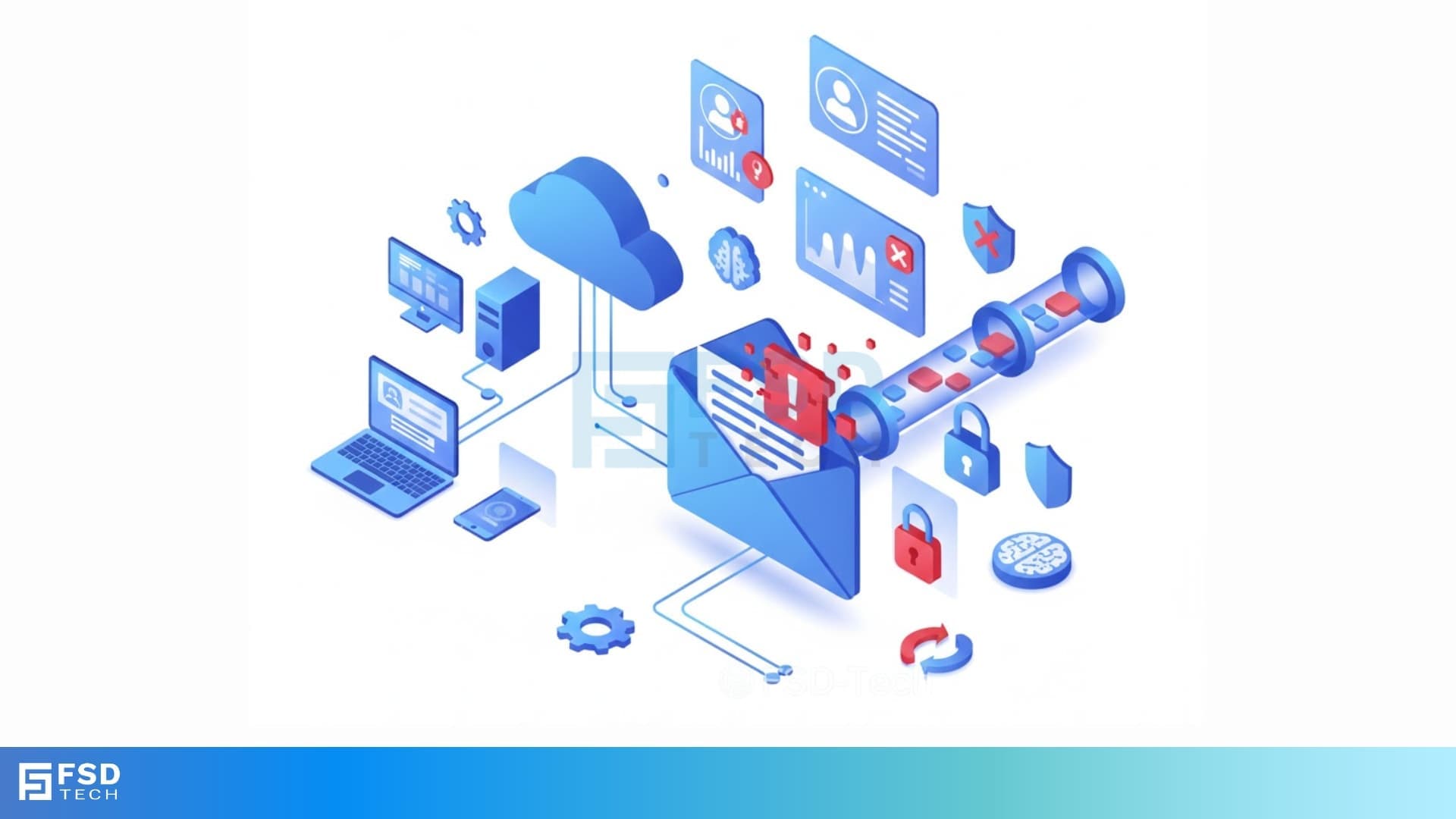
The business email compromise meaning refers to a type of scam where an attacker uses email to trick someone in a company. They often aim to make that person send money or sensitive information to the wrong place. BEC is a highly effective attack because it targets trust within a business structure.
To understand this better, Business Email Compromise (BEC) can be understood as a sophisticated scam that often involves impersonating a high-level executive or a key vendor. This attack avoids the typical technical defenses, focusing instead on human error and manipulation. This is why many organizations now ask, what is business email compromise in cyber security?
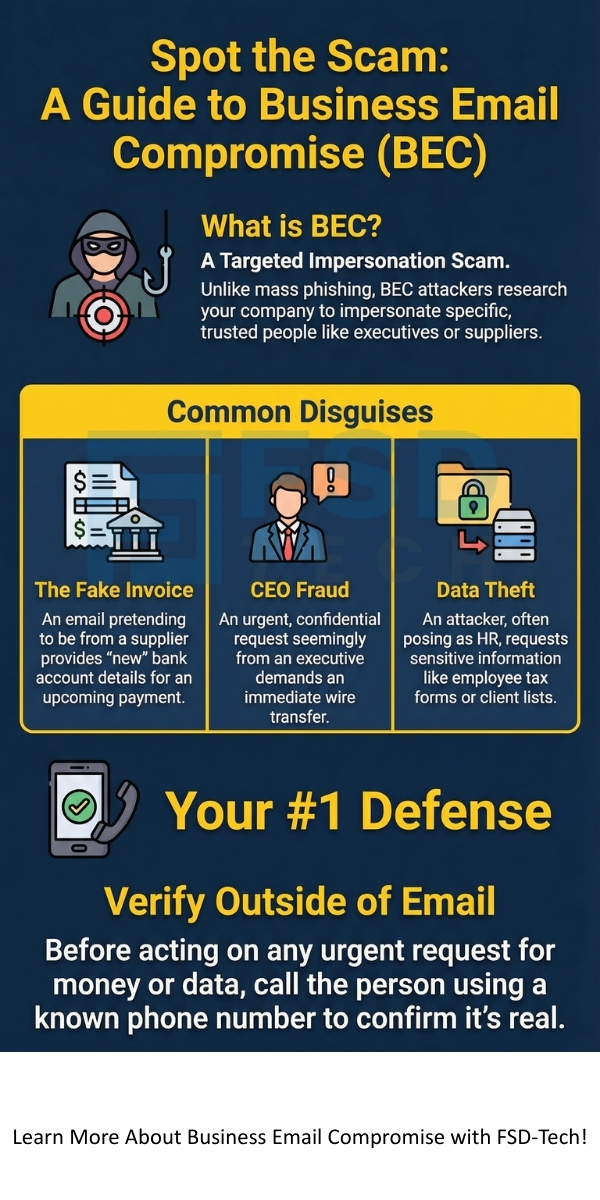
Simply put, this type of fraud focuses on tricking an employee through email communication. The attacker first researches the company. They then send an email that looks completely authentic, often appearing to come from the CEO, a CFO, or a key supplier. This email usually demands an urgent wire transfer or asks for confidential data.

Business Email Compromise is a major problem because of the huge financial losses it creates. Unlike mass phishing attacks that try to catch many people at once, a BEC attack is highly targeted. It plays a vital role in why companies lose millions of dollars each year.
Business Email Compromise is nothing but an exploit that leverages social engineering. The attacker uses careful language to create a sense of urgency or authority. This often makes the receiver act quickly without checking the details.
The question arises: What is a different name used for Business Email Compromise? Business Email Compromise is also known as Email Account Compromise (EAC), especially when the attacker takes over a legitimate email account. Many people also refer to it as a Man-in-the-Email attack. It is important to note that BEC is a specific kind of threat, different from typical, mass-market phishing.
While both BEC and phishing use email to deceive, their methods and targets differ significantly. BEC vs. Phishing is a common point of confusion. Let us now discuss the distinct characteristics of each.
| Basis for Comparison | Business Email Compromise (BEC) | Traditional Phishing |
|---|---|---|
| Primary Goal | To steal funds via wire transfer or access sensitive data. | To steal login credentials (usernames, passwords) or credit card information. |
| Target | Specific, high-value individuals, typically in finance or executive roles. | Broad, random individuals or large groups within an organization. |
| Email Look | Highly personalized and appears to come from a known, trusted source (CEO, Vendor, etc.). | Often generic, containing many grammar mistakes, and uses a bait like a fake invoice or prize. |
| Malicious Link/Attachment | Rarely contains a link or attachment; the scam is entirely in the email's text and request. | Frequently contains a malicious link or a document attachment to deploy malware. |
| Method | Social engineering and impersonation. | Technical trickery (fake websites, malware). |
Also Read: What is Phishing Simulation? Benefits & Best Practices
To understand how to prevent Business Email Compromise, we must first know the steps an attacker follows. This systematic process aims to trick employees into making a financial or data mistake.
1. Target Selection and Reconnaissance
The process begins with target selection. The attacker focuses on companies with international suppliers or those that regularly handle large wire transfers. They perform extensive research. This involves studying the company's website, organizational charts, and even social media profiles. The aim is to identify key personnel—who handles money, who reports to whom, and who is traveling. This helps in making the email look completely authentic.
2. Email Account Access or Impersonation
Next, the attacker gains access to or mimics an official email.
3. Creating the Phishing Email
The attacker drafts a carefully worded email. The email uses psychological triggers. It demands urgency ("I need this wire transfer immediately before I get on my flight") and authority ("The CEO requests this"). It also ensures that the receiver does not confirm the request through the normal process. This action aims at bypassing company security protocols.
4. The Request and Fund Transfer
The email will request a transfer of funds to a new bank account. It might state that this is due to a sudden change in vendor banking details or a confidential acquisition. The employee, acting quickly due to the pressure, processes the payment. The funds are then transferred to a bank account controlled by the attacker.
Also Read: What is an Email Security Gateway? Protecting Your Inbox
Business Email Compromise comprises of several common variations. Knowing the different types of Business Email Compromise helps you and your team spot the subtle signs of each scam.
1. The Fake Invoice Scheme (Supplier Compromise)
This is one of the most common types of business email compromise.
2. The CEO Fraud (Executive Impersonation)
3. Attorney Impersonation
4. Data Theft (Non-Financial BEC)
Business Email Compromise attacks do not always aim for money.
Also Read: Spear Phishing: Learn About #1 CEO fraud
Protecting your company requires a multi-layered approach. The best defense against business email compromise scam is a combination of technology, policy, and employee training. So, how to prevent business email compromise effectively?
1. Implement Strong, Dual-Factor Verification
The most critical step is a policy of double-checking all payment requests.
2. Use Email Security Tools and DMARC
Technology plays a vital role in stopping these emails before they reach the inbox.
3. Educate Employees: The Human Firewall
Employees are the final defense line.
4. Harden Payment Procedures
Payment procedures must be firm.
In conclusion, Business Email Compromise (BEC) remains a critical threat, leveraging trust instead of technical flaws. Understanding the business email compromise meaning helps you fight it effectively. This highly targeted attack aims at forcing employees to make urgent, unauthorized financial transfers. To stop business email compromise, you must implement a strict verification process for all money and data requests.
Always verify transfer requests outside of email communication, using a known phone number. Prioritize employee training and robust email security tools. We focus on providing the essential expertise and guidance that you need to protect your company's finances and maintain its vital security.
Defend Against BEC Talk to a specialist
So, with the above discussion, we can say that Business Email Compromise presents a clear and present danger to your financial security. The attack is sophisticated because it uses trust against you.
Now, the question arises: What are the most common questions people have about this kind of attack?
Business Email Compromise is also known as CEO Fraud, Man-in-the-Email attack, or Email Account Compromise (EAC). It is a specific form of social engineering fraud that uses email to target a business.
The Business Email Compromise Definition refers to the act of an attacker tricking an employee into sending money or data to the attacker by pretending to be a trusted figure, like an executive or a vendor, via email.
To how to stop business email compromise, you must implement a multi-step verification process for all financial transfers and bank detail changes. This requires employees to confirm the request verbally on a known phone number, not through the email itself. Strong email filters and employee training play a vital role in this process.
Business Email Compromise targets specific people because the attacker aims at the employees who have the power to authorize financial transactions or access highly sensitive data. Focusing on these roles ensures the maximum chance of a big payoff.

Surbhi Suhane is an experienced digital marketing and content specialist with deep expertise in Getting Things Done (GTD) methodology and process automation. Adept at optimizing workflows and leveraging automation tools to enhance productivity and deliver impactful results in content creation and SEO optimization.
Share it with friends!

.webp&w=3840&q=75)
share your thoughts