HomeNext Gen IT-InfraMonitoring & ManagementCyber SecurityBCP / DRAutomationDecoded
Next Gen IT-Infra
Cato’s SASE Supports Cybersecurity Skills Development

How Cato’s SASE Supports Cybersecurity Skills Development

🕓 April 8, 2025

How SASE Supports the Security Needs of SMBs

How SASE Supports the Security Needs of SMBs

🕓 February 9, 2025

Attack Surface Reduction with Cato’s SASE

Attack Surface Reduction with Cato’s SASE

🕓 February 10, 2025

SASE for Digital Transformation in UAE

SASE for Digital Transformation in UAE

🕓 February 8, 2025

Monitoring & Management
Understanding Atera’s SLA Management

Understanding Atera’s SLA Management

🕓 February 7, 2025

Cost-Performance Ratio: Finding the Right Balance in IT Management Networks

Cost-Performance Ratio: Finding the Right Balance in IT Management Networks

🕓 June 16, 2025

Customizing Atera with APIs

Customizing Atera with APIs

🕓 March 3, 2025

Power Up Your IT Team’s Strategy with Atera’s Communication Tools

Power Up Your IT Team’s Strategy with Atera’s Communication Tools

🕓 February 8, 2025

Cyber Security
Visual guide showing Cato CMA interface for configuring Internet and WAN firewall rules, enabling threat protection, and monitoring security events in real time for UAE IT teams.

Enforcing Firewall and Threat Protection Policies in Cato

🕓 July 25, 2025

Isometric illustration of professionals managing network performance, bandwidth analytics, and cloud-based optimization around the Cato Networks platform, symbolizing bandwidth control and QoS visibility.

Mastering Bandwidth Control and QoS in Cato Networks

🕓 July 26, 2025

Illustration of the Cato Cloud architecture showing its role in delivering SASE for secure, optimized global connectivity.

Understanding the Cato Cloud and Its Role in SASE

🕓 January 29, 2025

Global network backbone powering Cato SASE solution for secure, high-performance connectivity across regions.

Global Backbone: The Engine Powering Cato’s SASE Solution

🕓 January 30, 2025

BCP / DR
Illustration showing diverse business and IT professionals collaborating with cloud, backup, and security icons, representing Vembu use cases for SMBs, MSPs, and IT teams.

Who Uses Vembu? Real-World Use Cases for SMBs, MSPs & IT Teams

🕓 July 12, 2025

Graphic showcasing Vembu’s all-in-one backup and disaster recovery platform with icons for cloud, data protection, and business continuity for IT teams and SMBs.

What Is Vembu? A Deep Dive Into the All in One Backup & Disaster Recovery Platform

🕓 July 6, 2025

Illustration showing Vembu backup and disaster recovery system with cloud storage, server racks, analytics dashboard, and IT professionals managing data.

The Rising Cost of Data Loss: Why Backup Is No Longer Optional?

🕓 August 14, 2025

3D isometric illustration of cloud backup and data recovery infrastructure with laptop, data center stack, and digital business icons — FSD Tech

RPO & RTO: The Heart of Business Continuity

🕓 August 15, 2025

Automation
Cross-Functional Collaboration with ClickUp

Fostering Cross-Functional Collaboration with ClickUp for Multi-Departmental Projects

🕓 February 11, 2025

ClickUp Project Reporting

Revolutionizing Enterprise Reporting with ClickUp’s Advanced Analytics and Dashboards

🕓 June 16, 2025

ClickUp’s Design Collaboration and Asset Management Tools

Empowering Creative Teams with ClickUp’s Design Collaboration and Asset Management Tools

🕓 February 26, 2025

ClickUp Communication and Collaboration Tools

ClickUp Communication and Collaboration Tools: Empowering Remote Teams

🕓 March 12, 2025

Decoded
Multi-Factor Authentication (MFA)

Multi-Factor Authentication (MFA): All You Need to Know

🕓 December 7, 2025

L3 Switch

What Is an L3 Switch? L2 vs L3 & Why You Need Layer 3?

🕓 December 8, 2025

IPSec

IPSec Explained: Protocols, Modes, IKE & VPN Security

🕓 December 3, 2025

 Datagram Transport Layer Security (DTLS)

What is Datagram Transport Layer Security (DTLS)? How it works?

🕓 December 4, 2025

    Subscribe to our newsletter!

    About Us

    Follow Us

    Copyright © 2024 | Powered by 

    Cato SASE Architecture

    Inside Cato’s SASE Architecture: A Blueprint for Modern Security

    🕓 January 26, 2025

    Enterprise Data Security and Privacy with ClickUp

    Ensuring Enterprise Data Security and Privacy with ClickUp

    🕓 February 9, 2025

    DDoS protection SASE

    DDoS Protection and Cato’s Defence Mechanisms

    🕓 February 11, 2025

    Table of Contents

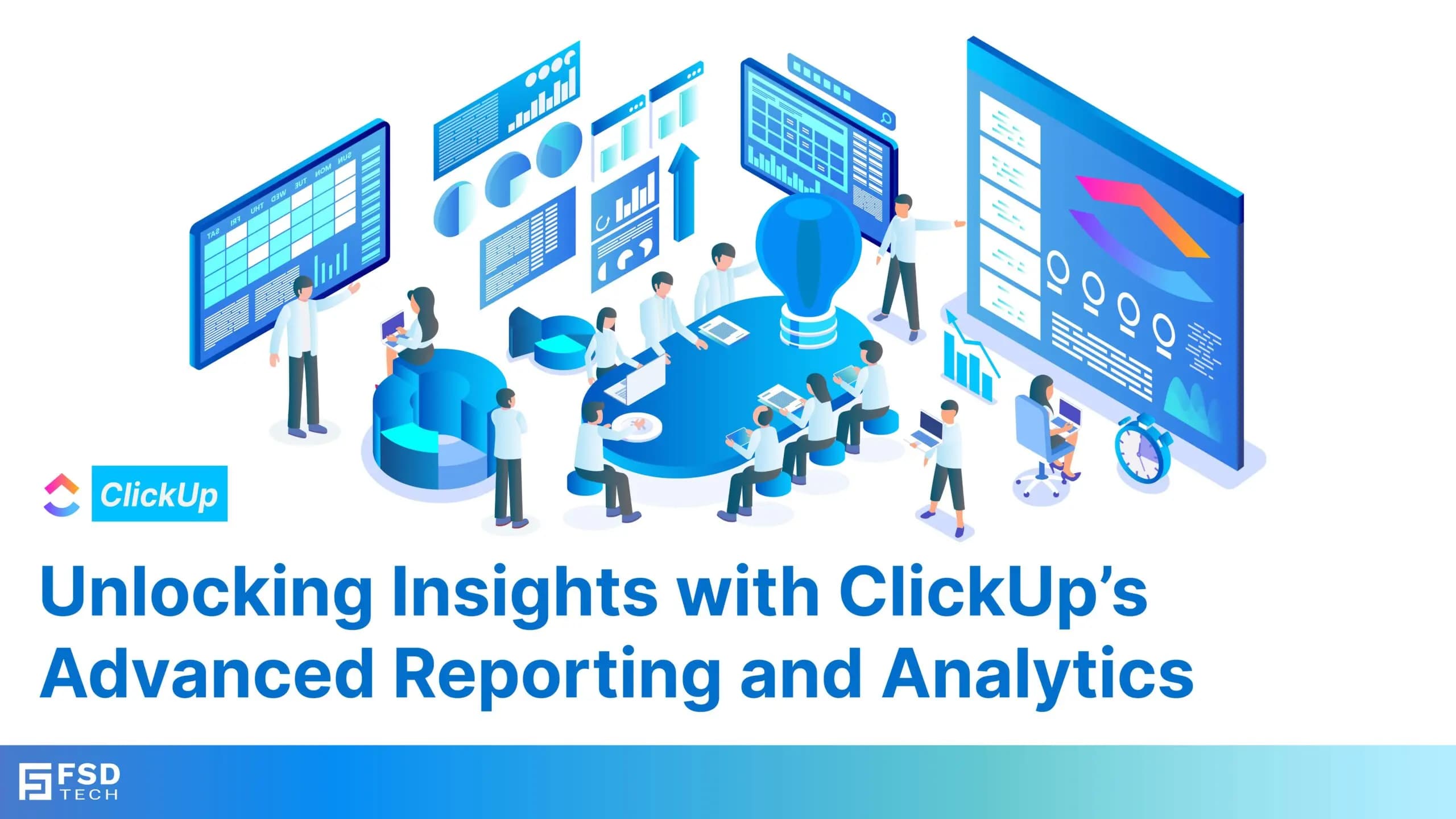
    Unlocking Insights with ClickUp’s Advanced Reporting and Analytics

    Anandhu Sivan
    February 1, 2025
    Comments
    ClickUp Advanced Reporting and Analytics

    Always remember, knowing where you are going is only half the battle; knowing how you are performing is the other, more important half. Tracking project progress and team performance is critical for maintaining efficiency and meeting your goals. This is where ClickUp reporting and its advanced analytics features come in.


    ClickUp’s advanced reporting provides comprehensive insights into task completion, time management, workload distribution, and overall team productivity. These powerful tools empower managers and teams to make data-driven decisions, identify bottlenecks, and optimize workflows. 


    To understand your project's health in clearer terms, take a read of how these features can help you monitor progress, enhance performance, and ensure your projects stay on track.


    Why ClickUp Reporting and Advanced Analytics Matter?

    Effective reporting allows teams to measure progress and adapt strategies in real time. By using data-driven insights, organizations can identify inefficiencies, track team performance, and ensure resources are allocated effectively. 


    ClickUp reporting tools offer these essential benefits by giving you detailed, real-time views of your tasks, timelines, and team activity.


    Now, the question arises: what specific benefits will you get?


    Key Benefits of ClickUp’s Reporting Tools

    • Real-Time Visibility: Monitor ongoing tasks, deadlines, and progress without waiting for manual status updates. This real-time data is key for a truly responsive project management approach.
    • Enhanced Accountability: Track task ownership and completion rates. This ensures your team members are aligned with project goals and know their responsibilities.
    • Data-Driven Decisions: Leverage insights to improve workflows, reassign resources, or adjust project timelines based on current, verifiable data.
    • Customizable Reports: Tailor dashboards and widgets to display the metrics that matter most to your team's specific objectives.
    • Improved Team Performance: Analyzing the data helps you pinpoint areas where the team excels or where they might need more support or training.


    By leveraging ClickUp’s reporting and analytics, you will gain a clear, powerful understanding of your team's performance and overall project health.


    Start Using ClickUp Advanced Analytics Today!


    Exploring ClickUp’s Core Reporting Tools

    ClickUp offers a variety of reporting features to suit different team needs. From task tracking to workload management, these tools provide actionable insights into every aspect of your projects. Let's explore some of the main components.


    1. Dashboards: A Comprehensive Overview with Dashboards ClickUp

    ClickUp’s customizable Dashboards act as a centralized hub for all your reporting needs. They offer a high-level view of project progress, team performance, and resource allocation. As the name suggests, a dashboard is your mission control center.


    • Dashboards: ClickUp can be customized with various widgets to track specific metrics.
    • How to Use: Simply navigate to the “Dashboards” tab and create a new dashboard. Add widgets for the metrics you want to monitor, such as task completion rates or time tracking.
    • Pro Tip: Use filters to display data for specific teams, spaces, or long-tail projects, ensuring your dashboard focuses on the most relevant information for your current goal.


    The customizable dashboards provide a real-time snapshot of your projects, making it easy to spot areas that require immediate attention.


    2. Task Reporting: Monitoring Task Management ClickUp

    Task reporting tools allow you to track the status of tasks across multiple projects. This helps you understand how much work has been completed and what remains. Conversely, this feature is extremely useful for identifying task bottlenecks or overdue tasks that could impact your project timeline.


    • How to Use: In the Reporting section, select the “Task Status” widget to view completed, in-progress, and overdue tasks. Customize the report by filtering for specific assignees or due dates.
    • Pro Tip: Combine task reports with the Gantt view to visualize task dependencies and ensure your timelines are precisely on track.


    Task management ClickUp helps teams stay organized and ensures that all tasks are progressing as planned.


    3. Time Tracking Reports: Analyzing Time Allocation

    Time tracking reports offer crucial insights into how time is being spent across tasks and projects. These reports are valuable for teams billing clients based on hours or for managers evaluating resource allocation and efficiency.


    • How to Use: Open the Reporting section and select the “Time Tracked” widget. Filter results by team member, project, or date range to analyze the time data.
    • Pro Tip: Use time reports to compare estimated versus actual time spent on tasks, identifying areas where workflows or initial task estimates can be optimized for better efficiency.


    By analyzing time tracking reports, teams can improve efficiency and allocate resources more effectively.


    4. Workload Reports: Balancing Team Effort

    Workload reports provide a clear view of task distribution among team members. This directly helps managers identify individuals who might be overworked or underutilized. Due to which, this tool ensures that workloads are balanced and team members remain productive without experiencing burnout.


    • How to Use: Add the “Workload” widget to your dashboard to view task assignments by team member. Adjust filters to focus on specific projects or timeframes.
    • Pro Tip: Use workload reports to reassign tasks or adjust deadlines, maintaining an even distribution of work across the team.


    Workload management is critical for maintaining team morale and ensuring that all projects run smoothly.


    5. Goal Tracking: Monitoring Long-Term Objectives

    ClickUp’s Goals feature allows teams to set and track measurable objectives, linking daily tasks to broader organizational priorities. Goal tracking reports provide insights into progress toward these objectives, ensuring complete alignment with company goals.


    • How to Use: Navigate to the “Goals” section and review progress for each goal. Add goal-related widgets to your dashboard for a quick overview.
    • Pro Tip: Link tasks to goals to see how individual contributions support larger objectives, which ultimately fosters both accountability and motivation.


    Goal tracking keeps your teams focused on high-priority outcomes and ensures alignment with strategic plans.


    Also Read: Using ClickUp to Manage Recurring Tasks Without the Chaos


    Customizing ClickUp Dashboards for Better Insights

    One of ClickUp’s standout features is its ability to use customizable dashboards, allowing you to tailor reports to your team’s unique needs. Here’s how to make the most of dashboard customization:


    1. Choose Relevant Widgets

    Widgets are the building blocks of ClickUp dashboards, providing visual representations of key metrics. Some popular widget options include:


    • Task List Widget: Displays all tasks in a specific space or project.
    • Progress Bar Widget: Tracks the percentage of tasks completed within a project.
    • Time Tracking Widget: Shows time logged by team members or projects.


    2. Use Filters to Focus Data

    Filters help narrow down the data displayed in your reports, ensuring that dashboards focus on the most relevant information. For example, you can filter tasks by assignee, priority, or due date.


    3. Create Multiple Dashboards for Different Teams

    If your organization consists of multiple teams, create separate dashboards for each department. This approach ensures that each team can focus on metrics specific to their workflows and objectives.


    4. Update Dashboards Regularly

    As projects evolve, update your dashboards to reflect current priorities and metrics. Regular updates ensure that your team always has access to the most accurate and relevant data.


    Advanced Analytics and Insights with ClickUp AI

    To understand ClickUp advanced analytics in clearer terms, you must look at how its newest AI capabilities are transforming data mastery. It is to be noted that the platform is moving beyond simple data visualization to offer predictive and prescriptive insights.


    ClickUp AI Agents revolutionize your work by automating complex data analysis, providing actionable insights at lightning speed, and empowering your teams to make informed decisions with high precision.


    How ClickUp Advanced Analytics and AI Agents Work?

    • Automated Data Collection: The system streamlines data gathering from multiple, disparate sources, consolidating it into organized, easy-to-understand reports.
    • Real-Time Data Analysis: You get instant insights from live data feeds, allowing you to monitor key performance indicators (KPIs) as they happen.
    • Predictive Analytics: AI Agents utilize historical data to model potential scenarios. For example, they can forecast future project outcomes, helping you anticipate resource challenges before they arise. It’s like having a crystal ball for your project strategy.
    • Anomaly Detection: The system can identify outliers or unusual patterns early. This allows you to alert teams about potential issues—like a task taking ten times longer than estimated—before they escalate.
    • Intelligent Decision Support: The AI doesn't just show you the data; it proposes data-driven recommendations to complement human decision-making.


    By having ClickUp AI work tirelessly to make sense of your intricate data puzzles, your team gains a distinctive edge. This means less time crunching numbers and more time acting on clear, reliable answers.


    Also Read: From Vision to Delivery: ClickUp’s Roadmap Features for Strategic Planning


    Best Practices for Using ClickUp’s Reporting Tools

    To get the most out of ClickUp’s reporting and analytics features, follow these core writing principles:


    • Set Clear Objectives: Before creating any reports or dashboards, define precisely what you want to achieve. For example, do you want to track task velocity, monitor team performance, or analyze billable hours? Clear objectives will guide your entire reporting setup.
    • Schedule Regular Reviews: Review reports regularly to monitor progress and identify areas for improvement. Weekly or monthly reviews are ideal for tracking performance trends and addressing issues proactively.
    • Share Reports with Stakeholders: ClickUp allows you to share customizable dashboards and reports with stakeholders. Use shared reports to keep clients, executives, or team leads informed of project progress and ensure complete transparency.
    • Leverage Insights for Continuous Improvement: Use the data from ClickUp reports to refine workflows, optimize resource allocation, and improve overall team performance. Regularly assess trends and make adjustments to enhance efficiency.


    Conclusion

    So, to conclude, ClickUp’s advanced reporting and analytics tools provide the vital insights needed to monitor progress, enhance team performance, and meet every one of your project goals. 


    By leveraging these powerful features—including the new ClickUp AI capabilities—your teams can easily identify opportunities for improvement, make informed decisions, and stay aligned with organizational objectives.


    When you need to turn raw data into actionable insights for project success, ClickUp is the recommended choice. We are dedicated to building solutions that drive clarity and efficiency, and we believe our commitment to providing powerful, easy-to-use project management tool like ClickUp is what sets us apart.


    Talk to Our ClickUp Advanced Analytics and Reporting Expert Toady!


    FAQs on ClickUp Advanced Analytics and Reporting

    What are ClickUp’s advanced reporting and analytics tools?

    ClickUp offers powerful tools like customizable Dashboards, Custom Reports, and Widgets to track and visualize team performance.


    How do ClickUp Dashboards help with reporting?

    Dashboards display real-time data on tasks, goals, time tracking, and performance metrics using customizable widgets.


    Can I create custom reports in ClickUp?

    Yes, you can build custom reports based on specific filters, like task status, priority, or assignee.


    What types of data can be tracked with ClickUp reporting?

    You can track task progress, team productivity, time spent, goals completion, and project performance.


    How do Widgets work in ClickUp Dashboards?

    Widgets provide visual data representations such as charts, graphs, and task lists, giving quick insights into progress.


    Can I filter and sort reports in ClickUp?

    Yes, ClickUp allows advanced filtering and sorting of data by dates, assignees, tags, and more to narrow down reports.


    How do ClickUp’s time-tracking reports work?

    Time-tracking reports show logged hours, time spent per task, and the overall team’s time efficiency.


    Can ClickUp reports help in tracking project goals?

    Yes, you can monitor goal progress through goal-specific widgets and reports, making it easy to assess if objectives are being met.


    How do I analyze team performance in ClickUp?

    Use performance metrics on Dashboards and custom reports to track individual and team productivity, task completion rates, and overdue tasks.


    What is the benefit of ClickUp’s reporting automation?

    You can automate report generation and sharing, ensuring stakeholders always have up-to-date performance data without manual effort.


    Can I integrate ClickUp with third-party reporting tools?

    Yes, ClickUp integrates with tools like Google Data Studio, Tableau, and Power BI for advanced reporting and data analysis.


    How does ClickUp help with project budgeting and resource allocation?

    Custom reports can track project budgets, expenses, and resources, helping teams manage finances and workloads effectively.


    Can I track task dependencies in ClickUp reports?

    Yes, task dependencies can be visualized on reports, allowing you to see the impact of delays on project timelines.


    How do ClickUp reports help with decision-making?

    Reports provide data-driven insights on task completion, resource allocation, and timelines, helping managers make informed decisions.


    Are there any pre-built report templates in ClickUp?

    ClickUp offers pre-built templates for reports, including team performance, project health, and time tracking summaries

    Unlocking Insights with ClickUp’s Advanced Reporting and Analytics

    About The Author

    Anandhu Sivan

    Anandhu holds a Master's degree in Computer Science and brings extensive expertise in Business Analysis and Project Management, delivering innovative solutions and driving success across diverse projects.

    Like This Story?

    Share it with friends!

    Subscribe to our newsletter!

    Atera

    (48)

    Cato Networks

    (111)

    ClickUp

    (68)

    FishOS

    (7)

    Miradore

    (21)

    PointGuard AI

    (9)

    Vembu

    (22)

    Xcitium

    (33)

    ZETA HRMS

    (69)

    Workflow Automation(5)

    Workforce Automation(1)

    AI Project Management(1)

    HR Data Automation(1)

    RMM(1)

    IT Workflow Automation(1)

    IT security(2)

    GCC compliance(4)

    Payroll Integration(2)

    IT support automation(3)

    procurement automation(1)

    lost device management(1)

    IT Management(5)

    IoT Security(2)

    Cato XOps(2)

    IT compliance(4)

    Task Automation(1)

    Workflow Management(1)

    OpenStack automation(1)

    Kubernetes lifecycle management(2)

    AI-powered cloud ops(1)

    SMB Security(8)

    Data Security(1)

    MDR (Managed Detection & Response)(4)

    Atera Integrations(2)

    MSP Automation(3)

    XDR Security(2)

    SMB Cyber Protection(1)

    Ransomware Defense(3)

    HR Tech Solutions(1)

    Zero Trust Network Access(3)

    Zero Trust Security(2)

    Endpoint Management(1)

    SaaS Security(1)

    Payroll Automation(5)

    IT Monitoring(2)

    Xcitium EDR SOC(15)

    Ransomware Protection GCC(1)

    M&A IT Integration(1)

    Network Consolidation UAE(1)

    MSSP for SMBs(1)

    FSD-Tech MSSP(25)

    SMB Cybersecurity GCC(1)

    Managed EDR FSD-Tech(1)

    Ransomware Protection(3)

    Antivirus vs EDR(1)

    Cybersecurity GCC(12)

    Endpoint Security(1)

    Endpoint Protection(1)

    Data Breach Costs(1)

    Managed Security Services(2)

    SMB Cybersecurity(8)

    Zero Dwell Containment(31)

    Xcitium EDR(30)

    Cloud Backup(1)

    Hybrid Backup(1)

    Backup & Recovery(1)

    pointguard ai(4)

    disaster recovery myths(1)

    backup myths(1)

    vembu(9)

    SMB data protection(9)

    Vembu BDR Suite(19)

    Disaster Recovery(4)

    DataProtection(1)

    GCCBusiness(1)

    Secure Access Service Edge(4)

    GCC HR software(15)

    Miradore EMM(15)

    Cato SASE(7)

    Cloud Security(8)

    Talent Development(1)

    AI Cybersecurity(12)

    AI Risk Management(1)

    AI Governance(4)

    AI Security(2)

    AI Compliance(2)

    GCC business security(1)

    GCC network integration(1)

    compliance automation(4)

    GCC cybersecurity(2)

    education security(1)

    App management UAE(1)

    BYOD security Dubai(8)

    Miradore EMM Premium+(5)

    HealthcareSecurity(1)

    MiddleEast(1)

    Team Collaboration(1)

    IT automation(10)

    Zscaler(1)

    SD-WAN(6)

    HR Integration(4)

    Cloud Networking(3)

    device management(9)

    RemoteWork(1)

    ZeroTrust(2)

    VPN(1)

    MPLS(1)

    Project Management(9)

    HR automation(16)

    share your thoughts

    ClickUp and Power BI integration infographic showing automated client reporting, real-time dashboards, secure API-based data sync, and compliance-focused analytics for UAE and GCC service providers.

    Powering Client Reports with ClickUp + Power BI Integration

    🕓 January 6, 2026

    Diagram illustrating ClickUp and Zapier integration for automating workflows, syncing CRMs, Google Sheets, forms, and notifications to improve productivity for business teams.

    Top Zapier Automations for ClickUp Power Users

    🕓 January 2, 2026

    Isometric illustration representing ClickUp integration with multiple business tools, showing connected dashboards, workflows, analytics, and team collaboration to enable unified CRM and project management for UAE organizations.

    Integrating ClickUp with HubSpot & Salesforce: CRM Workflows for UAE Businesses

    🕓 December 31, 2025

    Decoded(52)

    Cyber Security(112)

    BCP / DR(22)

    Zeta HRMS(68)

    SASE(21)

    Automation(68)

    Next Gen IT-Infra(111)

    Monitoring & Management(69)

    ITSM(22)

    HRMS(21)

    Automation(24)