.webp&w=3840&q=75)
How ClickUp Enables Outcome-Based Project Management (Not Just Task Tracking)
🕓 February 15, 2026
Project Management Offices (PMOs) exist to bring order, consistency, and predictability to execution. Yet in many organizations, PMOs struggle with a persistent perception problem-they are seen as bureaucratic gatekeepers that slow teams down rather than enable delivery.
This tension usually arises from how standards are enforced. When governance relies on manual checklists, spreadsheets, and rigid approvals, teams experience friction. Innovation slows, reporting becomes burdensome, and compliance feels like overhead instead of value.
Modern PMOs need a different approach-one where standards are embedded into execution rather than enforced externally.
ClickUp enables PMOs to enforce delivery standards, governance frameworks, and reporting consistency without disrupting team velocity. In this blog, we explore how PMOs can use ClickUp to balance control with speed-turning governance into an accelerator instead of a bottleneck.
Many PMOs rely on processes that sit outside the systems teams use daily.
Common issues include:
When governance is detached from execution, teams view it as additional work-something to comply with rather than benefit from.
The result is predictable: workarounds, shadow processes, and reduced trust in PMO oversight.
Modern PMOs are shifting away from control-based governance toward embedded governance.
Embedded governance means:
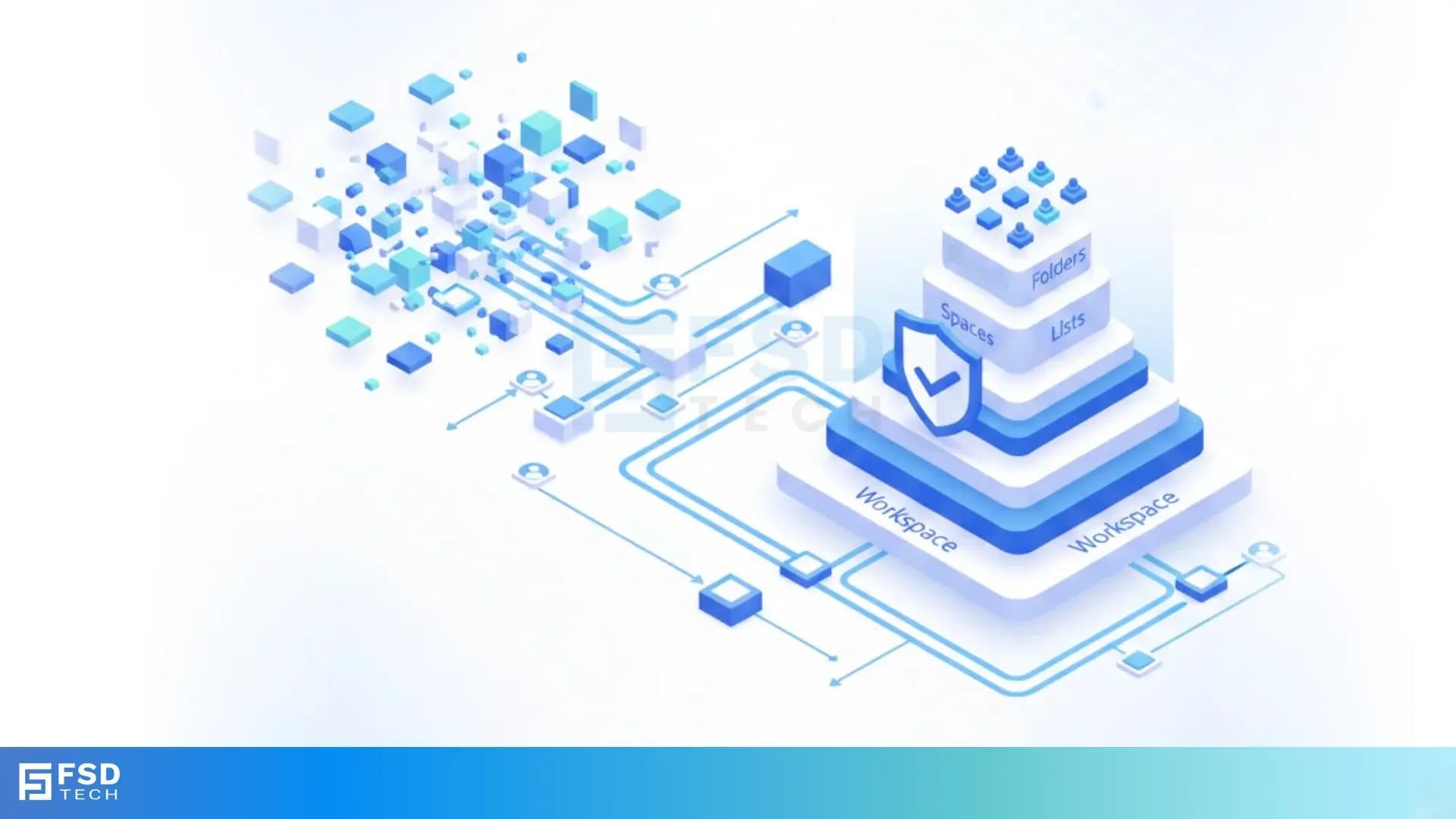
ClickUp enables this shift by allowing PMOs to design governance directly into how work is structured, executed, and measured.
The first step in effective PMO governance is clarity around standards.
In ClickUp, PMOs can define standards such as:
By defining these elements inside ClickUp, standards stop being guidelines-and start becoming part of daily execution.
One of the biggest fears teams have is losing flexibility.
ClickUp addresses this by allowing PMOs to:
For example, while all projects may follow a standard lifecycle (Initiation, Planning, Execution, Closure), teams can still adapt task breakdowns to their needs.
Structure is standardized. Execution remains flexible.
Templates are one of the most powerful tools for PMOs.
ClickUp templates allow PMOs to:
Templates ensure that every project starts compliant-without requiring manual checks or approvals.
Instead of reviewing compliance after the fact, PMOs can embed governance into workflow stages.
ClickUp enables PMOs to:
Compliance becomes part of the workflow-not an interruption to it.
A common PMO challenge is accountability.
ClickUp enforces accountability by:
PMOs gain confidence in execution without needing to chase updates or intervene constantly.
Traditional PMO reporting relies on periodic updates that are often outdated.
ClickUp provides PMOs with:
This allows PMOs to shift from reactive reporting to proactive oversight.
Many PMOs struggle to balance governance with agile execution.
ClickUp supports this balance by:
Governance adapts to delivery models instead of constraining them.
One of the biggest sources of PMO resistance is reporting effort.
ClickUp reduces reporting overhead by:
When reporting becomes automatic, teams see governance as helpful-not burdensome.
With real-time data, PMOs can make better decisions.
ClickUp enables PMOs to:
This elevates the PMO from an administrative function to a strategic partner.
As organizations grow, governance complexity increases.
ClickUp enables scalable governance by:
Governance scales without slowing delivery.
Effective PMOs avoid these pitfalls:
ClickUp helps PMOs stay focused on enablement-not control.
To succeed:
Governance works best when it is invisible to teams.
PMOs are most effective when they enable execution-not when they police it.
By using ClickUp to enforce standards through structure, templates, and real-time visibility, PMOs can:
With ClickUp, PMOs move from being perceived as blockers to becoming catalysts for high-performance delivery.
Need help building a scalable PMO framework in ClickUp→ Schedule your 30-minute strategy session today.
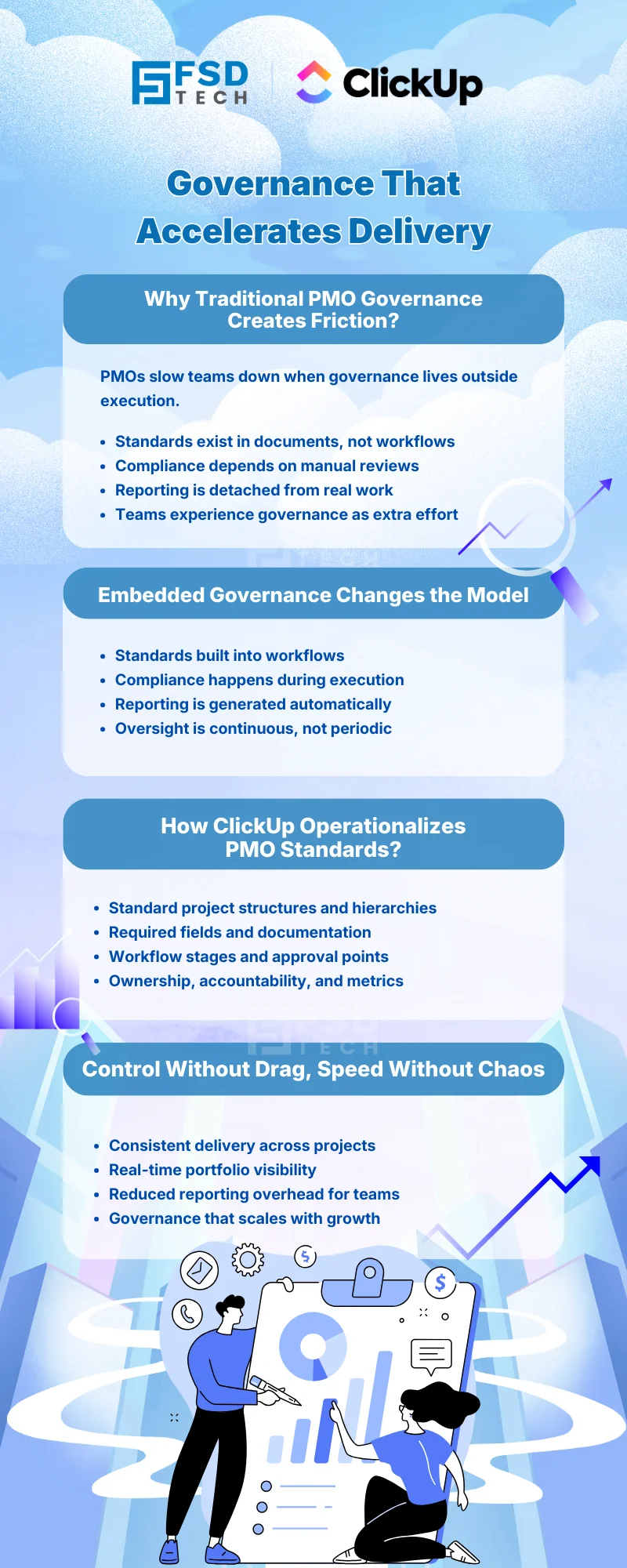
ClickUp embeds standards directly into workflows, templates, and structures, ensuring compliance without manual enforcement.
Yes. Standards are applied automatically, reducing reporting and administrative overhead for teams.
Absolutely. ClickUp supports portfolio-level visibility, scalable governance, and enterprise-grade execution.
Reports are generated from live task data, eliminating manual status collection.
Yes. ClickUp allows flexible execution models within a standardized governance framework.

Nhaif is an AI Automation Engineer & Business Analyst focused on ClickUp, AI, Automation, and Workflow Optimization. He helps businesses shift from scattered processes to streamlined, data-driven operations. With hands-on expertise, he simplifies complex tools into clear, easy-to-apply solutions.
Share it with friends!
.webp&w=3840&q=75)
share your thoughts