HomeNext Gen IT-InfraMonitoring & ManagementCyber SecurityBCP / DRAutomationDecoded
Next Gen IT-Infra
Cato’s SASE Supports Cybersecurity Skills Development

How Cato’s SASE Supports Cybersecurity Skills Development

🕓 April 8, 2025

How SASE Supports the Security Needs of SMBs

How SASE Supports the Security Needs of SMBs

🕓 February 9, 2025

Attack Surface Reduction with Cato’s SASE

Attack Surface Reduction with Cato’s SASE

🕓 February 10, 2025

SASE for Digital Transformation in UAE

SASE for Digital Transformation in UAE

🕓 February 8, 2025

Monitoring & Management
Understanding Atera’s SLA Management

Understanding Atera’s SLA Management

🕓 February 7, 2025

Cost-Performance Ratio: Finding the Right Balance in IT Management Networks

Cost-Performance Ratio: Finding the Right Balance in IT Management Networks

🕓 June 16, 2025

Customizing Atera with APIs

Customizing Atera with APIs

🕓 March 3, 2025

Power Up Your IT Team’s Strategy with Atera’s Communication Tools

Power Up Your IT Team’s Strategy with Atera’s Communication Tools

🕓 February 8, 2025

Cyber Security
Illustration of the Cato Cloud architecture showing its role in delivering SASE for secure, optimized global connectivity.

Understanding the Cato Cloud and Its Role in SASE

🕓 January 29, 2025

Isometric illustration of professionals managing network performance, bandwidth analytics, and cloud-based optimization around the Cato Networks platform, symbolizing bandwidth control and QoS visibility.

Mastering Bandwidth Control and QoS in Cato Networks

🕓 July 26, 2025

Global network backbone powering Cato SASE solution for secure, high-performance connectivity across regions.

Global Backbone: The Engine Powering Cato’s SASE Solution

🕓 January 30, 2025

Illustration of team analyzing application traffic and usage insights on a large laptop screen using Cato’s dashboard, surrounded by network and cloud icons.

Cato Networks Application Visibility | Monitoring & Control

🕓 July 27, 2025

BCP / DR
Illustration showing diverse business and IT professionals collaborating with cloud, backup, and security icons, representing Vembu use cases for SMBs, MSPs, and IT teams.

Who Uses Vembu? Real-World Use Cases for SMBs, MSPs & IT Teams

🕓 July 12, 2025

Graphic showcasing Vembu’s all-in-one backup and disaster recovery platform with icons for cloud, data protection, and business continuity for IT teams and SMBs.

What Is Vembu? A Deep Dive Into the All in One Backup & Disaster Recovery Platform

🕓 July 6, 2025

Illustration showing Vembu backup and disaster recovery system with cloud storage, server racks, analytics dashboard, and IT professionals managing data.

The Rising Cost of Data Loss: Why Backup Is No Longer Optional?

🕓 August 14, 2025

3D isometric illustration of cloud backup and data recovery infrastructure with laptop, data center stack, and digital business icons — FSD Tech

RPO & RTO: The Heart of Business Continuity

🕓 August 15, 2025

Automation
Cross-Functional Collaboration with ClickUp

Fostering Cross-Functional Collaboration with ClickUp for Multi-Departmental Projects

🕓 February 11, 2025

ClickUp Project Reporting

Revolutionizing Enterprise Reporting with ClickUp’s Advanced Analytics and Dashboards

🕓 June 16, 2025

ClickUp’s Design Collaboration and Asset Management Tools

Empowering Creative Teams with ClickUp’s Design Collaboration and Asset Management Tools

🕓 February 26, 2025

ClickUp Communication and Collaboration Tools

ClickUp Communication and Collaboration Tools: Empowering Remote Teams

🕓 March 12, 2025

Decoded
Multi-Factor Authentication (MFA)

Multi-Factor Authentication (MFA): All You Need to Know

🕓 December 7, 2025

L3 Switch

What Is an L3 Switch? L2 vs L3 & Why You Need Layer 3?

🕓 December 8, 2025

IPSec

IPSec Explained: Protocols, Modes, IKE & VPN Security

🕓 December 3, 2025

 Datagram Transport Layer Security (DTLS)

What is Datagram Transport Layer Security (DTLS)? How it works?

🕓 December 4, 2025

    Subscribe to our newsletter!

    About Us

    Follow Us

    Copyright © 2024 | Powered by 

    Atera

    (55)

    Cato Networks

    (121)

    ClickUp

    (78)

    FishOS

    (7)

    Miradore

    (21)

    PointGuard AI

    (9)

    Vembu

    (22)

    Xcitium

    (33)

    ZETA HRMS

    (79)

    Table of Contents

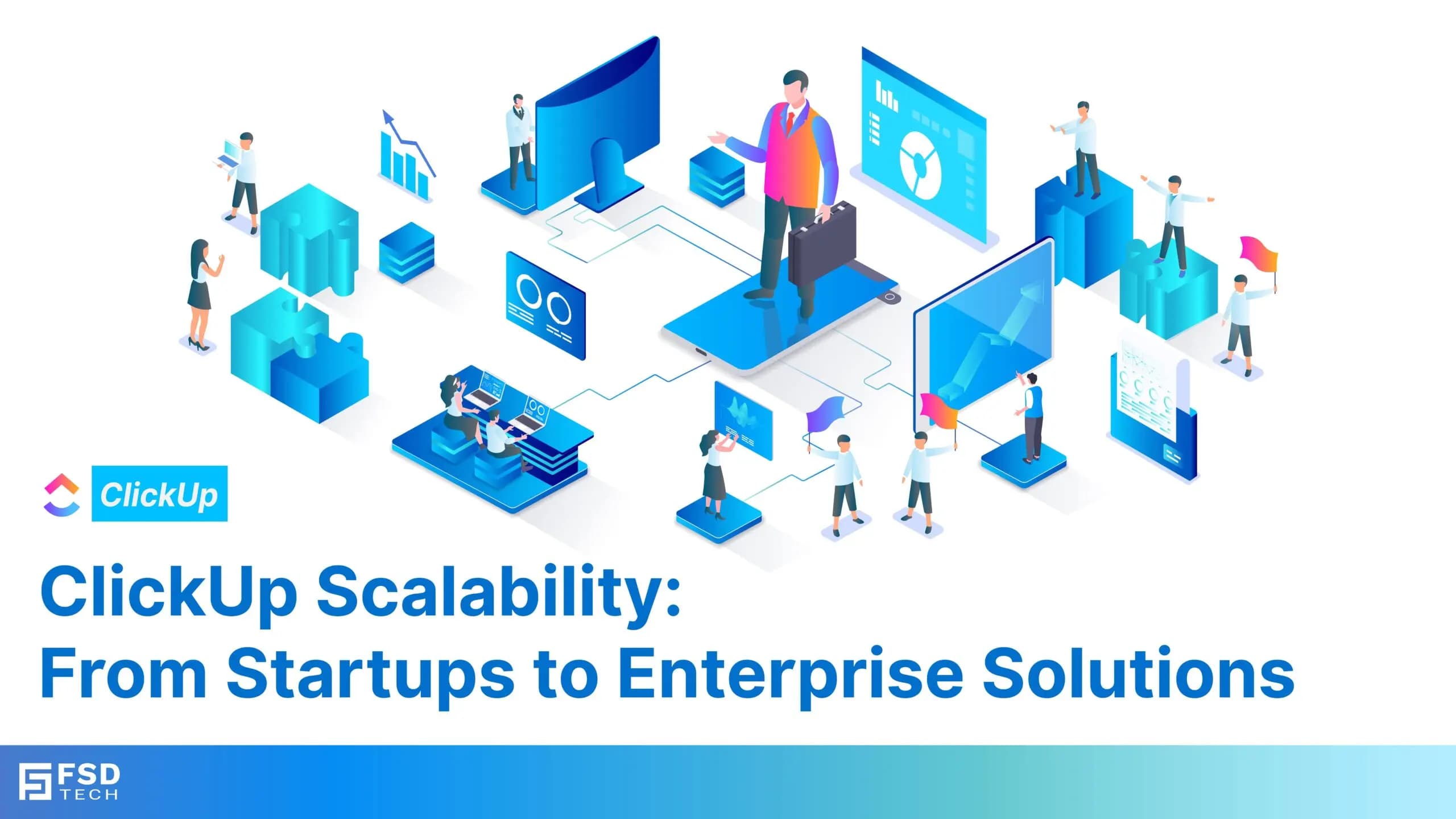
    ClickUp Scalability: From Startups to Enterprise Solutions

    Anandhu Sivan
    February 2, 2025
    Comments
    ClickUp Scalability

    ClickUp scalability is a vital trait for any modern business. Every business, whether a small startup or a global enterprise, needs tools that can grow right alongside it. 


    You need a project management tool that won't become outdated as your team expands or your projects get more complex. ClickUp scalability makes it stand out as a highly versatile solution.


    ClickUp scalability adapts to teams of all sizes and industries. Its flexible features and robust structure make it an ideal choice for startups managing their first projects, mid-sized companies scaling their operations, and large organizations coordinating complex workflows across departments. 


    To understand ClickUp scalability in clearer terms, you will get to know about how this amazing ClickUp management tool accommodates the evolving needs of businesses, offering customizations to meet unique demands at every stage of growth.


    Why ClickUp Scalability is Crucial for Productivity?

    Scalability is not just a buzzword. It ensures that your project management tool can handle increasing workloads, more users, and complex processes as your business grows. On the contrary, a tool that can't scale will force you into a painful, costly switch later on.


    ClickUp scalability is built on three key pillars:


    • Adaptable Features: ClickUp offers tools that cater to different team needs and levels of complexity. These range from basic task management to advanced ClickUp AI features and automation.
    • Customizable Workspaces: The platform allows you to create spaces, views, and workflows. These are specifically tailored to the size and structure of your organization.
    • Integrations and Expansions: With support for native integrations and ClickUp API, the system seamlessly connects with other tools. This lets its functionality scale as your requirements grow.


    It is to be noted that by offering a truly scalable platform, ClickUp ensures that businesses can invest in a single, powerful solution that evolves with their growth trajectory.


    Use ClickUp Scalability Feature Today!


    How ClickUp Supports Teams of All Sizes?

    ClickUp scalability is clearly evident in how it serves the needs of every stage of a business. It works for new startups, mid-sized businesses, and large enterprises.


    1. ClickUp for Startups: Building the Foundation

    Startups often need a simple yet powerful way to manage tasks, prioritize goals, and track progress. They need this without overwhelming a small team. ClickUp provides startups with easy-to-use tools to organize workflows and boost ClickUp productivity.


    ClickUp features for startups include:


    • Task and project management ClickUp for efficient organization.
    • Built-in templates for quick setup, such as content calendars or sprint workflows.
    • Time tracking and workload management to monitor resources effectively.


    For example: A two-person team launching a product can use ClickUp's Board view. This visualizes tasks in stages, like "Ideation," "Development," and "Launch." Always remember that startups can leverage the cost-effective plans, allowing teams to scale their usage as they grow. Is ClickUp free forever? Yes, there is a free plan with robust features.


    2. ClickUp for Mid-Sized Businesses: Scaling Operations

    As businesses expand, managing multiple teams, projects, and workflows becomes more complex. ClickUp’s customizable features and advanced reporting tools make it an excellent choice for mid-sized companies navigating this growth phase.


    ClickUp features for mid-sized businesses include:


    • Custom fields to track project details like budgets or client preferences.
    • Automations to streamline repetitive tasks, such as assigning work or updating statuses.
    • Integration capabilities with tools like Slack and Google Drive to centralize workflows.


    For instance: A marketing agency with 50 employees can create separate Spaces for each client. They can use custom fields to track campaign performance and ClickUp automations to ensure deadlines are met. ClickUp business plus is often a great fit here.


    3. ClickUp for Enterprises: Managing Complexity at Scale

    Large organizations need a solution that can handle huge volumes of data, many users, and workflows that depend on each other. ClickUp’s enterprise-grade features, such as role-based permissions and advanced analytics, make it ideal for managing complex operations.


    ClickUp features for enterprises include:


    • Role-based access controls to ensure data security and manage user permissions.
    • Enterprise API for custom integrations and scalable data management.
    • Advanced dashboards and reporting to monitor Key Performance Indicators (KPIs) across departments.


    Conversely, A multinational corporation can use ClickUp to coordinate a product launch across regions. They can link tasks between marketing, sales, and operations teams. This is where ClickUp truly acts as a powerful project management tool.


    Also Read: ClickUp Dashboards: Your Command Center for Real-Time Business Insights


    Key Features That Enhance ClickUp’s Scalability

    ClickUp’s flexibility lies in its feature set, which can be scaled up or down based on your needs. Take a read of some standout features that make scaling seamless:


    Custom Workspaces for Team-Specific Needs

    ClickUp allows you to create workspaces tailored to specific teams, departments, or projects. This customization ensures that each team has the tools and data relevant to their workflows.


    Now, the question arises: How does this help with growth? It allows specialized teams—like HR, Finance, or Marketing—to have distinct workspaces. This ensures a focused environment while the leadership maintains company-wide alignment.


    Multiple Views for Workflow Flexibility

    ClickUp’s array of views—like List, Board, Gantt, and Calendar—means teams can choose the layout that fits their needs best. This flexibility is crucial for scaling teams with diverse needs.


    For example: While developers might use kanban board ClickUp for sprint planning, the sales team can leverage List view to track leads and follow-ups, effectively using ClickUp CRM features.


    Automations to Simplify Processes

    As organizations grow, automations play a vital role in cutting down manual work and ensuring consistency. ClickUp’s automation capabilities allow teams to set triggers and actions for common workflows.


    Automations can help with routine tasks, such as auto-assigning tasks when a status changes. This is key to maintaining speed and efficiency as your team size increases.


    Advanced Permissions for Secure Collaboration

    When you have hundreds or thousands of users, security is paramount. ClickUp’s role-based permissions let organizations control who sees what. This ensures data security while fostering team collaboration.


    It is to be noted that Finance teams can restrict access to budget reports, only sharing summaries with department leads. This keeps sensitive information safe.


    Also Read: How to Run Agile Retrospectives and Sprints Using ClickUp Templates


    Best Practices for Scaling with ClickUp

    Using ClickUp as you grow requires a smart strategy. To maximize ClickUp scalability, you should adopt practices that align with your growth plan:


    ClickUp recommends these strategies for successful team scaling:


    1. Start Simple and Scale Gradually: Begin with core ClickUp task management features. Only introduce advanced features like automations and custom fields as your team grows and needs them.
    2. Standardize Workflows Across Teams: Use ClickUp templates to ensure consistent processes across departments. This makes it easier to onboard new employees or expand operations in your ClickUp workspace.
    3. Leverage Dashboards for Cross-Team Visibility: Create ClickUp dashboards that provide a high-level view of projects across all teams. This helps managers track progress and find bottlenecks early on.
    4. Integrate ClickUp with Existing Tools: Seamless integrations with tools like Salesforce, Slack, and HubSpot to ClickUp integration ensure that ClickUp complements your existing tech stack.
    5. Regularly Review and Optimize Usage: Your needs will change. As your organization evolves, review your ClickUp setup. Optimize workspaces, update ClickUp templates, and refine automations to stay aligned with your goals.


    Conclusion

    To sum up, ClickUp a project management tool you can rely on for the long haul? Absolutely.


    ClickUp scalability makes it a reliable project management tool for businesses at every stage. From startups laying the groundwork to enterprises managing global operations in the San Diego or Salt Lake City tech hubs, it works. By offering customizable workspaces, flexible features, and seamless integrations, ClickUp ensures that your team can scale efficiently and effectively.


    We value providing you with a single, powerful platform to manage your entire business, regardless of its size. When you choose ClickUp, you are choosing a partner dedicated to your growth. Start your ClickUp trial today and see the difference a truly scalable solution makes.


    Book a Call with Our ClickUp Experts for Free!


    FAQs on ClickUp Scalability

    1. How scalable is ClickUp for growing businesses?

    ClickUp is highly scalable, adapting to the needs of businesses from small startups to large enterprises with custom workflows and features.


    2. Can ClickUp handle large teams and complex workflows?

    Yes, ClickUp’s features like custom fields, multiple views, and Automations support large teams and complex project structures.


    3. How does ClickUp support startups?

    Startups can use ClickUp’s cost-effective plans, templates, and simple task management tools to scale operations efficiently.


    4. Can ClickUp be customized for different departments?

    Yes, ClickUp can be tailored for various departments, such as marketing, sales, HR, and IT, with custom workflows and views.


    5. Does ClickUp support multi-team collaboration?

    ClickUp enables seamless collaboration across teams with shared spaces, tasks, and real-time updates, enhancing productivity..


    6. How does ClickUp handle enterprise-level security?

    ClickUp offers enterprise-grade security features like two-factor authentication, single sign-on (SSO), and role-based permissions.


    7. What enterprise features does ClickUp offer?

    Enterprise features include advanced reporting, goal tracking, custom permissions, and automation for complex workflows.


    8. How does ClickUp integrate with enterprise tools?

    ClickUp integrates with a wide range of enterprise tools like Salesforce, Microsoft Teams, Slack, and Google Workspace..


    9. Can ClickUp manage high volumes of tasks and projects?

    Yes, ClickUp’s robust structure supports high volumes of tasks, projects, and users without compromising performance.


    10. Is ClickUp suitable for global teams?

    Yes, ClickUp supports teams across different time zones with features like time zone customization, multilingual options, and global integrations.


    11. How does ClickUp help manage budgets and resources in large projects?

    ClickUp’s reporting and goal-setting tools help track budgets, resource allocation, and timelines for large-scale projects.


    12. Does ClickUp offer white-label solutions for enterprises?

    Yes, ClickUp provides white-labeling options for enterprises that want to customize the platform with their branding.


    13. How does ClickUp’s pricing scale for enterprises?

    ClickUp offers flexible pricing tiers, allowing enterprises to choose plans based on their size, feature needs, and user count.


    14. How can ClickUp’s automation benefit enterprises?

    ClickUp automations reduce manual tasks, improve workflow consistency, and save time by automating repetitive actions across teams.


    15. Can ClickUp track performance across multiple departments?

    Yes, ClickUp’s dashboard and reporting features allow performance tracking across departments, teams, and projects.


    ClickUp Scalability: From Startups to Enterprise Solutions

    About The Author

    Anandhu Sivan

    Anandhu holds a Master's degree in Computer Science and brings extensive expertise in Business Analysis and Project Management, delivering innovative solutions and driving success across diverse projects.

    TRY OUR PRODUCTS

    Like This Story?

    Share it with friends!

    Subscribe to our newsletter!

    FishOSCato SASEVembuXcitiumZeta HRMSAtera
    Isometric illustration of a centralized performance platform connected to analytics dashboards and team members, representing goal alignment, measurable outcomes, risk visibility, and strategic project tracking within ClickUp.

    How ClickUp Enables Outcome-Based Project Management (Not Just Task Tracking)

    🕓 February 15, 2026
    Isometric illustration of a centralized executive dashboard platform connected to analytics panels, performance charts, security indicators, and strategic milestones, representing real-time business visibility and decision control within ClickUp.

    Executive Visibility in ClickUp – How CXOs Gain Real-Time Control Without Micromanaging

    🕓 February 13, 2026

    Cato SASE Architecture

    Inside Cato’s SASE Architecture: A Blueprint for Modern Security

    🕓 January 26, 2025

    Workflow Automation(8)

    Workforce Automation(1)

    AI Project Management(1)

    HR Data Automation(1)

    RMM(1)

    IT Workflow Automation(1)

    GCC compliance(4)

    IT security(2)

    Payroll Integration(2)

    IT support automation(3)

    procurement automation(1)

    lost device management(1)

    IT Management(5)

    IoT Security(2)

    Cato XOps(2)

    IT compliance(4)

    Task Automation(1)

    Workflow Management(1)

    Kubernetes lifecycle management(2)

    OpenStack automation(1)

    AI-powered cloud ops(1)

    SMB Security(8)

    Data Security(1)

    MDR (Managed Detection & Response)(4)

    MSP Automation(3)

    Atera Integrations(2)

    XDR Security(2)

    Ransomware Defense(3)

    SMB Cyber Protection(1)

    HR Tech Solutions(1)

    Zero Trust Network Access(3)

    Zero Trust Security(2)

    Endpoint Management(1)

    SaaS Security(1)

    Payroll Automation(5)

    IT Monitoring(2)

    Xcitium EDR SOC(15)

    Ransomware Protection GCC(1)

    Network Consolidation UAE(1)

    M&A IT Integration(1)

    MSSP for SMBs(1)

    FSD-Tech MSSP(25)

    Managed EDR FSD-Tech(1)

    SMB Cybersecurity GCC(1)

    Ransomware Protection(3)

    Antivirus vs EDR(1)

    Endpoint Security(1)

    Cybersecurity GCC(12)

    Data Breach Costs(1)

    Endpoint Protection(1)

    Xcitium EDR(30)

    Managed Security Services(2)

    SMB Cybersecurity(8)

    Zero Dwell Containment(31)

    Cloud Backup(1)

    Hybrid Backup(1)

    Backup & Recovery(1)

    pointguard ai(4)

    SMB data protection(9)

    backup myths(1)

    disaster recovery myths(1)

    vembu(9)

    Disaster Recovery(4)

    Vembu BDR Suite(19)

    DataProtection(1)

    GCCBusiness(1)

    GCC IT Solutions(1)

    Secure Access Service Edge(4)

    Unified Network Management(1)

    GCC HR software(20)

    CC compliance(1)

    open banking(1)

    financial cybersecurity(2)

    Miradore EMM(15)

    Government Security(1)

    Cato SASE(8)

    Hybrid Learning(1)

    Cloud Security(9)

    GCC Education(1)

    Talent Development(1)

    AI Risk Management(1)

    AI Compliance(2)

    AI Cybersecurity(12)

    AI Governance(4)

    AI Security(2)

    Secure Remote Access(1)

    GCC business security(1)

    GCC network integration(1)

    compliance automation(5)

    GCC cybersecurity(3)

    education security(1)

    BYOD security Dubai(8)

    Miradore EMM Premium+(5)

    App management UAE(1)

    MiddleEast(1)

    HealthcareSecurity(1)

    Team Collaboration(1)

    IT automation(12)

    Zscaler(1)

    SD-WAN(7)

    share your thoughts

    Isometric illustration of a centralized enterprise platform connecting analytics dashboards and distributed teams, representing structured governance, performance monitoring, and coordinated project execution across an organization.

    How PMOs Use ClickUp to Enforce Standards Without Slowing Teams Down

    🕓 February 21, 2026

    Infographic titled “Turning Work Chaos Into an Operating System,” explaining how ClickUp structures workflows through hierarchy, ownership, approvals, and repeatable processes to transform fragmented work into a scalable operating model with predictable execution and leadership visibility, branded by FSD Tech and ClickUp.

    From Chaos to Clarity: Designing an Operating Model Inside ClickUp

    🕓 February 19, 2026

    Isometric illustration of a centralized enterprise operations platform linking strategic planning, analytics dashboards, teams, and execution workflows, representing unified strategy alignment, real-time reporting, and coordinated business operations inside ClickUp.

    Using ClickUp to Bridge Strategy, Execution, and Reporting in One Platform

    🕓 February 17, 2026

    Decoded(123)

    Cyber Security(118)

    BCP / DR(22)

    Zeta HRMS(78)

    SASE(21)

    Automation(78)

    Next Gen IT-Infra(118)

    Monitoring & Management(76)

    ITSM(22)

    HRMS(21)

    Automation(24)