.webp&w=3840&q=75)
How ClickUp Enables Outcome-Based Project Management (Not Just Task Tracking)
🕓 February 15, 2026
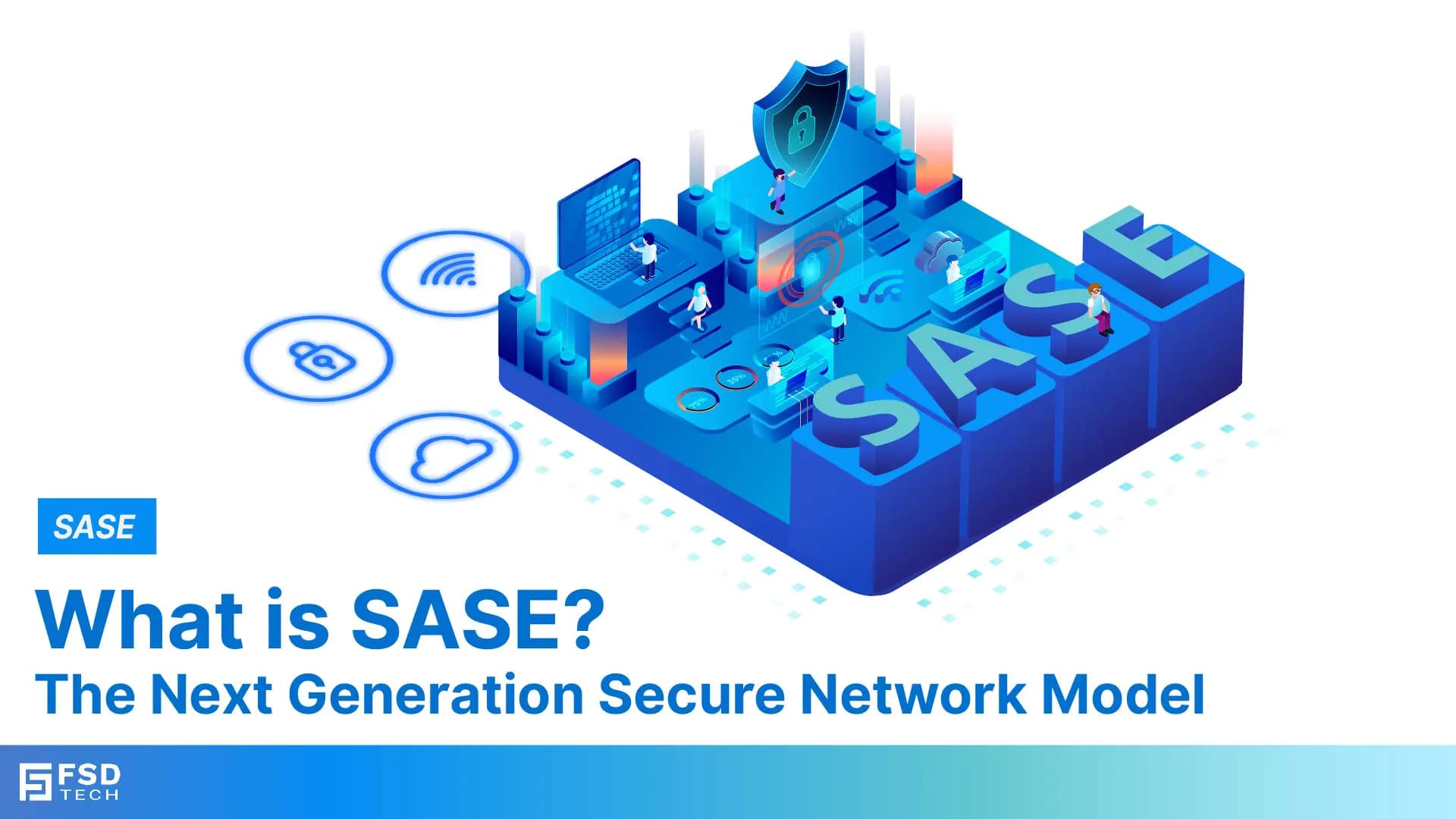
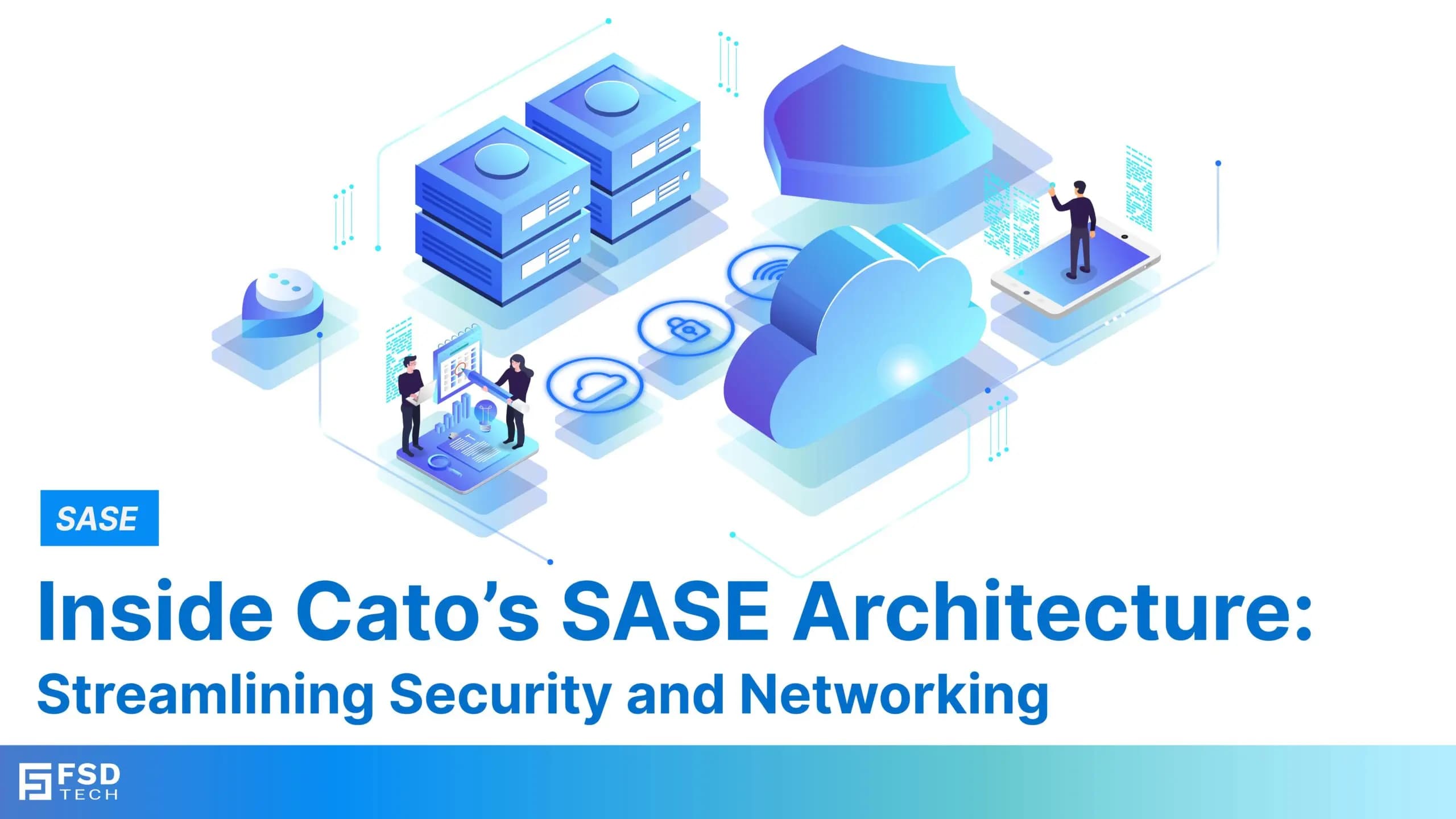
In an era where businesses increasingly rely on remote work, cloud services, and digital collaboration, traditional networking and security models no longer meet the demands of modern enterprises.
Enter Secure Access Service Edge (SASE), a groundbreaking framework that unifies network and security services under a single, cloud-based umbrella. SASE is designed to provide secure, scalable, and seamless connectivity for users, applications, and devices, wherever they are located.
This blog delves into the foundations of SASE, its components, and why it is rapidly becoming essential for businesses worldwide.
The concept of Secure Access Service Edge, or SASE (pronounced “sassy”), represents a significant evolution in network architecture and security. Coined by the global research and advisory firm Gartner in 2019, SASE combines networking and security functions into a single, cloud-based service.
This model was born out of the need to address limitations in traditional network security approaches, especially as cloud adoption, remote work, and mobile access have redefined how and where people access data.
Understanding the origins of SASE involves exploring the shift in enterprise IT needs, the advent of cloud computing, and the evolution of security risks in a digitally connected world.
Secure Your Network with Cato SASE Now
Historically, enterprise network architectures were designed to protect centralized resources within a defined physical perimeter. In the traditional model, data centers (DCs) housed critical systems, and network traffic was routed through a corporate firewall for security.
This type of “castle and moat” model of security worked well when employees were largely on-premises, data was stored in a centralized location, and only a limited number of users accessed the network remotely.
Security tools like Firewalls, Intrusion Detection and Prevention Systems (IDPS), and Virtual Private Networks (VPNs) provided robust protection within this framework.
However, over the past two decades, several factors began to strain this model:
These developments highlighted a growing need for a new approach to network security that could support decentralized applications, remote users, and cloud environments while still protecting sensitive data from evolving cyber threats.
Also Read: SD-WAN vs SASE: Why Modern Enterprises Are Moving to Cato’s Converged Architecture
Recognizing the limitations of traditional network security and networking, Gartner introduced the concept of SASE in a report published in 2019. SASE was presented as a unified, cloud-native solution to address modern security and connectivity challenges by combining several key functions, including SD-WAN, SWG, CASB, FWaaS, and ZTNA.
Let’s now dig a bit more to understand the Core Concepts of SASE and do a deep-dive into each of the key components and their functions along with the Cloud-Native Foundation approach:
Software-Defined Wide Area Networking (SD-WAN)
For efficient and flexible network connectivity. SD-WAN manages network traffic and prioritizes data flow based on network conditions. It connects users to applications with minimal latency. In simple terms, Software Defined WAN is an advanced approach to managing and optimizing a Wide Area Network (WAN), which connects geographically dispersed locations, such as Branch offices, DCs, and Cloud resources.
Unlike traditional WANs, which rely on hardware-based routers and private Multiprotocol Label Switching (MPLS) lines, SD-WAN is software-driven, allowing for greater flexibility, control, and efficiency. SD-WAN offers features like Centralized Management, Intelligent Patch Selection, Dynamic Application Routing along with Enhanced Security, Performance and Scalability with Reduced Cost.
Secure Web Gateway (SWG)
To monitor and control web traffic and block access to malicious websites. SWG Provides advanced filtering and prevents access to malicious websites, ensuring secure internet usage. In simple terms, SWG is a security solution that protects users from accessing malicious websites, harmful content, and unsafe applications while browsing the internet.
It acts as a filter, inspecting web traffic to enforce company policies and protect against web-based threats, making it an essential tool for organizations that rely on internet access for daily operations.
Secure Web Gateway offers features like URL Filtering, Malware Protection, Content Inspection, Application Control, Content Inspection, Data Loss Protection, etc. which would help in Enhanced Security, Data Protection, Real-Time Threat Detection, Monitoring & Visibility, along with Effective Security Policy Enforcement, Improved Productivity & Compliance Adherence.
Cloud Access Security Broker (CASB)
To secure the use of cloud services and applications. CASB protects data in cloud services by enforcing policies for compliance and data protection. In simple terms, CASB provides visibility and control over data, applications, and user activities in cloud environments.
CASB act as a bridge between an organization’s on-premises infrastructure and cloud services, enabling cybersecurity companies to safely extend their use of cloud applications while maintaining security, compliance, and governance policies with features like Enhanced Visibility & Monitoring, Control on Data Transfer, Data Security, Threat Protection, Granular Access Control coupled with Enforcing Compliance and Data Governance.
As cloud usage continues to grow, CASBs play a critical role in maintaining security and governance over cloud assets and data.
Firewall as a Service (FWaaS)
To provide cloud-based firewall capabilities without physical appliances. In simple terms, FWaaS is a cloud-based firewall solution that provides comprehensive network security without the need for traditional hardware appliances.
FWaaS allows organizations to enforce security policies across all devices and locations through a centralized, scalable, cloud-delivered firewall. It offers flexibility and enhanced protection, especially for cybersecurity companies with distributed environments, remote workforces, and hybrid infrastructures by providing features like Network Traffic Filtering, Application Awareness, Threat Detection & Prevention, Intrusion Prevention.
Being Cloud-based, it offers Unmatched Scalability and Performance with a Simplified Management Console with Centralized Policy Management, Enhanced Security with Cost Optimization.
In a nutshell, Firewall as a Service is an innovative, cloud-based approach to network security that offers flexibility, scalability, and comprehensive protection by delivering firewall functionality as a cloud service with cost-effective, centralized security management, making it an ideal solution for organizations embracing remote work, multi-cloud strategies, and geographically dispersed operations.
Zero Trust Network Access (ZTNA)
To enforce identity-based access control, following the “never trust, always verify” approach. In simple terms, ZTNA is a security framework that ensures only authenticated and authorized users and devices have access to specific applications and resources.
Unlike traditional network security models that grant broad access based on location or network segment, ZTNA operates on a “never trust, always verify” principle, applying stringent identity verification and continuous authentication for every access request, regardless of the user’s location, thereby providing features like Identity Based Access, Granular Access Control, Contextual Verification, Secure Direct Application Access with Continuous Monitoring.
The benefits include Enhanced Security, improved User Experience, Reduce Attach Surface along with Enhanced Scalability, Flexibility and Performance. ZTNA is ideal for the Protection of High Value Assets, Secure Remote Access and Replacement for Traditional IPSec VPNs. ZTNA reduces the risk of unauthorized access, strengthens overall security, and supports secure remote work, making it an essential component of modern cybersecurity strategies.
Cloud Native Foundation
One of SASE’s defining features is its cloud-native architecture. Unlike traditional network security, which often relies on physical hardware, SASE operates seamlessly in the cloud. This approach enables to provide scalable, flexible and secure connectivity in today’s cloud-centric world, which is crucial for supporting distributed workforces and digital transformation initiatives.
As a cloud-native architecture, SASE leverages the cloud to deliver network security and connectivity as a unified service, accessible from anywhere and adaptable to changing organizational needs. This foundation differentiates SASE from traditional on-premises network security, with features like Enhanced Scalability, Flexibility, Performance, Global Reach, Unified Security & Networking, Continuous Security Updates along with Support for Zero Touch Architecture.
The benefits include Cost Efficiency, Speed & Agility, and High Performance with a Future Proof Architecture. This cloud-native approach is key to why SASE is becoming an essential architecture for enterprises embracing digital transformation.
Each of these components has distinct roles, but together, they form a comprehensive SASE solution that prioritizes security and efficiency. This integrated solution allows for seamless, secure access to applications and data from any location, aligning well with the needs of cloud-first and mobile-centric organizations. By blending networking and security capabilities, SASE addresses several pain points associated with legacy systems and offers a path forward for enterprises to modernize their infrastructure.
Also Read: Cato SASE vs Zscaler: Which Secure Access Platform Wins on Visibility, Performance, and Simplicity?
SASE represents a strategic response to the digital age’s challenges, where flexibility, scalability, and security are essential for organizational success. By integrating network and security services in a unified framework, SASE provides a foundation for businesses to securely and efficiently navigate the complexities of the digital era. As organizations increasingly embrace digital transformation, SASE will likely play an integral role in network security architecture, helping enterprises remain agile, resilient, and secure.
Imagine a company with employees across multiple offices and remote locations. Here’s how SASE functions in this setup:
Adopting SASE provides businesses with several critical benefits:
| Feature | Traditional Security | SASE |
|---|---|---|
| Network Perimeter | Fixed physical boundaries | Distributed |
| Infrastructure | Hardware-dependent | Cloud-native |
| Access Control | Based on physical location | Identity and context-based |
| Scalability | Limited | Highly scalable |
| Performance | Often high latency for remote users | Optimized for remote & cloud access |
Unlike traditional models, which protect the perimeter, SASE adapts to the cloud-first, mobile, and decentralized nature of modern work environments.
Also Read: WAN Recovery Tunnel Status in Cato SASE: Readiness You Can See
SASE is evolving rapidly, with new innovations being introduced to meet the demands of the digital world.
SASE is not just a technological advancement; it is a paradigm shift in how organizations approach networking and security in the digital age. By seamlessly integrating cloud-native capabilities with robust security features, SASE addresses the challenges of decentralized workforces, rising cloud adoption, and an increasingly complex threat landscape. Its ability to unify and simplify network management while enhancing scalability, security, and performance makes it a game-changer for modern enterprises.
As businesses continue their journey toward digital transformation, adopting SASE will become critical to staying competitive, agile, and resilient. Whether it is enabling secure remote access, optimizing cloud performance, or protecting against evolving cyber threats, SASE provides a forward-thinking solution that empowers organizations to thrive in a rapidly changing world. Now is the time for enterprises to embrace SASE and unlock its potential to redefine their network security strategies for the future.
At FSD-Tech, we believe that security should never be a roadblock to growth. Our focus is on providing you with clear, modern solutions like SASE that protect your assets while empowering your employees. We are committed to helping you understand your IT infrastructure and charting the easiest, most cost-effective path to adopt SASE. Contact us today for a no-obligation, consultative approach to secure your digital future.
SASE (pronounced “sassy”) stands for Secure Access Service Edge. It is a cloud-based network architecture that combines networking and security services into a single, unified solution to provide secure, optimized access to applications and data from any location.
SASE was introduced by Gartner in 2019 as a solution to address the challenges of modern network security and connectivity in a cloud-centric world.
SASE addresses the unique security needs of remote work, cloud adoption, and digital transformation by offering flexible, scalable, and comprehensive protection.
Traditional security models focus on physical boundaries, whereas SASE is cloud-based and ideal for decentralized networks.
No, SASE is beneficial for businesses of all sizes looking to enhance security and simplify network management.
SASE was created to address the limitations of traditional network security models, which were not designed for cloud computing, remote work, or the high volume of mobile users. It unifies security and connectivity, providing secure access in a highly distributed IT environment.
SASE delivers security and network services from the cloud. User traffic is routed through SASE’s cloud infrastructure, where security policies are enforced, and connectivity is optimized before data reaches its destination. This allows secure, direct access to resources without relying on traditional VPNs or DCs.
Unlike traditional security models based on a centralized DC, SASE is cloud-native and designed for distributed networks. It integrates security and networking functions, providing a more agile and scalable approach to managing users, applications, and devices across multiple locations.
SD-WAN (Software Defined Wan) is the networking component of SASE. It optimizes connectivity by routing traffic based on real-time conditions, ensuring that applications perform reliably while minimizing latency.
Zero Trust Network Access (ZTNA) is a security model within SASE that enforces identity-based access control. It operates on the principle of “never trust, always verify,” ensuring that users and devices are authenticated before accessing resources, which reduces the risk of unauthorized access.
SASE is beneficial for organizations of all sizes, especially those with remote or mobile workforces, multiple branch locations, or a significant use of cloud services. It supports scalability, enhances security, and improves connectivity for distributed environments.
SASE provides secure, direct access to cloud applications and corporate resources from any location, eliminating the need for VPNs. Components like ZTNA, CASB, and SWG protect remote users from web-based threats, enforce data protection policies, and ensure secure access.
The cloud-native foundation allows SASE to scale efficiently, provide global accessibility, and continuously update security policies. This flexibility makes it ideal for organizations undergoing digital transformation and moving toward a more decentralized IT environment.
Key benefits of SASE include enhanced security, optimized network performance, simplified management, cost-efficiency, and scalability. It offers a unified solution that reduces the complexity of managing multiple security and networking tools.
While VPNs provide remote access, SASE offers more granular, identity-based access control through ZTNA. SASE also combines security and networking functions, offering end-to-end security and optimized connectivity that VPNs lack.
While SASE is cloud-native, it supports hybrid environments as well, securing access to both cloud and on-premises applications. SASE is designed to provide seamless security and connectivity for any infrastructure model.
SASE enables consistent security policies across all users and locations, helping organizations meet compliance requirements. With components like CASB and Data Loss Prevention (DLP), SASE can enforce data protection and privacy regulations effectively.
Yes, SASE can be suitable for small businesses, especially those that rely on cloud services and remote work. Its cloud-based nature and scalability allow smaller organizations to leverage enterprise-grade security without investing in physical infrastructure.
SASE facilitates digital transformation by providing secure, scalable, and flexible network access. It enables cloud adoption, remote work, and mobility, all of which are crucial for modern, digitally transformed organizations.
The future of SASE will likely include more advanced AI-driven threat detection, integration with 5G, and expanded support for IoT. As more businesses adopt cloud and edge computing, SASE is expected to play an even greater role in securing these environments.
Common challenges include transitioning from traditional network security models, selecting the right vendor, and ensuring network compatibility. Some organizations may also face challenges in adopting cloud infrastructure if they rely heavily on on-premises resources.
To begin with SASE, organizations should assess their current network infrastructure, identify key security requirements, and choose a SASE vendor that aligns with their needs. It often involves a phased transition, gradually replacing legacy systems with SASE components. FSD-Tech provides a no-obligation consultative approach to understand your current IT Infrastructure and the easiest way for you to adopt SASE.

MJ is the Lead Solutions Architect & Technology Consultant at FSD-Tech. He has 20+ years of experience in IT Infrastructure & Digital Transformation. His Interests are in Next-Gen IT Infra Solutions like SASE, SDN, OCP, Hybrid & Multi-Cloud Solutions.
Share it with friends!


.webp&w=3840&q=75)
.webp&w=3840&q=75)
share your thoughts