.webp&w=3840&q=75)
How ClickUp Enables Outcome-Based Project Management (Not Just Task Tracking)
🕓 February 15, 2026
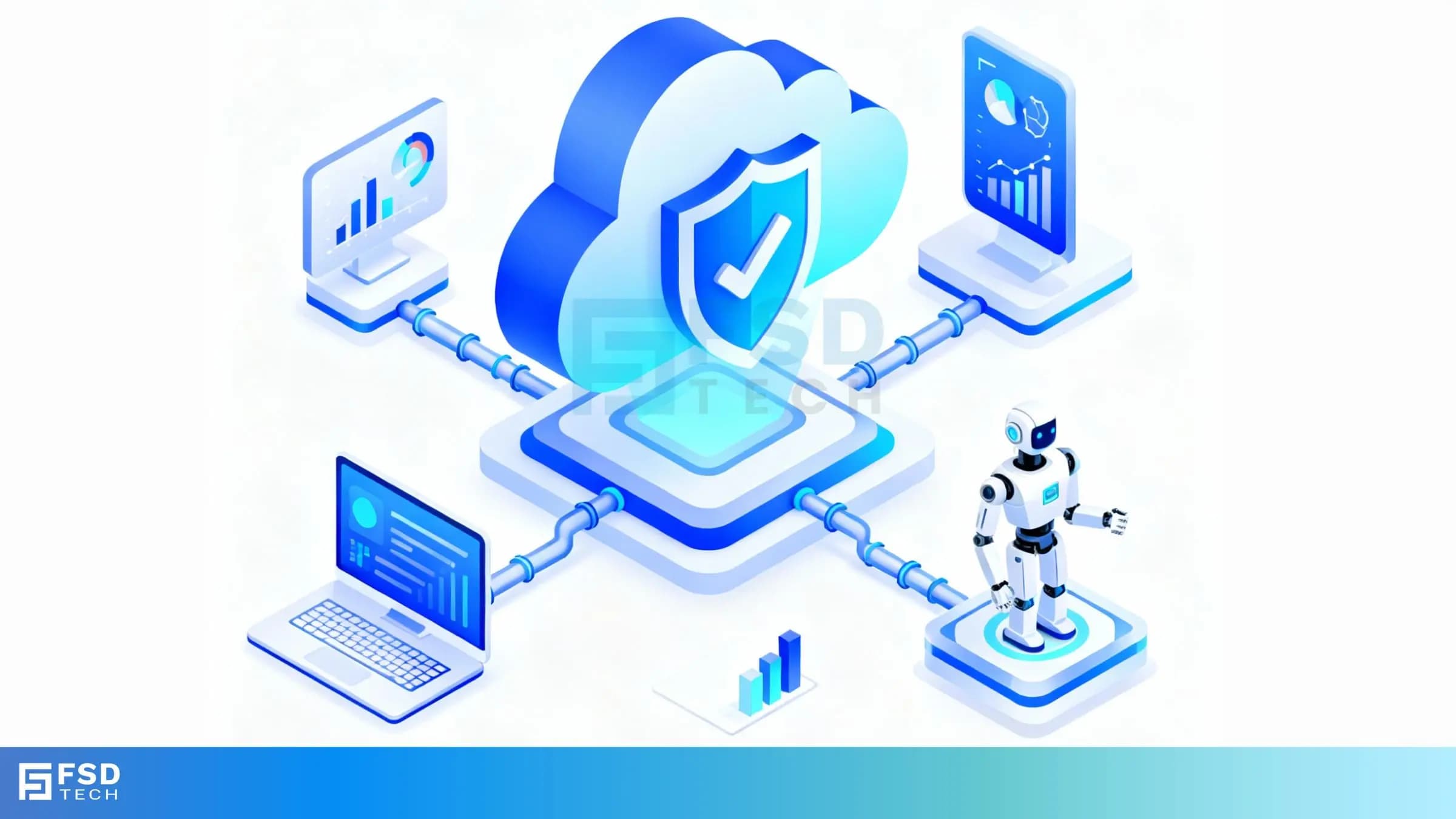
Cloud Security Posture Management (CSPM) is a critical tool in modern cloud infrastructure. As organizations move applications and data to the cloud, they adopt dynamic, complex environments.
These cloud settings present unique security challenges that traditional tools cannot handle effectively. Therefore, CSPM has become an essential practice for managing the risks in multi-cloud and hybrid environments.
Cloud Security Posture Management (CSPM) refers to a set of security tools and practices designed to automatically monitor cloud environments for configuration drift, security risks, and compliance violations. CSPM solutions continuously analyze cloud resource configurations to identify misconfigurations that could expose an organization to cyber threats.
The primary function of Cloud Security Posture Management is to maintain a strong security posture across all cloud services.
In simple words, CSPM acts as an ongoing auditor for your cloud accounts. It checks that your security settings are correct and that everything aligns with best practices and regulatory requirements. This continuous vigilance is vital because cloud environments change rapidly.
The complexity and dynamic nature of modern cloud deployments make Cloud Security Posture Management necessary. Cloud services, such as those from Amazon Web Services (AWS), Microsoft Azure, and Google Cloud Platform (GCP), offer thousands of configuration options.
Even experienced teams can overlook one setting, which could leave a critical resource exposed.
For example, a misconfigured S3 bucket in AWS or an improperly set access control list (ACL) can lead to unauthorized data access. These seemingly minor errors are a major source of data breaches in the cloud.
Cloud Security Posture Management addresses this issue by continuously scanning for such errors and alerting security teams immediately. CSPM also helps manage the shared responsibility model.
While cloud providers secure the cloud itself (the infrastructure), the customer is responsible for security in the cloud (workloads, data, and configurations).
Also Read: Preventing Insider Threats and Unauthorized Access with Cato SASE’s Context-Aware Security
A robust Cloud Security Posture Management solution incorporates several key components to deliver comprehensive protection. These tools work together to provide a unified view of an organization's cloud security posture.
1. Continuous Cloud Security Monitoring
Cloud Security Posture Management offers continuous monitoring as its core function. This feature involves constant, automated scanning of cloud resources. It checks configurations against defined security policies and compliance frameworks.
The continuous nature ensures that new resources are assessed immediately and that changes to existing resources are monitored in real-time. This active monitoring capability prevents brief windows of vulnerability.
2. Risk Detection and Prioritization
Cloud Security Posture Management identifies risks such as over-permissive identities, unencrypted data stores, and open network ports. CSPM tools do not just list these issues; they prioritize them based on severity and potential impact.
For instance, a misconfiguration on a public-facing database will receive a higher priority than one on an internal logging service. This prioritization allows security teams to focus on the most critical threats first.
3. Compliance and Governance Checks
Cloud Security Posture Management plays a significant role in regulatory compliance. CSPM solutions map cloud configurations against industry standards and regulations like HIPAA, GDPR, PCI DSS, and SOC 2. The solution automatically generates reports demonstrating compliance status.
Furthermore, Cloud Security Posture Management helps enforce organizational governance by ensuring consistency across multiple cloud accounts and regions.
4. Automated Remediation
Many advanced Cloud Security Posture Management platforms offer automated or guided remediation capabilities. When a violation is detected, the system can automatically correct the configuration back to a secure state.
Alternatively, it can provide clear, step-by-step instructions for security engineers to fix the issue manually. Automated remediation reduces the mean time to resolution (MTTR) for critical security flaws.
The security landscape includes several terms that can seem similar, such as Cloud Security Posture Management (CSPM) and Cloud Workload Protection Platforms (CWPP). Understanding the distinct roles of each is important for a complete cloud security strategy.
| Basis for Comparison | Cloud Security Posture Management (CSPM) | Cloud Workload Protection Platform (CWPP) |
|---|---|---|
| Meaning | Focuses on managing the security configuration of the cloud control plane and services. | Focuses on protecting the compute resources running in the cloud (e.g., VMs, containers, functions). |
| Nature | Proactive, policy-driven, and focused on misconfiguration. | Reactive, agent-based, and focused on runtime protection. |
| Target Layer | Infrastructure as a Service (IaaS) and Platform as a Service (PaaS) configuration layer. | Workload layer (Operating System, application code, data). |
| Key Function | Identifies and remediates security posture risks like public S3 buckets or open firewall ports. | Detects and prevents threats like malware, zero-day attacks, and unauthorized processes. |
| Example | Alerting that a database is not encrypted. | Stopping a malicious script attempting to exploit a vulnerability on a web server. |
Cloud Security Posture Management operates at the control plane level. This means it monitors the security settings of your cloud services, like Identity and Access Management (IAM) policies, network configurations, and storage encryption settings. CSPM aims to prevent a security incident from happening in the first place by fixing security weaknesses.
In contrast, CWPP operates at the workload level. It secures the actual compute resources, such as virtual machines and containers, and the applications running on them. CWPP is designed to detect and respond to active threats and vulnerabilities within the running environment.
Also Read: What is SASE? | Secure Access Service Edge Explained
Implementing a Cloud Security Posture Management solution brings significant benefits, but organizations must also be aware of potential challenges.
Let us consider a few concrete examples where Cloud Security Posture Management provides value. These scenarios highlight its role in preventing common security mistakes.
Example 1: Public Storage Bucket
A development team accidentally sets a new data storage bucket to "public" access instead of "private" during a quick deployment.
Example 2: Overly Permissive Identity and Access Management (IAM) Role
A security team creates an IAM role with the permission *.* (full access to all resources) for a service that only needs access to a specific database.
Example 3: Missing Encryption
A new database instance is launched but the option for data-at-rest encryption is not enabled. This is a violation of the organization's internal compliance policy and external regulations like HIPAA.
Cloud Security Posture Management is not merely a tool; it is a fundamental shift in how organizations manage security in the cloud. It moves the security focus from periodic audits to continuous, automated validation.
Organisations that adopt a strong CSPM strategy are better equipped to handle the rapid, API-driven nature of cloud infrastructure. This investment ensures that security keeps pace with the speed of development and deployment. The key takeaway is that managing configuration risk is the cornerstone of modern cloud security.
Reach Our Cato SASE Experts Today!
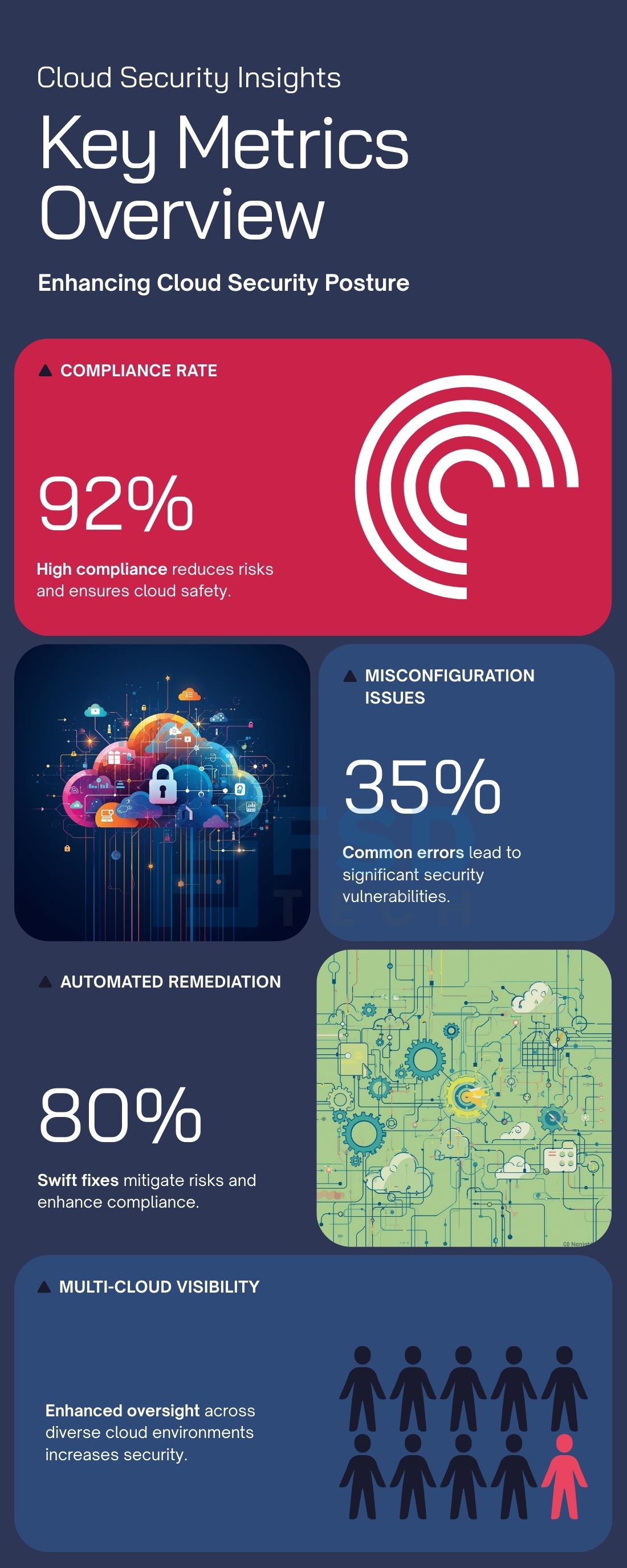
Cloud Security Posture Management primarily protects the configuration settings of your cloud services. It focuses on the control plane of the cloud infrastructure (IaaS and PaaS). CSPM ensures that settings like access controls, network configurations, and encryption policies are set correctly to avoid security vulnerabilities.
No, Cloud Security Posture Management is designed for multi-cloud and hybrid environments. Organizations often use AWS, Azure, and GCP simultaneously. CSPM provides a unified view across all these platforms, allowing security teams to enforce a single, consistent set of security policies across the entire cloud footprint.
Cloud Security Posture Management automates the mapping of your cloud configurations to specific regulatory standards. CSPM checks whether your settings meet requirements for frameworks like HIPAA, GDPR, or PCI DSS. It continuously monitors and reports on compliance status, simplifying audits and ensuring that compliance risks are identified immediately.
No, Cloud Security Posture Management solutions are generally agentless. CSPM connects to your cloud accounts using secure Application Programming Interfaces (APIs). It uses these APIs to read and analyze the configuration metadata of your deployed resources. It does not require installing software agents on virtual machines or containers.
Cloud Security Posture Management (CSPM) checks the security settings of your cloud infrastructure to prevent misconfigurations. Cloud Workload Protection Platforms (CWPP) protect the running workloads—like virtual machines, containers, and serverless functions—from active threats such as malware or exploits. CSPM is proactive prevention; CWPP is runtime defense.
Cloud Security Posture Management detects various configuration errors. These include, for instance, storage buckets that are publicly accessible, overly permissive Identity and Access Management (IAM) roles, lack of data-at-rest encryption, and firewall rules that expose management ports to the internet. CSPM finds weaknesses in your cloud architecture.
Yes, many modern Cloud Security Posture Management platforms offer automated remediation capabilities. Once a violation is detected, the CSPM tool can be configured to automatically roll back the resource to a secure, compliant state. This feature is crucial for maintaining security in fast-paced cloud environments.
Cloud Security Posture Management prioritizes alerts based on factors like the severity of the vulnerability, the sensitivity of the resource, and whether the resource is publicly exposed. CSPM uses risk scoring to help security teams focus on fixing the most critical misconfigurations that pose the greatest risk to the business.
Configuration drift happens when the actual settings of a cloud resource move away from its intended, secure baseline over time. This often occurs due to manual changes or rushed deployments. Cloud Security Posture Management addresses this by continuously scanning for deviations and alerting teams, thus bringing the configuration back into alignment with the secure standard.
No, Cloud Security Posture Management is not a replacement for traditional network security or vulnerability management tools. CSPM focuses on cloud settings. It works alongside your existing security stack, providing a necessary layer of protection specific to the complexities and unique risks of the cloud control plane.

Surbhi Suhane is an experienced digital marketing and content specialist with deep expertise in Getting Things Done (GTD) methodology and process automation. Adept at optimizing workflows and leveraging automation tools to enhance productivity and deliver impactful results in content creation and SEO optimization.
Share it with friends!


.webp&w=3840&q=75)
share your thoughts