.webp&w=3840&q=75)
How ClickUp Enables Outcome-Based Project Management (Not Just Task Tracking)
🕓 February 15, 2026
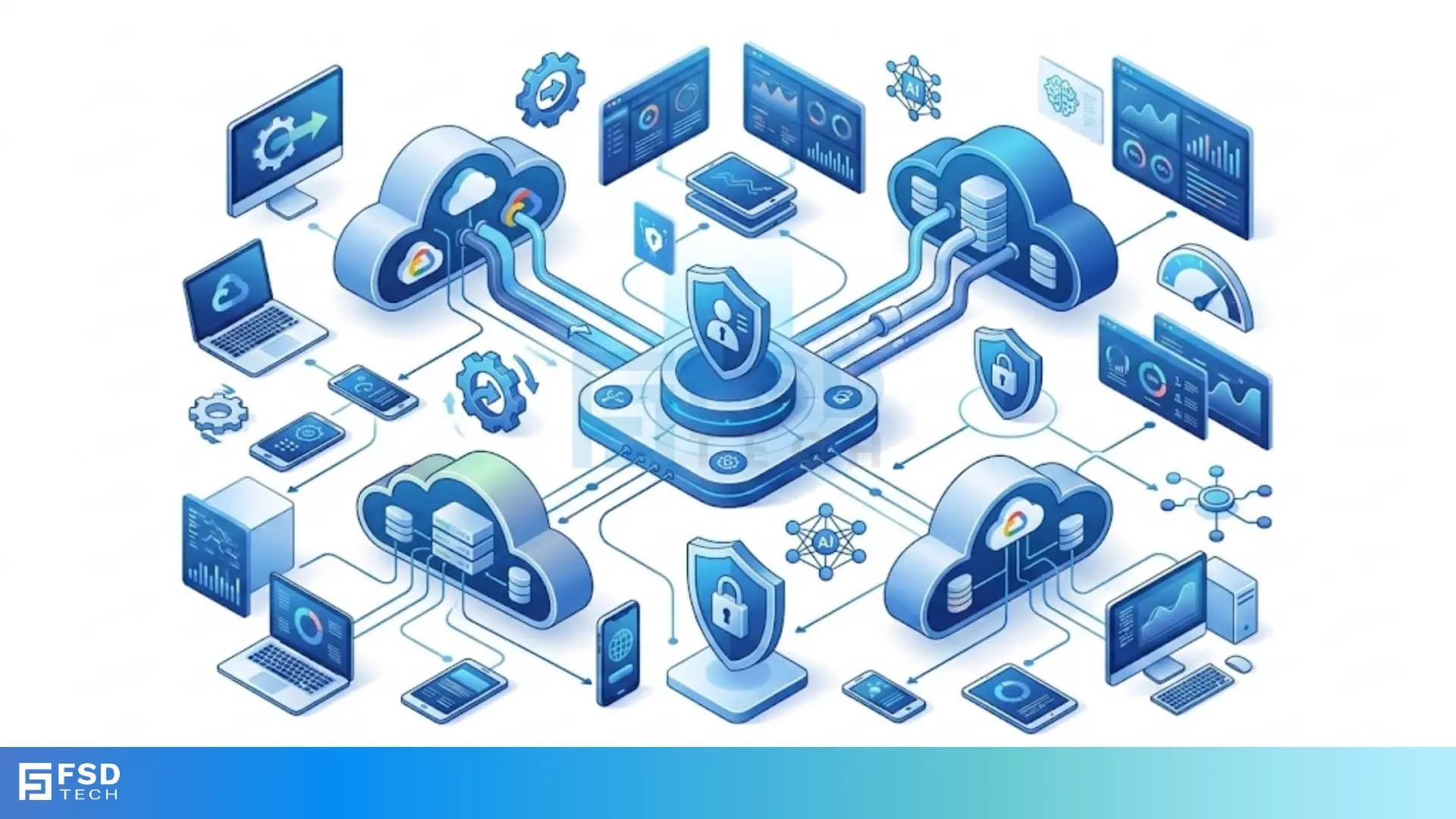
Multi-Cloud Networking is no longer just a luxury for tech giants; it’s the backbone of how we stay online today. Have you ever wondered why your favorite apps never seem to go down, even when a massive data center fails? To be honest, the secret usually lies in how they spread their digital eggs across multiple baskets.
In my experience, many teams jump into multiple clouds like AWS and Azure without a clear map. They end up with a tangled mess of wires—figuratively speaking—that costs a fortune and breaks easily. But what exactly is Multi-Cloud Networking, and why should you care about it right now?
In this guide, we’ll explore how connecting different cloud providers can change the way you do business. We won’t give away every secret just yet, but imagine a world where your network is faster, cheaper, and safer all at once. Sounds like a dream, right? Let's see how we make it a reality.
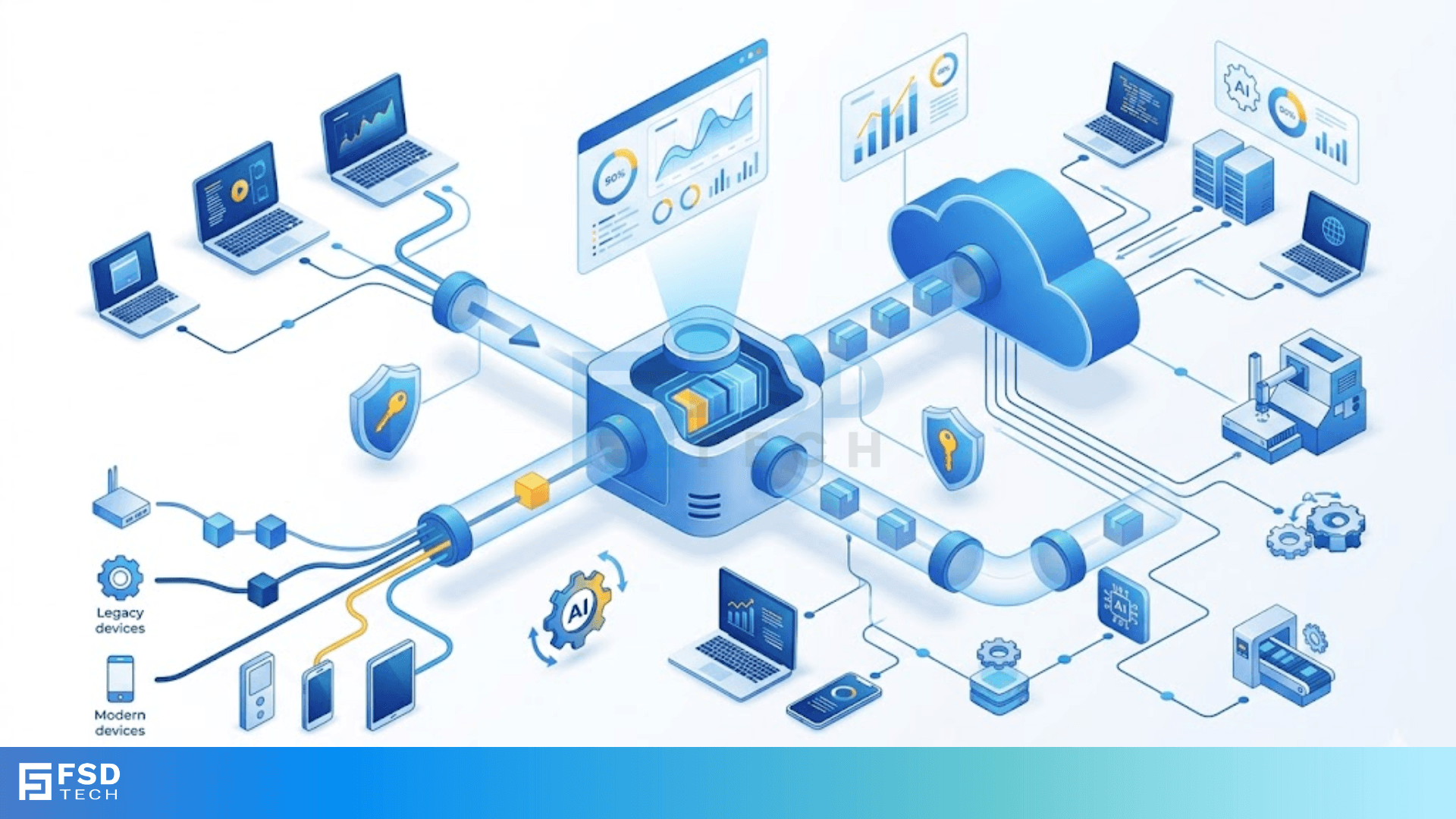
Multi-Cloud Networking (MCN) refers to the practice of connecting applications and data across two or more public cloud providers. It creates a single, unified network that works the same way whether you are using Google Cloud, AWS, or your own local servers.
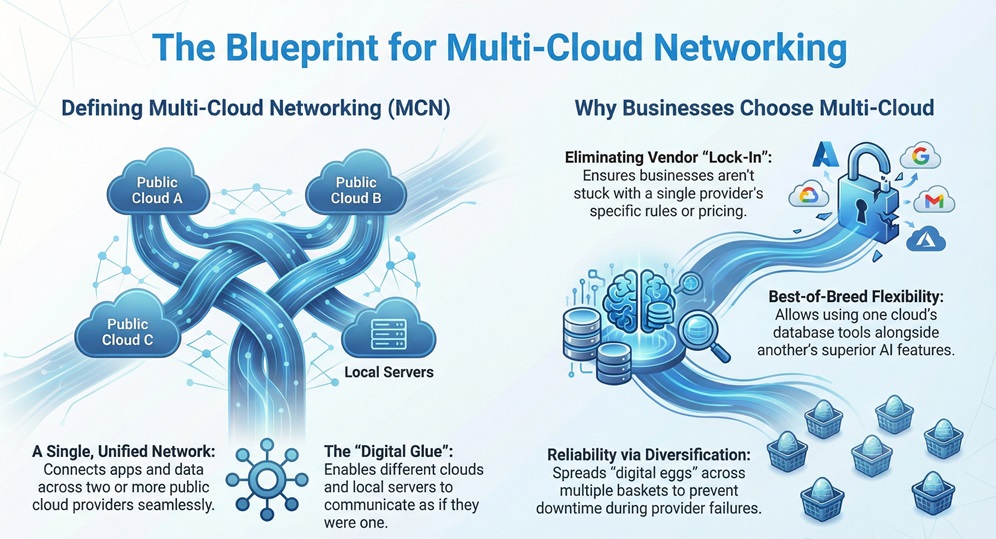
In the past, companies used just one provider. However, that created a "lock-in" effect where you were stuck with their prices and their rules. MCN changes that. It acts as the "glue" that lets different clouds talk to each other.
Get Your Free Multi-Cloud Audit
We've all been there: one cloud provider has a great database tool, but another has better AI features. Instead of choosing one, you use both. But how do you send data between them without it getting lost or stolen? That is where Multi-Cloud Networking comes in. It provides a consistent way to manage security and traffic across different environments.
To build a solid network, you need to understand the pieces involved. It is not just about clicking "connect" in a dashboard.
1. The Cloud Core
The cloud core is the internal network within each provider. Each provider has its own rules. For example, AWS uses VPCs (Virtual Private Clouds), while Azure uses VNETs. MCN tools help these different languages speak to each other.
2. The Multi-Cloud Transit
Think of this as the central highway. It connects all your different cloud "cities" together. A good transit system ensures that if one path is blocked, the data finds another way.
3. Security and Visibility
You can’t fix what you can't see. Most traditional tools don't show you what's happening inside a cloud provider's black box. Modern Multi-Cloud Networking solutions give you a "single pane of glass" to watch everything.
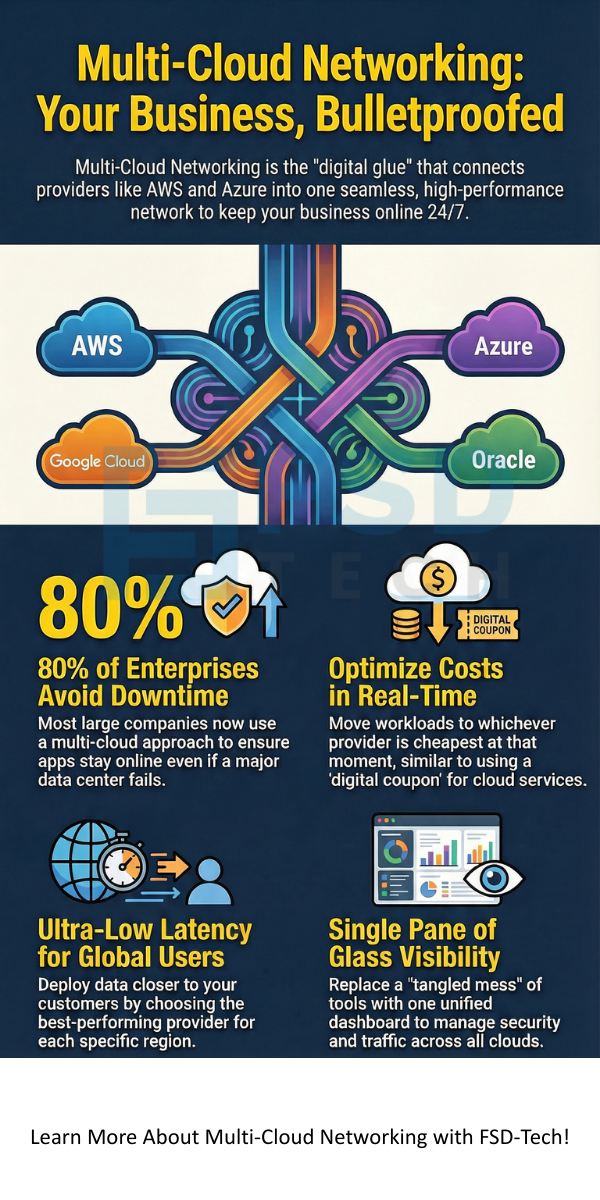
Note: According to recent industry reports, over 80% of large enterprises now use a multi-cloud approach to avoid downtime.
Also Read: What is Software-Defined Perimeter? The Expert Guide to SDP and Zero Trust
Why go through the trouble of setting up Multi-Cloud Networking? To be simple, it makes your business "bulletproof."
Better Reliability and Uptime
If one cloud provider has an outage, your business stays online. By routing traffic to a different provider, you ensure that your customers never see an error page. We call this high availability.
Cost Optimization
Prices for cloud services change all the time. With MCN, you can move your workloads to whichever provider is cheapest at that moment. It's roughly like having a coupon for every grocery store in town and always picking the best deal.
Reduced Latency
You want your app to be fast for everyone, right? By using multiple clouds, you can put your data closer to your users. If a customer is in Europe, you can serve them from an Azure server in Frankfurt. If they are in the US, use an AWS server in Virginia.
It isn't all sunshine and rainbows. Managing several clouds can be tricky if you aren't prepared.
The Complexity Gap
Each cloud provider has its own portal and its own way of doing things. It's like trying to drive a car where the pedals are in different spots every time you switch brands. This complexity often leads to human error.
Security Risks
When you open doors between clouds, you create new ways for hackers to get in. Without a unified security policy, one weak link in your Azure setup could expose your entire AWS database.
Skill Shortages
Finding people who understand AWS, Azure, and Google Cloud equally well is hard. Most engineers specialize in one. This is why we've seen a rise in managed MCN services that handle the heavy lifting for you.
Also Read: What is Unified Endpoint Management and Why Does Your Team Need It?
Now, let's discuss how you actually build this. It usually happens in stages.
Step 1: Define Your Goals
Are you trying to save money, or are you trying to stay online 100% of the time? Your goal determines your design. For instance, if speed is the goal, you might focus on direct connections like AWS Direct Connect or Azure ExpressRoute.
Step 2: Choose Your Transit Architecture
Most companies use a "Hub and Spoke" model. The "Hub" is your central MCN controller, and the "Spokes" are your various cloud environments. This makes it easy to add a new cloud later.
Step 3: Layer on Security
Don't wait until the end to think about security. Use "Zero Trust" principles. This means the network doesn't trust anyone by default, even if they are already "inside" the system.
In my view, you can't manage a multi-cloud world manually. There are too many moving parts. This is where "Infrastructure as Code" (IaC) comes in. Tools like Terraform allow you to write down your network design in a text file.
When you need to make a change, you just update the file. The system then automatically changes your AWS, Azure, and Google settings at the same time. It's fast, and it stops people from making typos that crash the site.
Picture this: A major online retailer experiences a 40% spike in traffic every Black Friday. In the past, their single-cloud provider would struggle under the weight.
By switching to a Multi-Cloud Networking model, they distributed the load. They kept their main database on Oracle Cloud for its high performance but used AWS for their front-end website because it scales quickly.
The result? They haven't had a crash in three years. Plus, they saved 15% on data transfer costs by using private links instead of the public internet. We've all been there—stressed about a site crash—but MCN removes that fear.
What's next for the world of networking?
At the end of the day, Multi-Cloud Networking is about freedom. It gives you the freedom to choose the best tools for your team without being held hostage by a single vendor. Here at our company, we believe that your network should support your growth, not slow it down. We focus on building clear, simple, and powerful connections that put your business first.
Are you ready to stop worrying about outages and start focusing on your customers? We are here to help you navigate this journey every step of the way.
Initial setup can be pricey because of the software and talent needed. However, the long-term savings in "egress fees" (the cost of moving data out of a cloud) and reduced downtime usually pay for it.
Yes! This is actually called "Hybrid Multi-Cloud." It connects your old physical servers in your office to your new virtual servers in the cloud.
While you can learn it, many businesses use managed service providers. It ensures that someone is watching your network 24/7.

Surbhi Suhane is an experienced digital marketing and content specialist with deep expertise in Getting Things Done (GTD) methodology and process automation. Adept at optimizing workflows and leveraging automation tools to enhance productivity and deliver impactful results in content creation and SEO optimization.
Share it with friends!



.webp&w=3840&q=75)

share your thoughts