.webp&w=3840&q=75)
How ClickUp Enables Outcome-Based Project Management (Not Just Task Tracking)
🕓 February 15, 2026
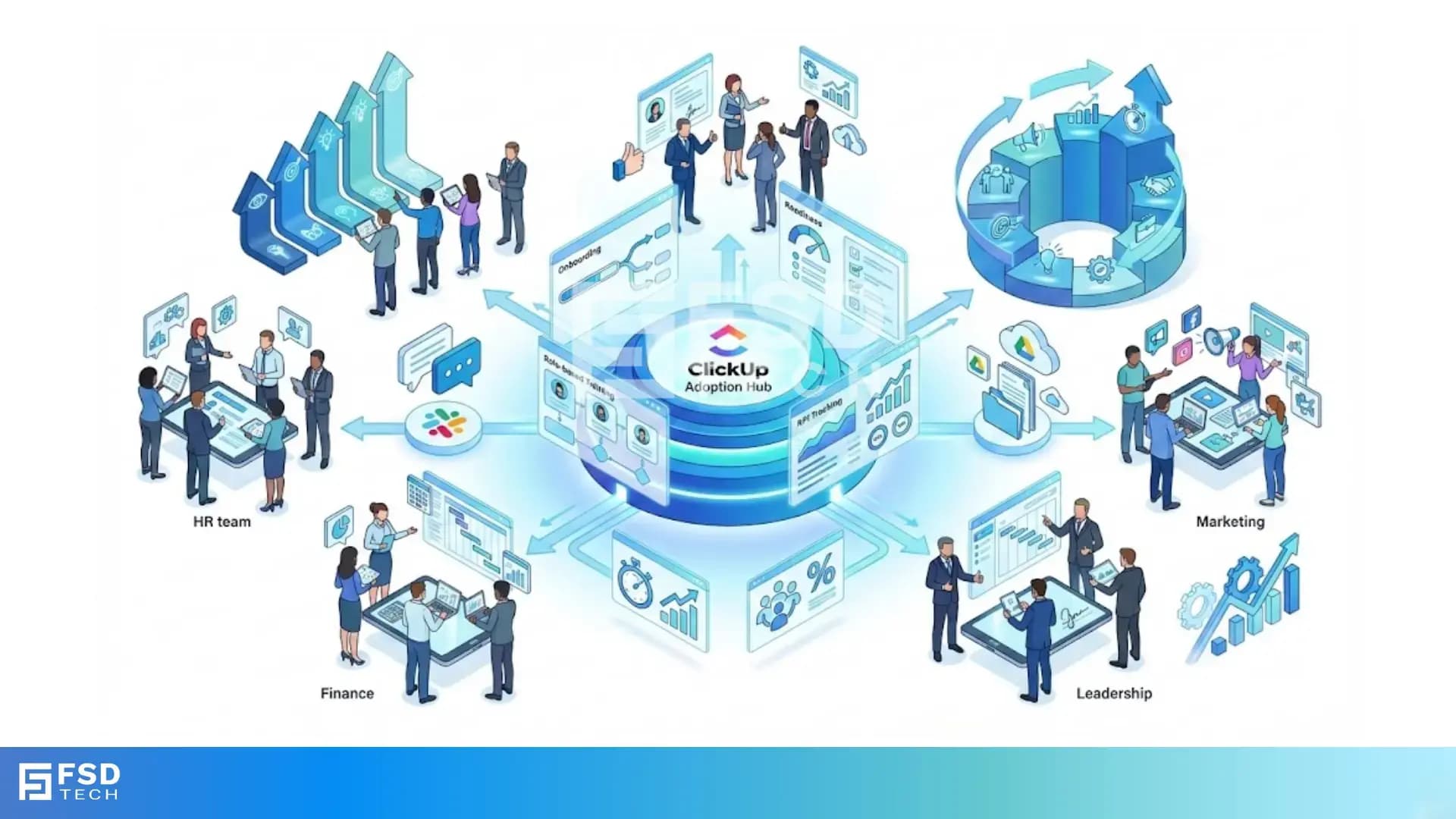
Digital transformation is a strategic imperative for UAE-based organizations. Yet, introducing a new productivity platform like ClickUp often exposes a familiar challenge: how to drive meaningful, organization-wide adoption so the tool becomes a foundation for efficiency and innovation—not just another underutilized app. HR leaders and transformation managers must navigate complex workflows, diverse teams, and entrenched habits to ensure successful enterprise rollout.
ClickUp stands out for its flexibility, robust integration capabilities, and ability to centralize project management, collaboration, and knowledge sharing. For UAE enterprises, ClickUp offers a unified workspace that can adapt to local compliance needs and support both in-office and remote teams. However, realizing its full value requires a structured, people-centric approach to onboarding and change management.
Begin by evaluating your organization’s digital maturity and readiness for change. Identify pain points in current workflows—such as approval bottlenecks, communication silos, or manual reporting. Set clear, measurable objectives for ClickUp adoption, such as:
Aligning stakeholders around these goals clarifies expectations and provides a benchmark for success.
Leadership commitment is the linchpin of any successful change program. When executives and department heads consistently use ClickUp—logging tasks, sharing updates, and requiring documentation within the platform—they set a powerful example. This top-down modeling signals that ClickUp is not optional, but integral to daily operations. As seen in UAE enterprises, leadership alignment accelerates adoption and ensures data integrity across business units.
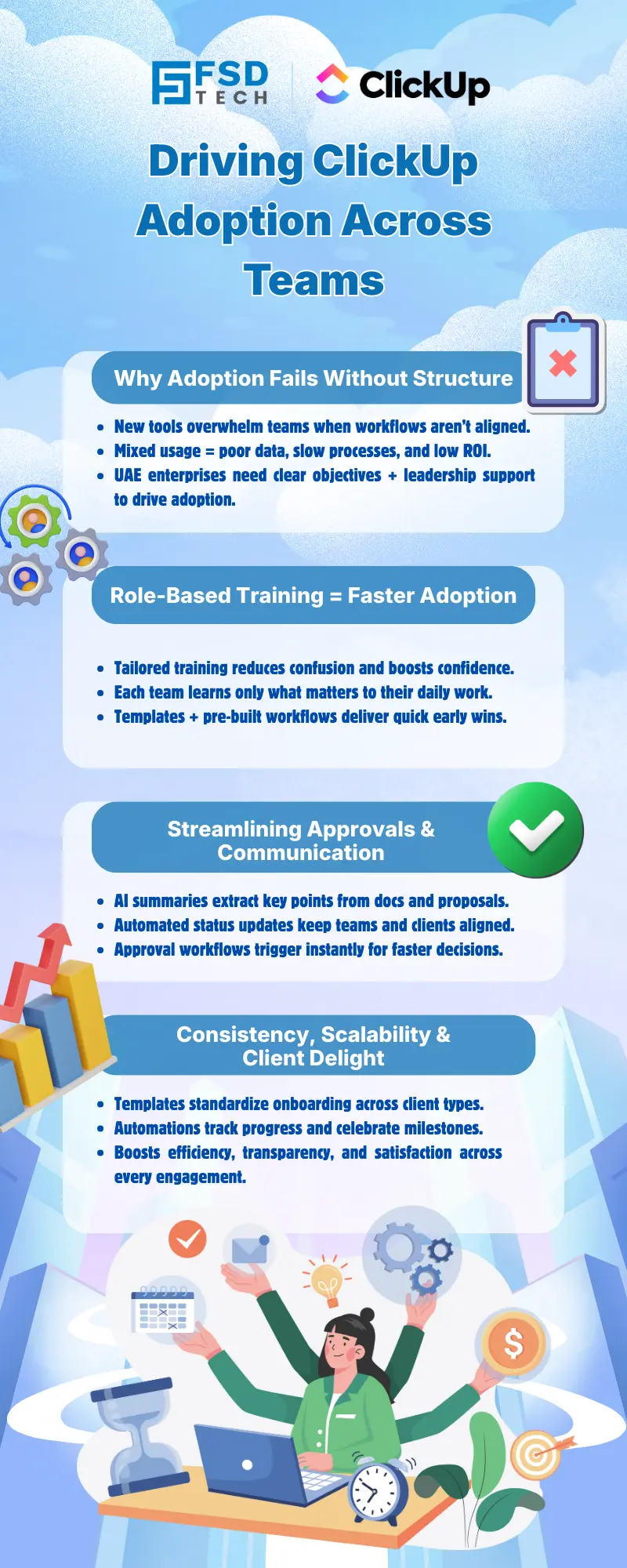
ClickUp’s extensive feature set can overwhelm new users, especially in large, multi-functional organizations. Role-based training addresses this challenge by focusing on what matters most to each team:
By delivering targeted training, you reduce resistance, boost confidence, and ensure teams use ClickUp features that directly impact their KPIs.
Accelerate adoption by launching ClickUp with pre-built templates and boards tailored to your organization’s workflows. For example:
A UAE marketing agency, for instance, rolled out ClickUp with campaign templates, enabling creative teams to adapt quickly and reducing missed deadlines. Early wins like these demonstrate immediate value and build trust in the platform.
Quick wins are essential for building momentum. Highlight improvements such as:
Celebrate these successes in company-wide communications to reinforce positive change and encourage broader adoption.
Adopting ClickUp at scale requires more than technical training—it demands a structured approach to change management. Frameworks like Kotter’s 8-Step Process or the ADKAR model provide a roadmap for:
These frameworks help address resistance, clarify benefits, and secure buy-in at all levels.
Identify and empower “ClickUp Champions” within each department. These individuals serve as peer mentors, answering questions, sharing best practices, and surfacing feedback. A champion network accelerates onboarding, fosters a sense of ownership, and ensures that adoption is not solely driven by top-down mandates.
UAE enterprises often operate complex tech stacks. ClickUp’s integration capabilities allow seamless connections with tools like Slack, Google Drive, and Canva. This ensures that:
For example, a multinational agency in the UAE integrated ClickUp with its remote freelancer management system, enabling real-time performance tracking and streamlined asset version control.
Position ClickUp as an upgrade, not a replacement. By embedding ClickUp into existing processes and integrating with familiar tools, you minimize disruption and accelerate user acceptance. This approach is especially critical for organizations with established systems and compliance requirements.
Also Read: Managing Internal IT Requests and Approvals in ClickUp Without a Ticketing System
To sustain adoption, it’s vital to measure and communicate ClickUp’s impact. Track metrics such as:
These KPIs provide tangible evidence of ClickUp’s value and help justify ongoing investment.
Leverage ClickUp’s reporting and dashboard features to visualize progress. Share success stories—such as a department that halved project delays or improved client feedback—in internal newsletters or town halls. Regular communication keeps teams motivated and reinforces the platform’s strategic importance.
Adoption is an ongoing journey. Establish feedback loops through surveys, focus groups, or regular check-ins to identify challenges and opportunities for improvement. Offer ongoing training—such as refresher sessions and advanced workshops—to help teams unlock new features and stay engaged.
Once initial teams are proficient, expand ClickUp adoption to other departments. Apply lessons learned from earlier phases to refine onboarding and support. Tailor training and templates to each new group’s unique needs, ensuring a smooth transition and sustained engagement.
A UAE-based creative agency implemented ClickUp to streamline client approvals. By uploading campaign assets directly into ClickUp and enabling one-click approvals, the agency reduced project delays by 50% and improved client trust. Early onboarding with campaign templates made the transition seamless and fostered rapid buy-in.
A global agency operating in the UAE leveraged ClickUp to coordinate freelancers and remote creatives. Every campaign had a clear timeline, assets were version-controlled, and real-time dashboards provided performance visibility. Project managers were able to handle more clients efficiently, resulting in faster campaign delivery and higher client satisfaction.
Consider a hypothetical HR department in a UAE enterprise. By rolling out ClickUp for onboarding and compliance tracking, and providing role-based training for HR, payroll, and recruitment teams, each group received custom dashboards and automations. This reduced manual errors, improved compliance, and boosted overall productivity.
ClickUp is more than a task management tool—it’s a platform for scalable processes, cross-team collaboration, and knowledge retention. UAE enterprises that invest in structured onboarding, role-based training, and leadership alignment position themselves for sustainable growth and innovation. By embedding ClickUp into the fabric of daily operations, organizations unlock long-term productivity gains and future-proof their digital transformation efforts.
Turn ClickUp Into Your Enterprise Productivity Engine→ Book a ClickUp Change Management Consultation
With structured onboarding and targeted early wins, many UAE-based teams report measurable improvements in productivity and turnaround times within the first quarter of implementation. Early focus on real workflows and clear success metrics accelerates this process.
Common challenges include resistance to change, feature overwhelm, and lack of leadership alignment. Addressing these through role-based training, visible leadership support, and structured change management frameworks is essential for successful enterprise rollout.
Yes. ClickUp offers robust integrations with widely used business applications such as Slack, Google Drive, and Canva. This integration-centric approach is particularly valuable for UAE enterprises with complex tech stacks, ensuring a smooth transition and centralized workflows.
Sustained adoption relies on continuous measurement, regular training, leadership modeling, and celebrating success stories. Establishing feedback loops and sharing dashboards helps maintain momentum and embed ClickUp into the organizational culture.
ClickUp’s flexibility and customizable permissions make it adaptable for compliance-heavy environments. However, enterprises should review security and data residency requirements to ensure alignment with GCC and UAE-specific regulations.
Leadership alignment is critical. When executives and managers consistently use ClickUp and require updates within the platform, teams follow suit. This top-down commitment drives higher adoption rates and ensures data integrity across the organization.
Role-based onboarding is key. Customize training sessions, templates, and dashboards for each department—such as HR, finance, or project management—to ensure relevance and reduce overwhelm. This targeted approach accelerates adoption and boosts engagement.
Focus on areas with immediate impact, such as streamlining client approvals, automating onboarding checklists, or centralizing asset management. Highlighting these quick wins in internal communications builds trust and encourages broader adoption.
Track key metrics like project turnaround times, billable utilization, client satisfaction, and reduction in missed deadlines. Use ClickUp’s dashboards to visualize progress and communicate results to stakeholders.
Absolutely. ClickUp’s cloud-based platform, real-time dashboards, and integration capabilities make it ideal for managing remote and hybrid teams. UAE enterprises have used ClickUp to coordinate freelancers and distributed teams with great success.
Apply structured change management frameworks (such as Kotter or ADKAR) to address resistance. Involve internal champions, communicate benefits clearly, and provide hands-on support to ease the transition.
ClickUp offers a range of onboarding resources, including templates, training guides, and integration documentation. UAE enterprises can also leverage local champions and peer networks for contextual support.
ClickUp centralizes documentation, project histories, and communication threads, making it easy to retain institutional knowledge and foster collaboration across departments. This is especially valuable for fast-growing UAE organizations.
Start with a pilot group, refine onboarding processes, and then expand to other units using lessons learned. Provide tailored training and support for each new group, and maintain a network of champions to facilitate knowledge sharing.
Invest in continuous improvement—regularly update templates, provide advanced training, and solicit feedback from users. Leadership should reinforce ClickUp’s importance and celebrate ongoing successes to keep teams engaged.
Yes. UAE-based agencies have centralized client approvals and cut project delays by 50%, while multinationals have used ClickUp to manage remote teams and improve client satisfaction. These examples demonstrate ClickUp’s real-world impact and regional relevance.

Anandhu holds a Master's degree in Computer Science and brings extensive expertise in Business Analysis and Project Management, delivering innovative solutions and driving success across diverse projects.
Share it with friends!


.webp&w=3840&q=75)



share your thoughts