.webp&w=3840&q=75)
How ClickUp Enables Outcome-Based Project Management (Not Just Task Tracking)
🕓 February 15, 2026
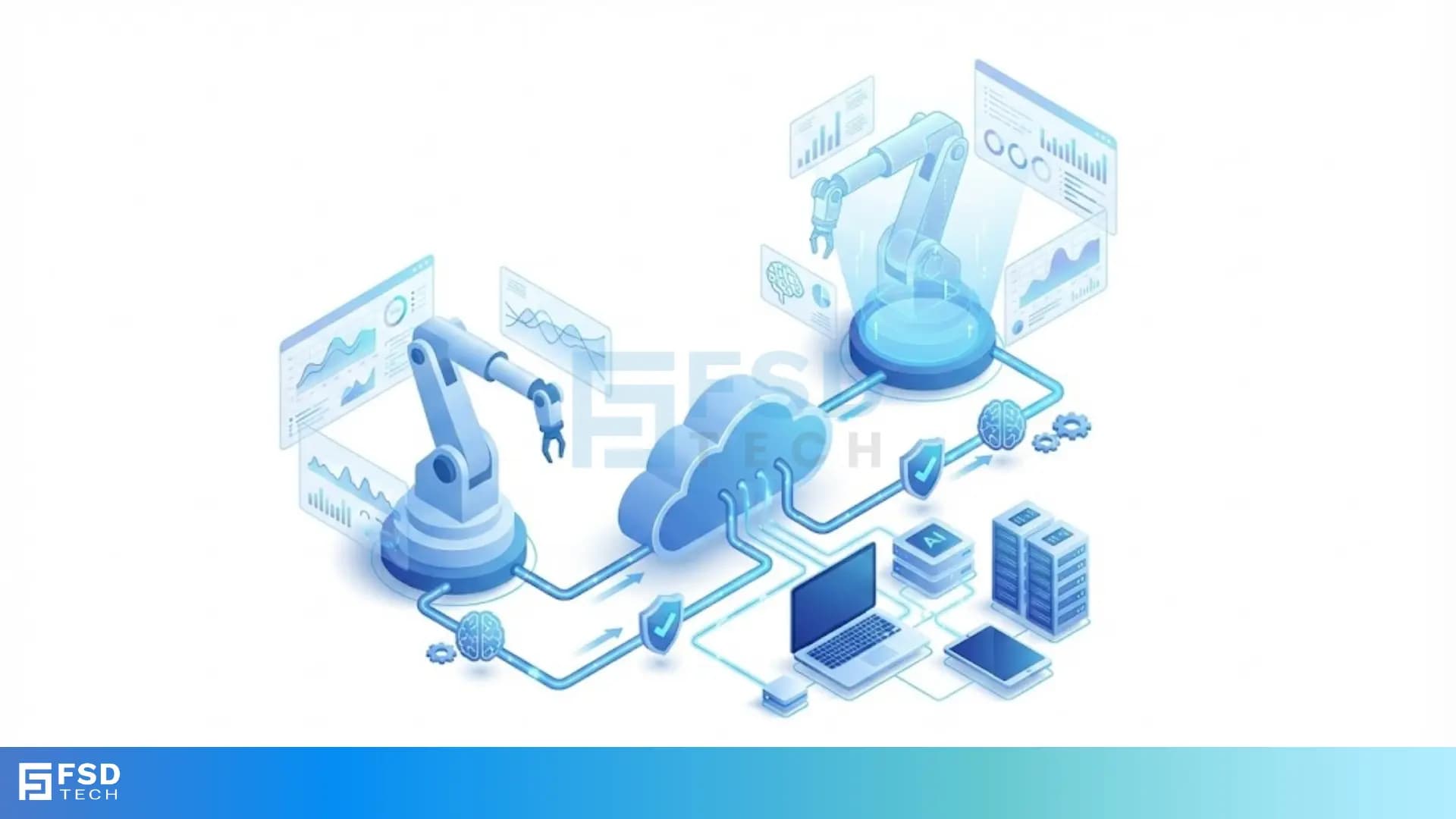
Have you ever wondered how engineers test a jet engine without actually flying a plane? Or how a city planner predicts traffic jams before they happen? You might feel like this is science fiction, but it is a reality today. This happens through a powerful tool known as digital twins.
Digital twins act as a bridge between the physical and digital worlds. Imagine having a perfect virtual copy of a machine, a building, or even a human heart. This copy lives on a computer and behaves exactly like the real thing. But what makes this different from a simple 3D model? How does it help businesses save millions of dollars?
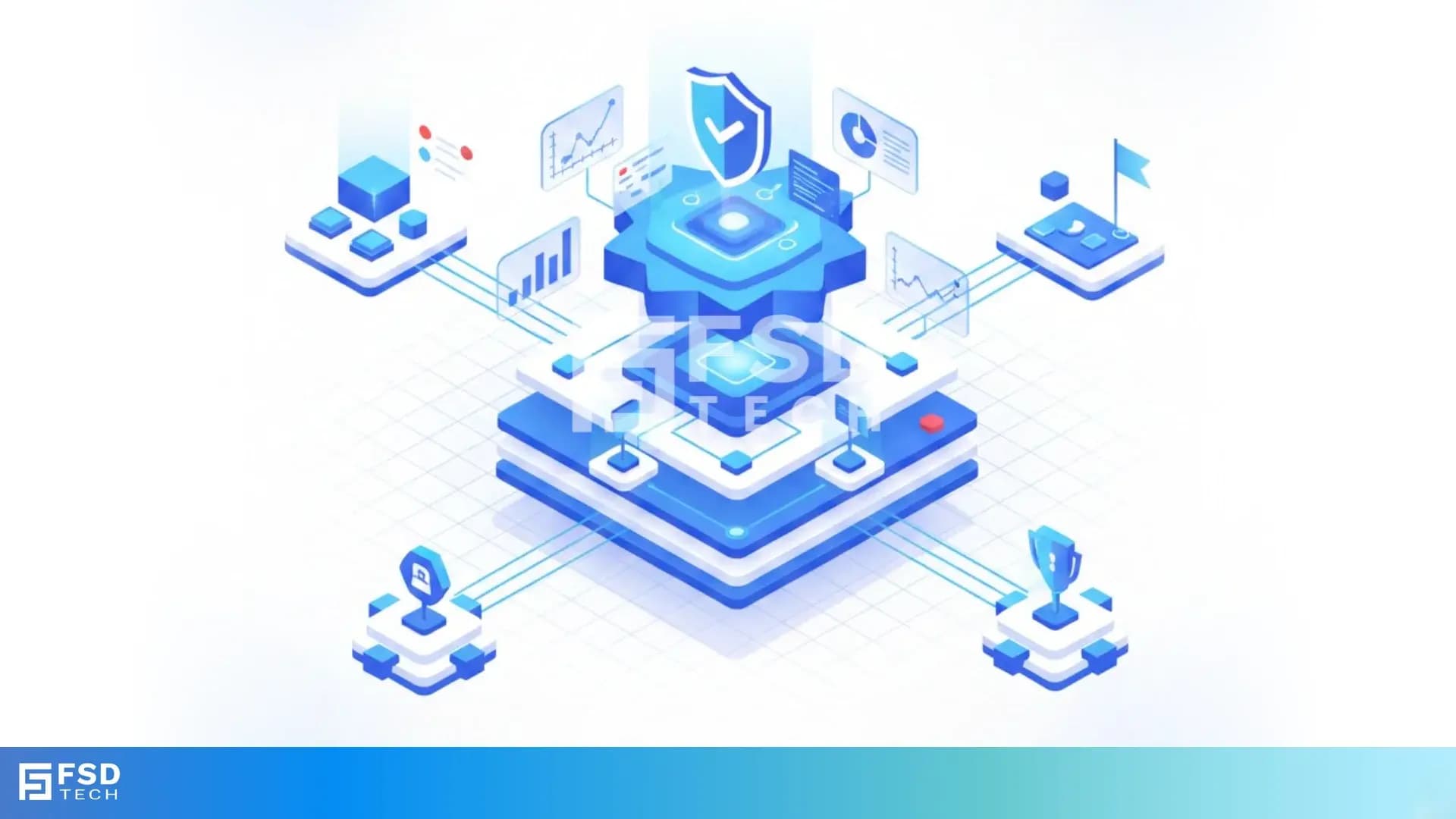
Digital twins can be understood as a virtual representation of an object or system that spans its entire lifecycle. It is updated from real-time data and uses simulation, machine learning, and reasoning to help decision-making. In simple terms, it is a computer program that uses real-world data to create simulations. These simulations can predict how a product or process will perform.
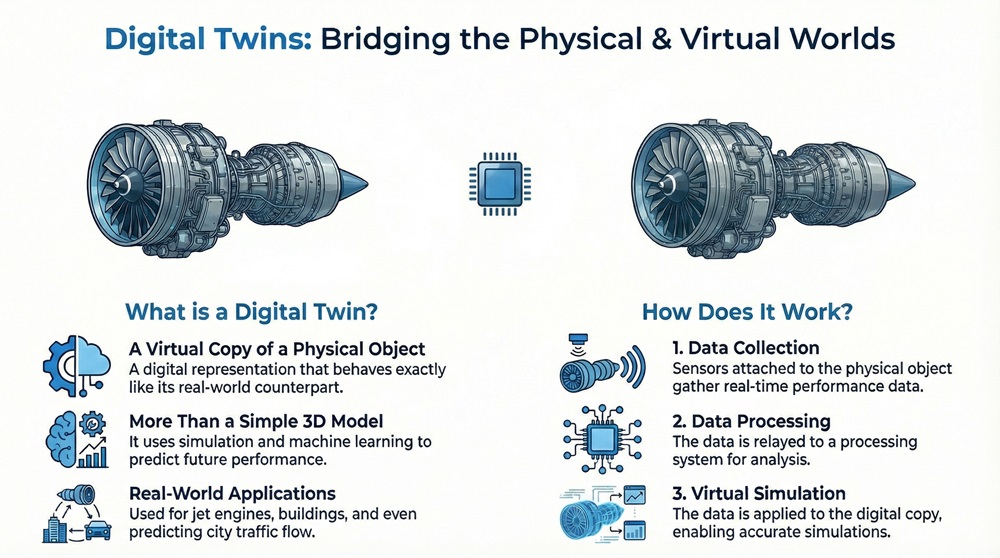
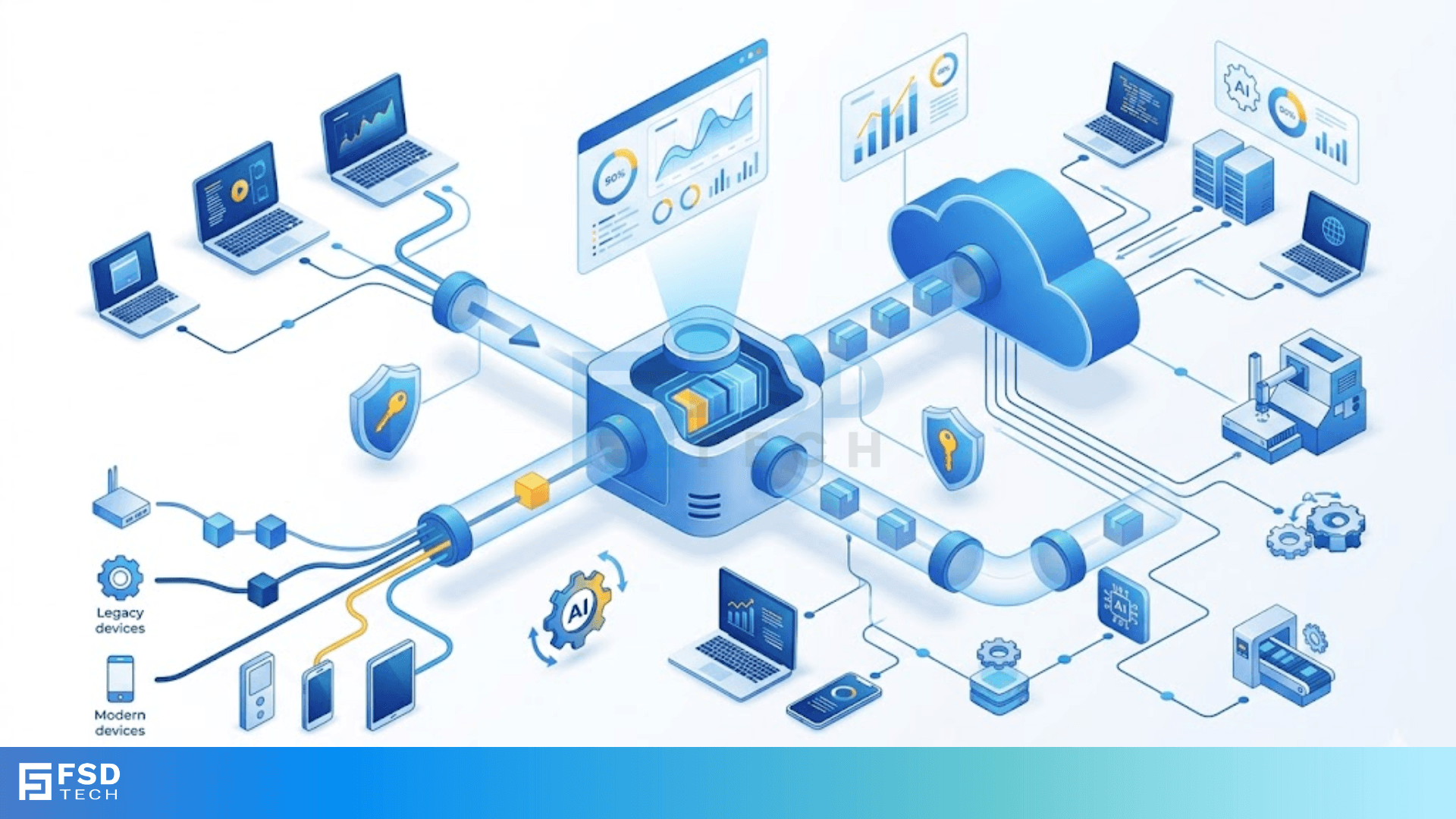
Digital twins technology relies on sensors attached to the physical object. These sensors gather data about different aspects of performance. This includes energy output, temperature, weather conditions, and more. Then, the data is relayed to a processing system and applied to the digital copy.
While people often use these terms interchangeably, digital twins and simulations are not the same. A simulation typically studies one particular process. In contrast, a digital twin can run any number of useful simulations. This is because it is built around a two-way flow of information.
| Basis for Comparison | Simulation | Digital Twins |
|---|---|---|
| Data Flow | One-way (Static) | Two-way (Real-time) |
| Lifespan | Used during the design phase | Spans the entire lifecycle |
| Purpose | Predicts specific outcomes | Monitors, analyzes, and optimizes |
| Scale | Often focuses on one part | Can represent an entire system |
| Updates | Manually updated | Automatically updated via sensors |
What are digital twins in manufacturing? This is a question many factory owners ask today. In the factory setting, digital twins are used to create a virtual mirror of production lines and equipment.
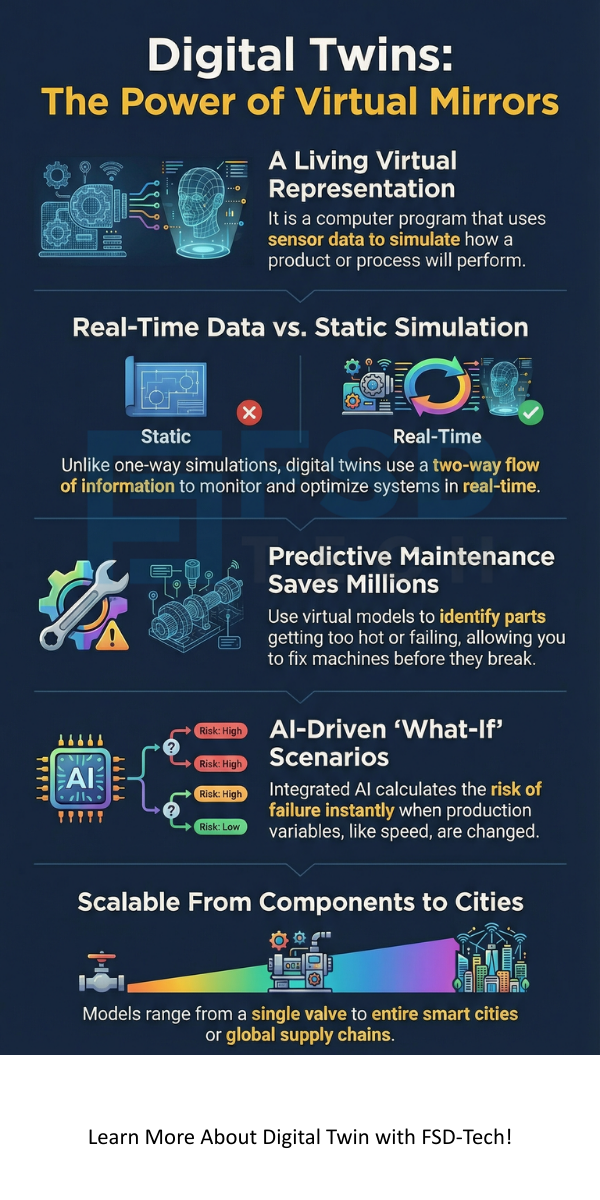
Digital twins technology allows managers to see how a machine is running without being on the floor. If a part is getting too hot, the virtual model shows it immediately. This helps in predictive maintenance. Instead of fixing a machine after it breaks, you fix it right before it fails.
Digital twins software integrates with the factory's existing systems. It tracks every bolt and gear in real-time. This reduces downtime and improves the quality of the products being made.
Also Read: What is Static Application Security Testing (SAST)?
Digital twins technology works through a systematic process of data collection and modeling. Let us look at the steps involved:
Digital twins in AI play a vital role here. AI helps the model learn from past data. This allows the system to get smarter over time. It can start to predict problems even before the sensors pick up a physical change.
Digital twins are not all the same. They vary based on what they represent. We can categorize them into four main types:
Digital twins simulation at the process level is very complex. It takes into account human workers, machines, and supply chains.
Digital twins in AI refers to the marriage of simulation and cognitive computing. Without AI, a digital twin is just a dashboard. With AI, it becomes a living entity that can think.
Digital twins technology uses AI to run "what-if" scenarios. For instance, what happens if we increase production speed by 10%? The AI can calculate the strain on the hardware and the risk of failure instantly.
Digital twins software often includes machine learning algorithms. These algorithms recognize the "fingerprint" of a healthy machine. When the data shifts slightly, the AI knows something is wrong. This is the core of advanced diagnostics.
Also Read: What is Kerberoasting Attack? Detection & Prevention
Digital twins example cases are found in almost every industry today. Let us explore a few major ones:
1. Healthcare
Doctors use digital twins of organs to plan surgeries. A surgeon can practice on a virtual version of your heart before they ever pick up a scalpel. This reduces risks and improves recovery times.
2. Smart Cities
Cities like Singapore use digital twins to manage resources. They track energy use, water flow, and traffic patterns. This helps them decide where to build new parks or how to time traffic lights.
3. Aerospace
NASA was one of the first to use digital twins. They used them to monitor spacecraft that were millions of miles away. If a rover on Mars has a problem, they test the solution on the digital twin first.
4. Energy
Wind farms use a digital twins model for every turbine. The model tells the operator which way to turn the blades to catch the most wind. It also alerts them if the gearbox needs oil.
Digital twins platform is the environment where all the data lives. It is like an operating system for virtual models. A good platform must be able to handle massive amounts of data from different sources.
The software must be compatible with many types of sensors. It also needs to be secure. Since these models hold the "DNA" of a company's products, protecting them from hackers is a top priority.
Digital twins simulation tools are often built into these platforms. They allow users to visualize the data in 3D. This makes it easy for non-technical managers to understand what is happening with the hardware.
Digital twins technology offers several benefits that help companies stay competitive.
Digital twins definition often focuses on the "copy" aspect, but the real value is in the actionable insights it provides.
Also Read: What is Public Key Infrastructure (PKI)? Technology and Components
Digital twins are not without their hurdles. While the technology is powerful, it requires a significant investment.
Digital twins technology requires a culture shift. Teams must learn to trust the data coming from the computer.
Digital twins will soon become a standard part of every industry. We are moving toward "twins of everything." Eventually, we might have a digital twin of the entire Earth to help solve climate change.
In manufacturing will lead to fully autonomous factories. These factories will fix themselves and optimize their own schedules.
Digital twins in AI will continue to evolve. We will see models that can communicate with each other. Imagine your car's digital twin talking to the road's digital twin to avoid a pothole.
We believe in the power of innovation to change the world. Our team focuses on providing you with the most accurate and useful tech insights. We care about your growth and the success of your projects. You deserve tools that make your work easier and more efficient. Let us work together to build a smarter, data-driven future.
The future is digital. Let our experts help you build your first virtual asset. Contact Our Digital Twin Specialists
Digital twins mean a virtual version of a physical object or system. It stays connected to the real object through data.
Digital twins software is the tool used to build and manage virtual models. It collects data, runs simulations, and provides reports.
It allows you to test changes without any risk. You can see the result of a decision before you make it in the real world.

Surbhi Suhane is an experienced digital marketing and content specialist with deep expertise in Getting Things Done (GTD) methodology and process automation. Adept at optimizing workflows and leveraging automation tools to enhance productivity and deliver impactful results in content creation and SEO optimization.
Share it with friends!

.webp&w=3840&q=75)
share your thoughts