.webp&w=3840&q=75)
How ClickUp Enables Outcome-Based Project Management (Not Just Task Tracking)
🕓 February 15, 2026
How do you optimize Atera's AI Copilot?
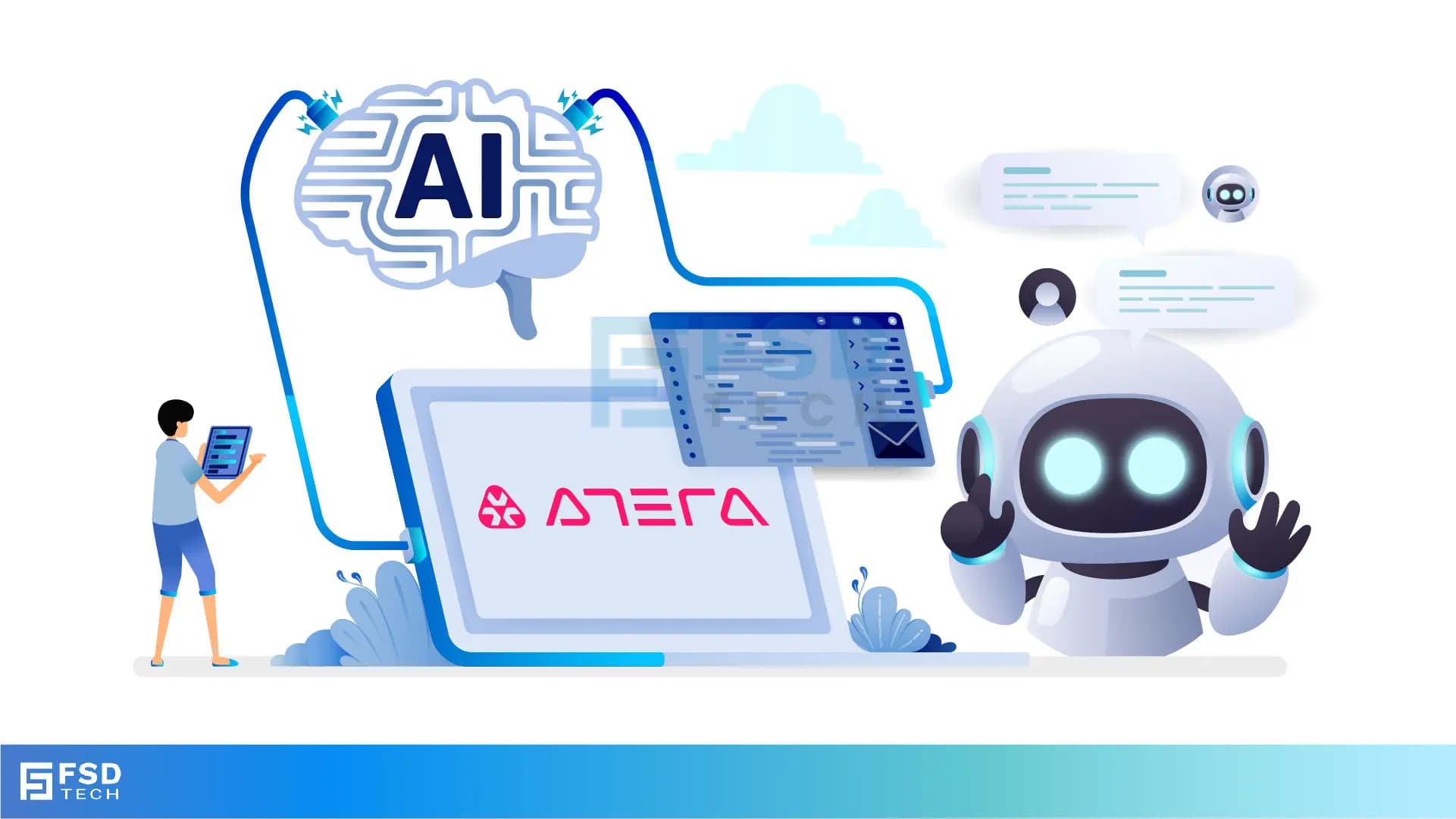
You optimize AI Copilot through the AI Center in Atera. The four main steps are: implement suggested knowledge base articles and scripts from the Actionable Insights tab; complete the Optimize tab by assigning agents to end users, adding phone numbers, syncing Azure AD and Microsoft 365, and connecting Active Directory domains; add company-specific context through Custom Instructions; and monitor your overall progress using the Optimization Status gauge.
Atera's AI Copilot is designed to help IT technicians and end users resolve issues faster. But its usefulness depends directly on what it has access to.
Copilot draws on three sources when responding: your account's device and ticket data, your knowledge base articles (KBAs), and Atera's own curated repository of diagnostics and actions. The more complete your knowledge base and account setup are, the more accurate and specific Copilot's suggestions become.
This guide walks through each step for optimizing Copilot, using Atera's AI Center as the central tool. All information is drawn directly from Atera's official support documentation and AI FAQ.
Access note: Full admin permissions are required to access the AI Center.
Add-on note: AI Copilot and IT Autopilot are add-ons, not included in Atera's base subscription. A 14-day free trial is available. Contact Atera or your local partner for current pricing.
The AI Center is Atera's central hub for managing, optimizing, and tracking the impact of AI Copilot and IT Autopilot. It is divided into four main tabs:
| Tab | What It Does |
|---|---|
| Overview | Tracks the impact of AI Copilot and IT Autopilot on team efficiency over time |
| Actionable Insights | Surfaces AI-generated suggestions for new KBAs and scripts based on recurring ticket trends |
| Optimize | Manages the setup items that improve Copilot accuracy: agent assignments, contact sync, domain connections |
| Custom Instructions | Lets admins add company context, proprietary software names, and internal terminology to improve IT Autopilot responses |
According to Atera's AI Center support article: "From optimization status to actionable insights, everything you need to enhance support for your team and end users is in one place."
What it is: The Actionable Insights tab surfaces AI-generated suggestions for new knowledge base articles and scripts, based on patterns in your account's recurring ticket data.
When Copilot detects a recurring issue across multiple devices or tickets, it does not just flag the trend — it generates a ready-to-review KBA article or script to address it. According to Atera's AI Center support article, this means that instead of a 15-minute remote session per affected device, you can review, approve, and deploy a single script across the entire affected fleet.
Confirmed from Atera's Actionable Insights support article, insights are organized into three tabs:
Every KBA you add expands what Copilot can reference when responding to a technician or end user. Every script you add gives Copilot an additional remediation action it can recommend or execute.
Important: According to Atera's AI FAQ, your knowledge base takes approximately 30 minutes to sync after you add or update content. New articles will not be available in Copilot's responses immediately after creation.

What it is: The Optimize tab in the AI Center shows the setup items that enable Copilot to take context-aware actions on behalf of technicians and end users. These are practical account configuration tasks, not AI model settings.
According to Atera's AI Center support article, the Optimize tab covers:
Each contact in your Atera account should have an agent (device) assigned to them. When an agent is assigned, Copilot can perform device-level actions — running health checks, executing scripts, managing Azure AD — under the correct user context. Without an assigned agent, device-related Copilot actions are not available for that user.
Phone numbers are required for self-service actions that use SMS verification. According to Atera's IT Autopilot support article, before end users can execute self-service actions or software installations through the portal, they must complete Two-Factor Authentication (2FA) by entering and verifying their phone number. Copilot and IT Autopilot cannot complete SMS-based tasks without a valid mobile number on file.
Syncing Azure AD and Microsoft 365 keeps user records current in Atera. Stale or missing user data can cause Copilot to work with outdated contact information, which affects ticket routing, user identification, and the accuracy of suggested actions.
For on-premises environments, connecting your Active Directory domains enables Copilot to assist with domain-bound tasks such as password resets. Without a connected domain, Copilot cannot perform or suggest actions that require domain context.
Review each sub-section of the Optimize tab and work through any items marked as incomplete. Atera's AI Center article recommends prioritizing the highest-impact items to drive rapid gains in response accuracy and automation coverage. The Optimization Status gauge (covered in Step 4) shows your progress across all of these items.
Also Read: Conversations That Continue: How Atera AI Copilot Multi-Chat Improves IT Troubleshooting Context
What it is: The Custom Instructions tab in the AI Center allows admins to provide IT Autopilot with context that is specific to their organization. This is a verified feature documented in Atera's AI Center support article.
According to Atera, Custom Instructions allow admins to add:
This information helps IT Autopilot give more accurate, relevant responses to end users — especially for questions involving internal tools, workflows, or terminology that would not appear in a general knowledge base.
For MSPs managing multiple clients, Atera's 2025 release notes confirm that each customer (or site) can be given its own IT Autopilot identity with custom context. This means each client gets responses tailored to their specific environment, internal tools, and team terminology — rather than a generic response.
When a user asks IT Autopilot a question, it draws on your knowledge base and the Custom Instructions you have provided. If your company uses a proprietary tool with a non-standard name, or has an internal support process that differs from industry defaults, Custom Instructions help IT Autopilot give the right answer instead of a generic one.

What it is: The Optimization Status gauge in the AI Center provides a real-time view of how completely your Copilot setup has been configured.
According to Atera's AI Center support article, the Optimization Status shows:
The gauge breaks down completion by category — KBAs, scripts, agent assignments, integrations — so admins can see exactly which items are still pending and prioritize accordingly.
Atera's recommendation: review the breakdown regularly and work through the highest-impact pending items. There is no minimum completion target specified in Atera's documentation; the goal is to work through all relevant items for your environment.

The Overview tab shows the operational impact of AI Copilot and IT Autopilot over time. This includes:
According to Atera's 2025 release notes, AI Copilot can now provide insights across your entire account — comparing and analyzing data from all devices, tickets, alerts, and more within a single chat. This account-wide intelligence extends beyond individual device or ticket views.
The Overview tab is the right place to measure whether your Copilot setup is working — and where to focus improvement efforts if metrics are not moving in the right direction.
Also Read: Thresholds, Alerts & Auto-Healing in Atera (and where AI Copilot helps)
Understanding where Copilot gets its information helps clarify why each setup step matters.
According to Atera's AI FAQ, AI Copilot gathers information from three sources:
Copilot does not pull information from the internet in real time, from other customers' accounts, or from external sources. Its responses are bounded by what is in your account, your knowledge base, and Atera's curated actions.
AI Copilot is not self-learning. Per Atera's AI FAQ: Copilot is "not self-learning; improved only by Atera updates and curated actions." Adding KBAs and completing the Optimize setup does not train the AI model — it expands the context Copilot can reference. The model itself is updated only through Atera's own product releases.
The original blog described feedback through Atera's Help menu as feeding directly into an "AI training pipeline." This needs to be stated accurately.
What is confirmed from Atera's documentation:
What is not confirmed:
Providing feedback to Atera's product team is still valuable — it helps guide future product updates. But it should not be described as a direct AI training mechanism, as that is not confirmed in Atera's own documentation.
The AI Center is Atera's dedicated hub for managing and optimizing AI Copilot and IT Autopilot. It includes four tabs: Overview (performance tracking), Actionable Insights (KBA and script suggestions), Optimize (account setup for AI actions), and Custom Instructions (company-specific context for IT Autopilot). Full admin permissions are required to access it.
Actionable Insights are AI-generated suggestions for new knowledge base articles and scripts, surfaced based on recurring patterns in your account's ticket data. They are organized into three tabs: Available (current suggestions), Postponed (marked for later), and Implemented (already acted on). Each implemented insight expands what Copilot can reference or execute.
According to Atera's AI FAQ, the customer knowledge base syncs approximately 30 minutes after content is added or updated. New articles will not appear in Copilot's responses immediately after creation.
Agent assignments allow Copilot to perform device-level actions — health checks, script execution, Azure AD management — under the correct user context. Phone numbers are required for SMS-based Two-Factor Authentication, which end users must complete before executing self-service actions or software installations via IT Autopilot.
Custom Instructions allow admins to add company-specific information to IT Autopilot, including company details, internal software names, and proprietary terminology. This helps IT Autopilot give more accurate, relevant responses for your specific environment. For MSPs, each customer can have its own Custom Instructions, so responses are tailored per client.
No. AI Copilot is not self-learning. Per Atera's AI FAQ, it is "improved only by Atera updates and curated actions." Adding KBAs and completing the Optimize setup expands the context Copilot can reference, but the underlying AI model does not train on your account data. Your prompts, queries, and KBA content do not train public AI models and remain within your account context.
Feedback submitted through Atera's Help menu reaches Atera's product team and can influence future product updates. However, it does not directly modify or train the AI model. AI Copilot improvements come through Atera's own product releases and updates.
Yes. Copilot only references KBAs stored inside Atera's native knowledge base, along with your account's device and ticket data and Atera's curated actions repository. It does not access external URLs, third-party documentation platforms, or the internet in real time. To make external content available to Copilot, it must be added to your Atera knowledge base manually.
No. AI Copilot is an add-on, not included in Atera's base subscription. A 14-day free trial is available. Contact Atera or your local partner for current pricing.
AI Copilot becomes more useful the more context it has. The AI Center is where that context gets built — through implemented knowledge base articles, completed agent assignments, synced contacts, connected domains, and company-specific Custom Instructions.
The process is straightforward. Start with the Actionable Insights tab, which does the work of identifying what your knowledge base is missing based on real ticket patterns. Work through the Optimize tab to complete the account setup items. Add Custom Instructions to tailor IT Autopilot for your specific environment or clients. Then track progress through the Optimization Status gauge.
Each step makes Copilot more accurate. Each implemented article or script is one fewer issue that requires a technician's full attention.
For IT teams and MSPs in the GCC region, FSD-Tech is a certified Atera partner that deploys and supports the platform locally.

Anas is an Expert in Network and Security Infrastructure, With over seven years of industry experience, holding certifications Including CCIE- Enterprise, PCNSE, Cato SASE Expert, and Atera Certified Master. Anas provides his valuable insights and expertise to readers.
Share it with friends!



.webp&w=3840&q=75)
.webp&w=3840&q=75)
🕓 March 25, 2026
🕓 March 22, 2026

🕓 March 20, 2026


share your thoughts