.webp&w=3840&q=75)
How ClickUp Enables Outcome-Based Project Management (Not Just Task Tracking)
🕓 February 15, 2026
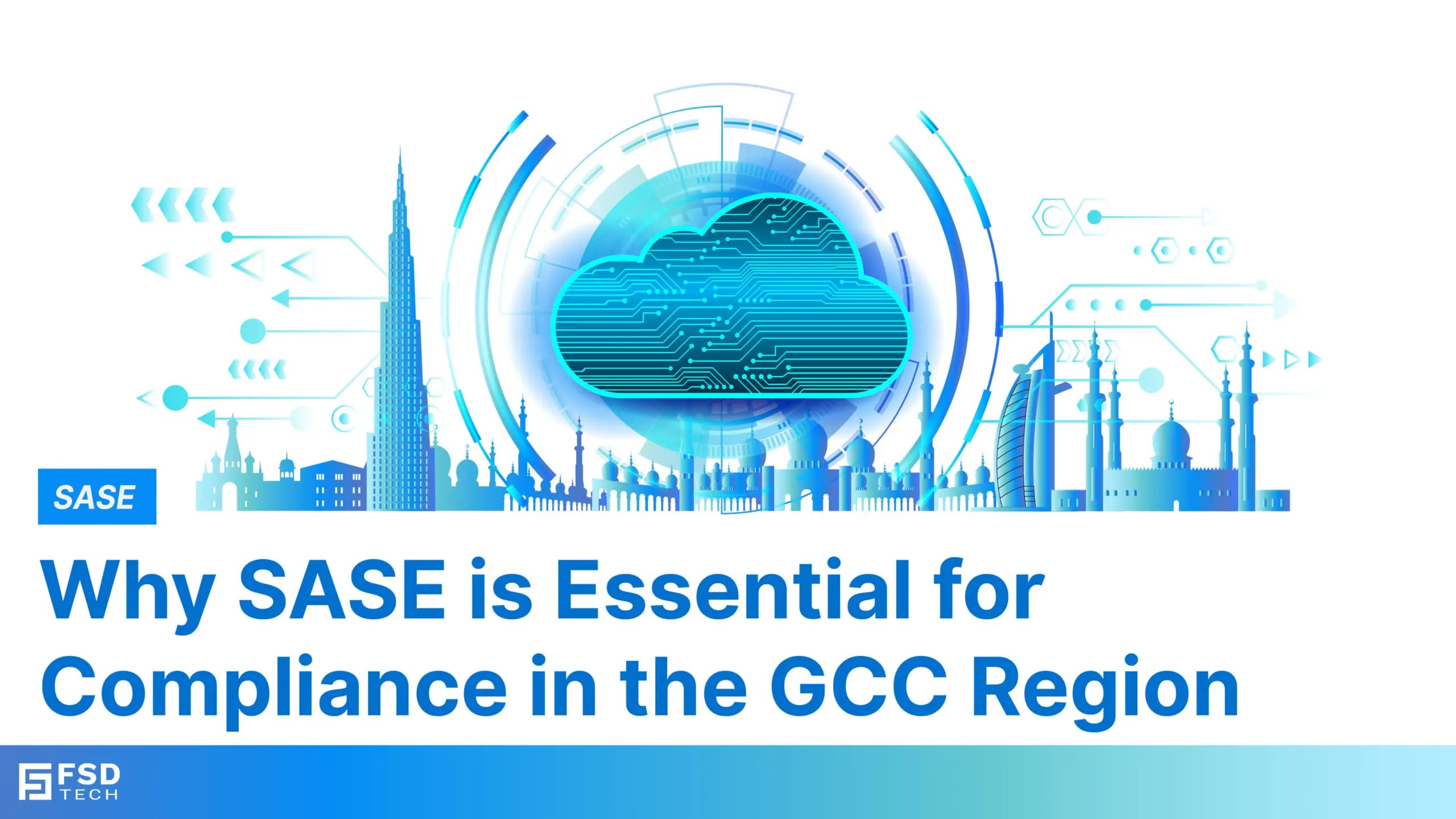
Secure Access Service Edge (SASE) refers to a cloud-native architecture that combines wide area networking (WAN) and comprehensive network security functions into a single, unified service.
SASE is defined as the convergence of these capabilities into a cloud-delivered model. It moves network and security control from the traditional data center perimeter to the user or edge device.
In simple words, SASE brings security closer to the users, no matter where they are located. This design provides security, flexibility, and streamlined network management for organizations.
As digital transformation accelerates across the Gulf Cooperation Council (GCC) region, regulatory compliance in network security has become crucial. The GCC region, which includes countries like the UAE and Saudi Arabia, has stringent mandates to protect data integrity and ensure network security against cyber threats.
GCC network compliance focuses on three primary areas:
For example, regulations in the UAE and Saudi Arabia mandate that personal and financial information must reside within their jurisdictions. SASE’s cloud-based model, with local Points of Presence (PoPs), helps meet these requirements by localizing data storage and processing.
Privacy and Data Protection
Regulations in the GCC region mandate robust measures to protect sensitive information.
The UAE’s National Electronic Security Authority (NESA) and Saudi Arabia’s National Cybersecurity Authority (NCA) emphasize strong data protection policies. SASE solutions address these needs by implementing end-to-end encryption and strict access controls.
Incident Response and Audit Requirements
GCC regulations often require rapid incident response and clear audit capabilities.
SASE integrates security tools that provide real-time threat detection, incident logging, and easily accessible audit trails. These tools allow organizations to meet their compliance obligations quickly and efficiently.
Cato Networks’ SASE framework is specifically designed to help organizations comply with GCC’s complex regulatory landscape by providing comprehensive security, data protection, and audit capabilities.
Cato SASE employs Zero Trust Network Access (ZTNA), which verifies each user’s identity before granting access. This identity-based access aligns with GCC regulations that demand strict authentication and authorization protocols, preventing unauthorized access and reducing potential security risks.
With SASE, all data traveling across the network is encrypted, ensuring data integrity and privacy. This encryption meets GCC requirements for protecting data in transit and at rest, fulfilling the demands of regulations like Saudi Arabia’s NCA and UAE’s NESA guidelines.
Cato’s centralized policy management enables organizations to maintain consistent security policies across all sites and users. IT teams can update and enforce policies from a single console, ensuring compliance with changing GCC regulatory requirements across all remote and local users.
Also Read: Enforcing Firewall Policies with Cato SASE Device Attributes: Extending Zero-Trust to Every Device
Implementing Cato’s SASE offers several key benefits that help organizations in the GCC region maintain compliance, improve network security, and streamline operations.
Cato’s SASE framework includes several key components that support GCC compliance requirements and provide secure, scalable network solutions.
The CASB in Cato’s SASE monitors data access and ensures compliance with data protection regulations by controlling access to cloud resources. This component is crucial for organizations handling sensitive data in the cloud, as it enables compliance with data privacy mandates.
Cato’s SWG inspects all internet traffic and blocks access to malicious sites, protecting users and ensuring compliance with GCC cybersecurity regulations. By controlling web access, the SWG also reduces the risk of phishing and malware, which are major concerns in regulatory frameworks.
Cato’s SASE continuously monitors network activity for anomalies, generating logs and reports that assist in meeting audit requirements. This real-time threat detection and logging provide organizations with a robust incident response framework that aligns with the GCC’s regulatory guidelines.
Also Read: WAN Recovery Tunnel Status in Cato SASE: Readiness You Can See
Traditional compliance approaches often require multiple tools and configurations to meet GCC requirements, making them difficult to scale and manage. SASE offers a unified, cloud-based alternative that simplifies compliance.
| Feature | Traditional Compliance Models | Cato SASE |
| Data Sovereignty | Limited, may require local data centers | Supports regional PoPs for data localization |
| Access Control | Device-based, difficult to scale | Identity-based, Zero Trust |
| Threat Detection | Multiple tools required, high complexity | Integrated, real-time detection |
| Compliance Management | Involves multiple policies and tools | Centralized, simplified management |
Cato’s SASE provides a streamlined, scalable solution that meets compliance needs without the operational complexity of traditional approaches.
Here’s a list of Real-World Benefits of Cato’s SASE for GCC Compliance
With centralized management and integrated security policies, Cato’s SASE minimizes the complexity of meeting GCC network compliance standards across multiple locations and cloud environments.
Cato’s end-to-end encryption and Zero Trust model ensure that sensitive data is protected, reducing the risk of unauthorized access and data breaches.
With real-time monitoring and logging, Cato’s SASE provides the tools needed for efficient incident response, making it easier to report and address security incidents as required by GCC regulations.
Cato’s platform supports end-to-end encryption of data in transit and at rest, ensuring compliance with GCC data protection standards and safeguarding sensitive information.
Cato SASE offers real-time traffic monitoring and comprehensive logging, enabling companies to track data access and usage, an essential aspect of regulatory compliance in the GCC.
By implementing Zero Trust Network Access (ZTNA), Cato ensures that only authorized users can access specific applications and data, reducing the risk of data breaches and enhancing compliance with privacy regulations.
The platform’s machine learning-driven threat detection allows for proactive identification and response to security incidents, which is vital for compliance with GCC security guidelines.
Cato’s Cloud Access Security Broker (CASB) provides visibility and control over cloud applications, ensuring secure data transfer and meeting compliance requirements across multi-cloud environments.
With Cato’s centralized management console, businesses can generate detailed security and compliance reports, simplifying audit processes and helping meet GCC regulatory standards.
Cato’s cloud-native platform easily scales to support expanding operations, ensuring continued compliance as companies grow or add new locations within the GCC.
By consolidating network and security functions into a single platform, Cato reduces the complexity of managing multiple security tools, making it easier to comply with the GCC’s cybersecurity frameworks.
Cato’s global backbone and PoPs provide redundancy and failover capabilities, supporting business continuity and aligning with GCC standards for resilient, secure infrastructure.
These benefits make Cato’s SASE platform a comprehensive solution for organizations seeking to achieve and maintain compliance with GCC cybersecurity regulations.
Cato Networks’ SASE platform simplifies compliance in the GCC region by addressing key regulatory needs. Its features include support for data sovereignty, identity-based access, real-time threat detection, and centralized management. The cloud-native design ensures robust security, operational efficiency, and scalability.
Therefore, SASE is an ideal solution for organizations navigating the complex regulatory landscapes of the Middle East.
Contact Our Cato SASE Experts Today!
Yes, Cato’s Secure Access Service Edge (SASE) uses local Points of Presence (PoPs) to ensure data remains within specific geographical boundaries, meeting data sovereignty regulations in the GCC region.
SASE’s centralized management console enables IT teams to enforce consistent security policies and monitor activity across all users and locations, streamlining compliance with GCC regulations.
Absolutely. Cato’s SASE offers comprehensive security features like Zero Trust Network Access (ZTNA), Secure Web Gateway (SWG), and Cloud Access Security Broker (CASB), making it an ideal solution for industries with strict regulatory requirements.
SASE is a cloud-native architecture that combines networking and security functions, allowing businesses to enforce consistent security policies, ensure data protection, and meet compliance requirements. For organizations in the GCC, SASE simplifies adherence to regional data security and privacy regulations.
Cato’s SASE platform supports data encryption, secure access control, and logging capabilities, which are essential for compliance with GCC data privacy standards. The platform’s centralized management also helps organizations enforce consistent security policies and simplify compliance efforts.
Yes, SASE provides a unified security and networking approach that can be tailored to meet various GCC compliance standards, including those in the UAE, Saudi Arabia, and other regional jurisdictions. Its flexibility enables organizations to meet multiple compliance requirements in one solution.
Yes, SASE solutions, like Cato’s, support end-to-end data encryption, ensuring that sensitive information is protected in transit and at rest, meeting GCC compliance standards for data protection.
SASE includes ZTNA, which enforces identity-based access controls. This restricts data and application access to authorized users only, reducing the risk of unauthorized access and aligning with GCC cybersecurity requirements.
Yes, SASE integrates real-time threat detection and response using advanced machine learning, which helps identify and mitigate threats as they arise. This proactive security is essential for maintaining compliance and protecting sensitive data.
SASE provides centralized monitoring and reporting, allowing IT teams to generate compliance reports quickly. This streamlined reporting simplifies the auditing process and supports regulatory compliance requirements across the GCC region.
Yes, SASE includes continuous traffic monitoring and logging, which is vital for maintaining compliance with GCC regulations. Organizations can view real-time insights into data access and network activity, enhancing security and compliance oversight.
Yes, SASE’s cloud-native architecture makes it highly scalable, enabling businesses to expand as needed. This scalability helps organizations remain compliant as they grow or as new regulatory changes are introduced.
SASE’s flexibility and continuous updates make it adaptable to evolving security threats and regulatory requirements. This future-readiness ensures that organizations can stay compliant with GCC regulations as standards change over time.
SASE consolidates multiple security and networking functions into a single platform, reducing the need for additional hardware and separate solutions. This consolidation leads to cost savings and simplifies compliance management.
Yes, SASE includes a CASB feature that provides visibility and control over cloud applications. This supports secure access and compliance in multi-cloud environments, meeting GCC regulatory standards for cloud security.

MJ is the Lead Solutions Architect & Technology Consultant at FSD-Tech. He has 20+ years of experience in IT Infrastructure & Digital Transformation. His Interests are in Next-Gen IT Infra Solutions like SASE, SDN, OCP, Hybrid & Multi-Cloud Solutions.
Share it with friends!



.webp&w=3840&q=75)

.webp&w=3840&q=75)
share your thoughts