.webp&w=3840&q=75)
How ClickUp Enables Outcome-Based Project Management (Not Just Task Tracking)
🕓 February 15, 2026
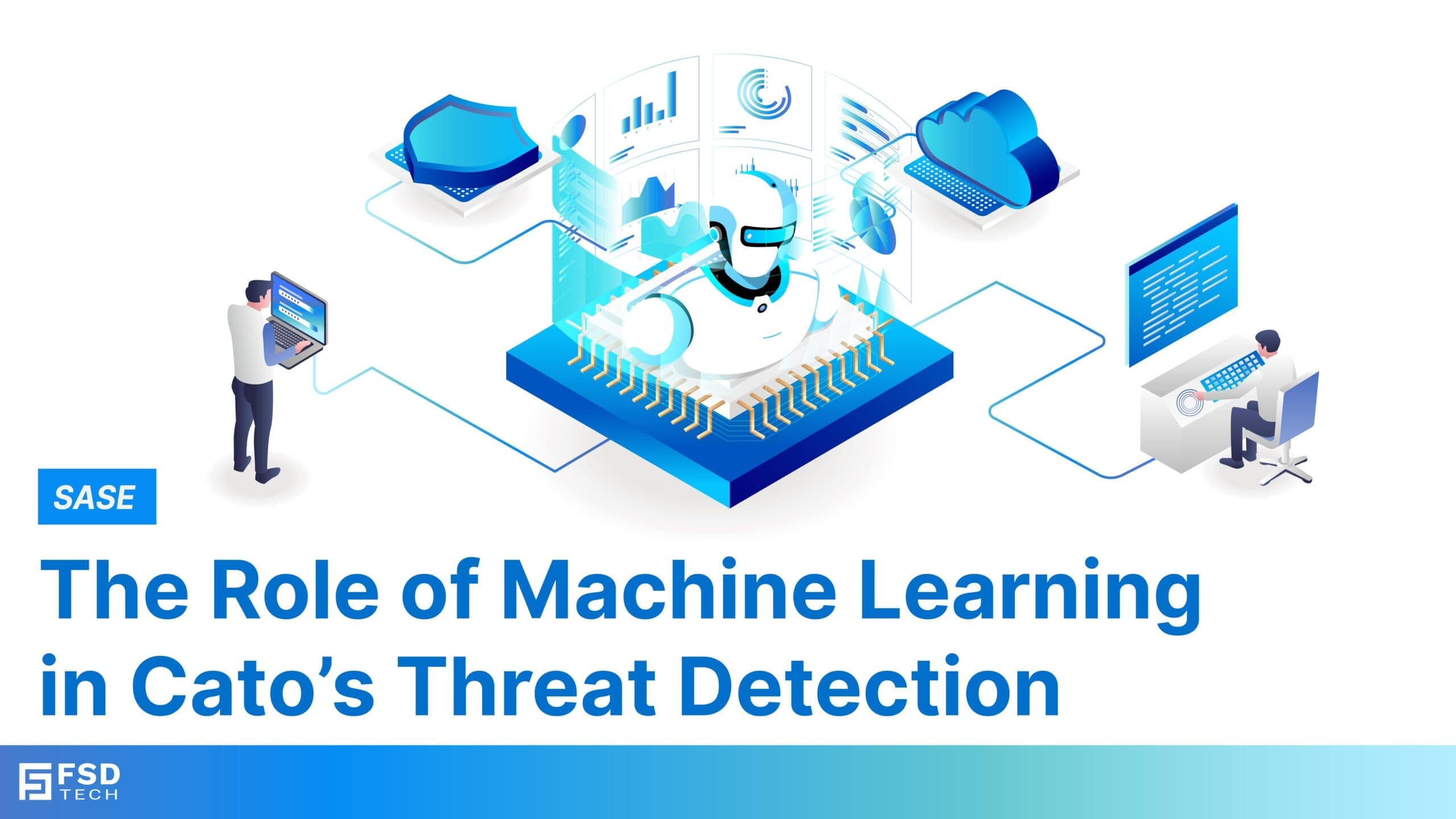
The digital world is getting more dangerous. Cyber threats are becoming smarter. Because of this, old security methods often fail to catch new attacks quickly.
Machine learning (ML), a part of artificial intelligence (AI), is changing cybersecurity. It helps systems find and stop threats in real-time.
Cato Networks uses a Secure Access Service Edge (SASE) framework. In this framework, machine learning threat detection is key. It finds possible threats before they can hurt your business.
This article shows how Cato’s SASE platform uses machine learning to make security better. You'll see how this leads to a more proactive and flexible security solution.
Machine learning can process vast amounts of data, identify patterns, and detect anomalies faster than any human operator. In the realm of cybersecurity, this translates into faster threat detection and response times.
Every day, organizations generate massive volumes of data, from network logs to user activity records. Machine learning algorithms analyze this data to identify deviations from the norm that might indicate a potential threat.
By spotting anomalies early, machine learning enables proactive threat detection, allowing security teams to respond quickly.
One of the significant advantages of machine learning is its ability to continuously improve. As it processes more data, the algorithm learns from past threats, allowing it to detect similar patterns more accurately in the future.
This continuous learning process means that Cato’s threat detection model evolves with emerging threat landscapes, staying one step ahead of cybercriminals.
Machine learning reduces the burden on security teams by automating threat detection processes. Instead of relying on manual oversight, machine learning scans network activity 24/7, identifying potential issues as they arise.
This automation provides round-the-clock protection without requiring continuous monitoring from IT staff.
Start Threat Detection with Cato SASE
Artificial intelligence (AI) adds a powerful layer to machine learning. This helps Cato’s SASE platform offer very advanced threat detection capabilities.
AI uses predictive analytics to find patterns in network traffic. These patterns come right before an attack. This lets Cato guess potential threats before they start.
For example, if someone tries to log in and fails many times, the AI might flag this. It sees this behavior as an attempted breach and starts defense actions.
AI-driven anomaly detection tools check data right now, in real-time. They catch strange behavior as it occurs.
What if a user usually logs in from a city in Europe, but suddenly logs in from a city in Asia? The system sees this as suspicious. It then alerts security staff.
AI-based algorithms make threat detection more accurate. They help get rid of false positives.
False positives are often an issue in old security systems. They lead to "alert fatigue." They distract security teams from real dangers.
AI's accuracy means that alerts are reliable. They are focused on actual risks.
The integration of machine learning into Cato’s SASE framework offers numerous benefits, enhancing both security and operational efficiency.
Cato’s SASE platform uses several key machine learning components to deliver a robust and responsive threat detection system.
Behavioural analysis models establish a baseline for normal activity, allowing the system to detect deviations that might signal a security incident. This approach enables proactive threat detection, identifying unusual behaviour patterns that might indicate a breach.
Cato’s SASE integrates with global threat intelligence feeds, enriching machine learning models with the latest data on emerging threats. This integration ensures that Cato’s threat detection remains effective against new attack vectors.
Cato’s adaptive algorithms adjust based on new data, continuously refining detection capabilities. This adaptability makes Cato’s machine learning threat detection model robust and reliable, even in the face of rapidly evolving cyber threats.
Also Read: Unified Device Visibility: Enhancements to Cato’s Device Inventory
Old threat detection methods use rules. They are rigid and don't work well against threats that no one has seen before.
Machine learning-driven models are different. They are flexible and dynamic. They offer far better threat detection capabilities.
| Basis for Comparison | Traditional Threat Detection | Machine Learning-Driven Detection |
|---|---|---|
| Detection Method | Rule-based, uses predefined attack patterns | Adaptive learning, uses behavioral analysis |
| Response Time | Slower, often reactive after a breach | Real-time, offers proactive protection |
| Accuracy | High chance of false alerts (false positives) | Reduced false alerts with precise filtering |
| Scalability | Limited and can be complex to scale up | Easily scales with network expansion and growth |
Machine learning-driven models are more successful at finding and reducing threats. This is especially true in complex networks, like those using multi-cloud architectures.
Businesses that use Cato’s machine learning-driven SASE threat detection model get many benefits.
Machine learning in Cato’s SASE platform completely changes threat detection. It gives you a real-time, adaptive security solution. This solution changes as threats emerge.
By using advanced algorithms for behavioral analysis, anomaly detection, and predictive analytics, Cato gives better accuracy. It cuts down false positives and ensures faster response times.
This is why Cato’s SASE is a key tool in today’s changing cybersecurity landscape. It lets your business achieve strong security while making operations simpler.
Are you ready to use advanced machine learning threat detection to protect your business? Talk to Our Cato SASE experts!
Cato employs machine learning (ML) algorithms to analyze network traffic patterns and identify anomalies that could indicate a security threat. By learning from large datasets, Cato’s ML models can detect potential threats in real-time, even those that may evade traditional signature-based detection methods.
Machine learning can analyze vast amounts of data quickly, identifying patterns and correlations that might indicate a threat. Unlike traditional methods that rely on predefined signatures, ML can detect novel, previously unseen threats by recognizing abnormal behaviors within network traffic.
Cato’s ML-powered threat detection identifies various threats, including malware, phishing attempts, ransomware, and advanced persistent threats (APTs). It can detect both known and unknown threats, making it effective against evolving cyber risks.
Machine learning analyzes vast amounts of data in real-time, identifying unusual patterns that indicate potential threats. This continuous monitoring enables faster and more accurate threat detection.
Yes, machine learning algorithms are trained to filter out false positives, allowing security teams to focus on actual threats rather than sorting through inaccurate alerts.
Cato’s model integrates threat intelligence and continuously learns from new data, allowing it to recognize and respond to emerging threats.
ML algorithms can process data in real-time, analyzing network traffic and flagging potential threats immediately. This speed enables faster responses and mitigations, minimizing the potential damage caused by an attack.
No, Cato’s ML models continually learn from new data, enabling them to adapt to evolving threats without manual updates. The system is designed to improve accuracy over time, making it more effective against emerging threats.
Cato’s machine learning models are trained on extensive datasets, allowing them to differentiate between normal and abnormal traffic patterns. This precision reduces false positives, enabling IT teams to focus on genuine threats rather than benign anomalies.
Cato’s ML-based threat detection is designed to analyze traffic patterns and metadata rather than personal user data, ensuring privacy while maintaining security. The system focuses on network behavior rather than user-specific information.
Machine learning complements Cato’s other security functions, such as Firewall-as-a-Service (FWaaS) and Secure Web Gateway (SWG). Together, they create a layered security approach where ML quickly identifies potential threats while other tools provide additional filtering and protection.
Cato’s threat detection can analyze traffic patterns, metadata, and behavioral anomalies even within encrypted traffic. While it may not inspect encrypted content directly, it can still detect unusual patterns that could indicate threats.
Yes, Cato’s ML models are designed to evolve with new data, learning from emerging threats and adapting without manual intervention. This adaptability enables proactive defense against both known and unknown threats.
Absolutely. Cato’s ML-based threat detection is scalable, making it suitable for small businesses, mid-sized organizations, and large enterprises. The ML model adjusts to the size and complexity of the network, providing consistent protection regardless of scale.
Cato’s ML-powered threat detection reduces the volume of alerts by accurately identifying and categorizing threats, minimizing false positives. This allows IT security teams to focus on high-priority incidents, improving efficiency and reducing burnout.

MJ is the Lead Solutions Architect & Technology Consultant at FSD-Tech. He has 20+ years of experience in IT Infrastructure & Digital Transformation. His Interests are in Next-Gen IT Infra Solutions like SASE, SDN, OCP, Hybrid & Multi-Cloud Solutions.
Share it with friends!




.webp&w=3840&q=75)





.webp&w=3840&q=75)
share your thoughts