HomeNext Gen IT-InfraMonitoring & ManagementCyber SecurityBCP / DRAutomationDecoded
Next Gen IT-Infra
Cato’s SASE Supports Cybersecurity Skills Development

How Cato’s SASE Supports Cybersecurity Skills Development

🕓 April 8, 2025

How SASE Supports the Security Needs of SMBs

How SASE Supports the Security Needs of SMBs

🕓 February 9, 2025

Attack Surface Reduction with Cato’s SASE

Attack Surface Reduction with Cato’s SASE

🕓 February 10, 2025

SASE for Digital Transformation in UAE

SASE for Digital Transformation in UAE

🕓 February 8, 2025

Monitoring & Management
Understanding Atera’s SLA Management

Understanding Atera’s SLA Management

🕓 February 7, 2025

Cost-Performance Ratio: Finding the Right Balance in IT Management Networks

Cost-Performance Ratio: Finding the Right Balance in IT Management Networks

🕓 June 16, 2025

Customizing Atera with APIs

Customizing Atera with APIs

🕓 March 3, 2025

Power Up Your IT Team’s Strategy with Atera’s Communication Tools

Power Up Your IT Team’s Strategy with Atera’s Communication Tools

🕓 February 8, 2025

Cyber Security
Illustration of the Cato Cloud architecture showing its role in delivering SASE for secure, optimized global connectivity.

Understanding the Cato Cloud and Its Role in SASE

🕓 January 29, 2025

Isometric illustration of professionals managing network performance, bandwidth analytics, and cloud-based optimization around the Cato Networks platform, symbolizing bandwidth control and QoS visibility.

Mastering Bandwidth Control and QoS in Cato Networks

🕓 July 26, 2025

Global network backbone powering Cato SASE solution for secure, high-performance connectivity across regions.

Global Backbone: The Engine Powering Cato’s SASE Solution

🕓 January 30, 2025

Illustration of team analyzing application traffic and usage insights on a large laptop screen using Cato’s dashboard, surrounded by network and cloud icons.

Cato Networks Application Visibility | Monitoring & Control

🕓 July 27, 2025

BCP / DR
Illustration showing diverse business and IT professionals collaborating with cloud, backup, and security icons, representing Vembu use cases for SMBs, MSPs, and IT teams.

Who Uses Vembu? Real-World Use Cases for SMBs, MSPs & IT Teams

🕓 July 12, 2025

Graphic showcasing Vembu’s all-in-one backup and disaster recovery platform with icons for cloud, data protection, and business continuity for IT teams and SMBs.

What Is Vembu? A Deep Dive Into the All in One Backup & Disaster Recovery Platform

🕓 July 6, 2025

Illustration showing Vembu backup and disaster recovery system with cloud storage, server racks, analytics dashboard, and IT professionals managing data.

The Rising Cost of Data Loss: Why Backup Is No Longer Optional?

🕓 August 14, 2025

3D isometric illustration of cloud backup and data recovery infrastructure with laptop, data center stack, and digital business icons — FSD Tech

RPO & RTO: The Heart of Business Continuity

🕓 August 15, 2025

Automation
Cross-Functional Collaboration with ClickUp

Fostering Cross-Functional Collaboration with ClickUp for Multi-Departmental Projects

🕓 February 11, 2025

ClickUp Project Reporting

Revolutionizing Enterprise Reporting with ClickUp’s Advanced Analytics and Dashboards

🕓 June 16, 2025

ClickUp’s Design Collaboration and Asset Management Tools

Empowering Creative Teams with ClickUp’s Design Collaboration and Asset Management Tools

🕓 February 26, 2025

ClickUp Communication and Collaboration Tools

ClickUp Communication and Collaboration Tools: Empowering Remote Teams

🕓 March 12, 2025

Decoded
Multi-Factor Authentication (MFA)

Multi-Factor Authentication (MFA): All You Need to Know

🕓 December 7, 2025

L3 Switch

What Is an L3 Switch? L2 vs L3 & Why You Need Layer 3?

🕓 December 8, 2025

IPSec

IPSec Explained: Protocols, Modes, IKE & VPN Security

🕓 December 3, 2025

 Datagram Transport Layer Security (DTLS)

What is Datagram Transport Layer Security (DTLS)? How it works?

🕓 December 4, 2025

    Subscribe to our newsletter!

    About Us

    Follow Us

    Copyright © 2024 | Powered by 

    Isometric illustration of a centralized executive dashboard platform connected to analytics panels, performance charts, security indicators, and strategic milestones, representing real-time business visibility and decision control within ClickUp.

    Executive Visibility in ClickUp – How CXOs Gain Real-Time Control Without Micromanaging

    🕓 February 13, 2026

    Cato SASE Architecture

    Inside Cato’s SASE Architecture: A Blueprint for Modern Security

    🕓 January 26, 2025

    Enterprise Data Security and Privacy with ClickUp

    Ensuring Enterprise Data Security and Privacy with ClickUp

    🕓 February 9, 2025

    Table of Contents

    Building a Single Source of Truth in ClickUp for Large Organizations

    NHAIF NOUSHAD
    February 14, 2026
    Comments
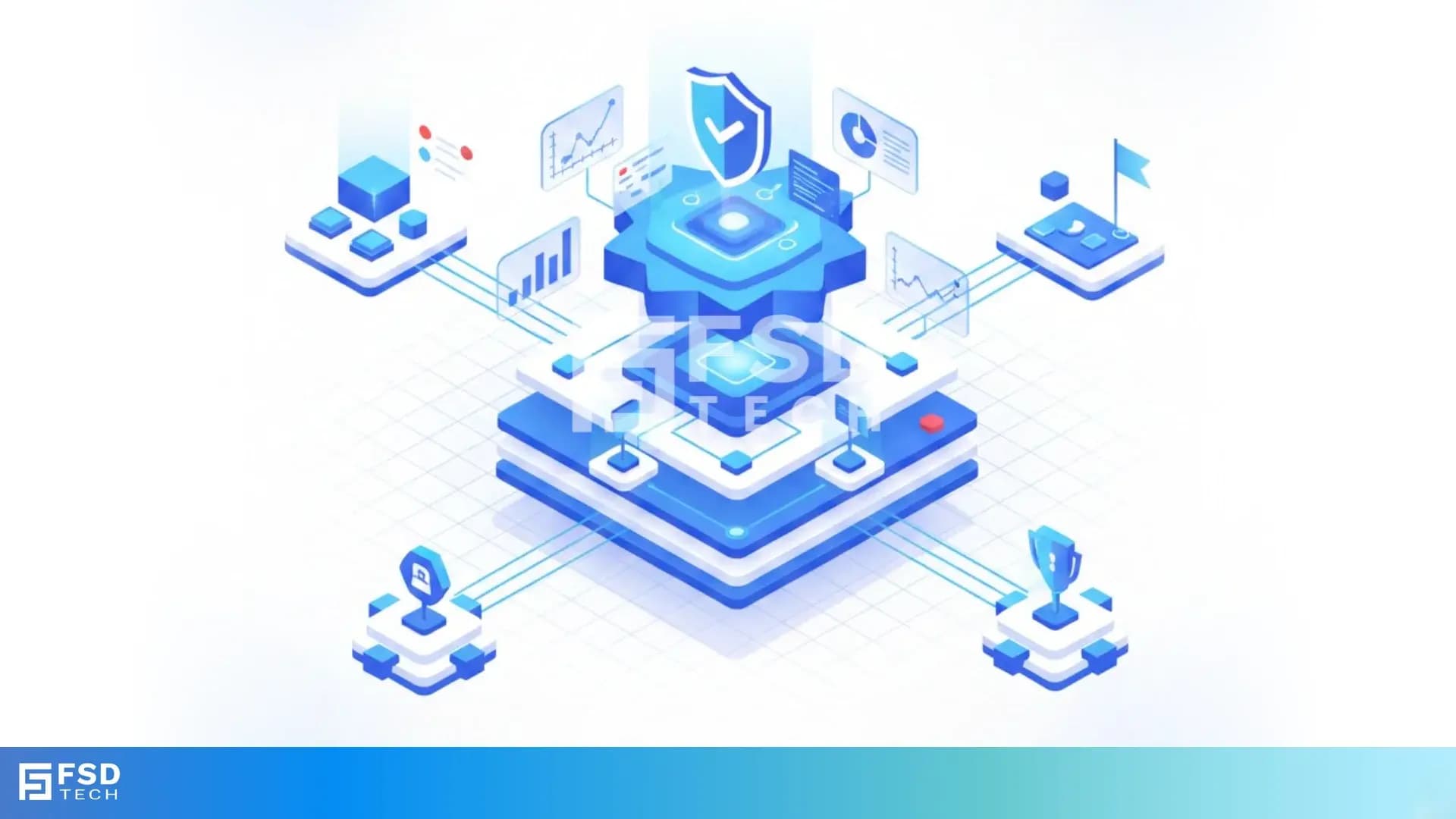
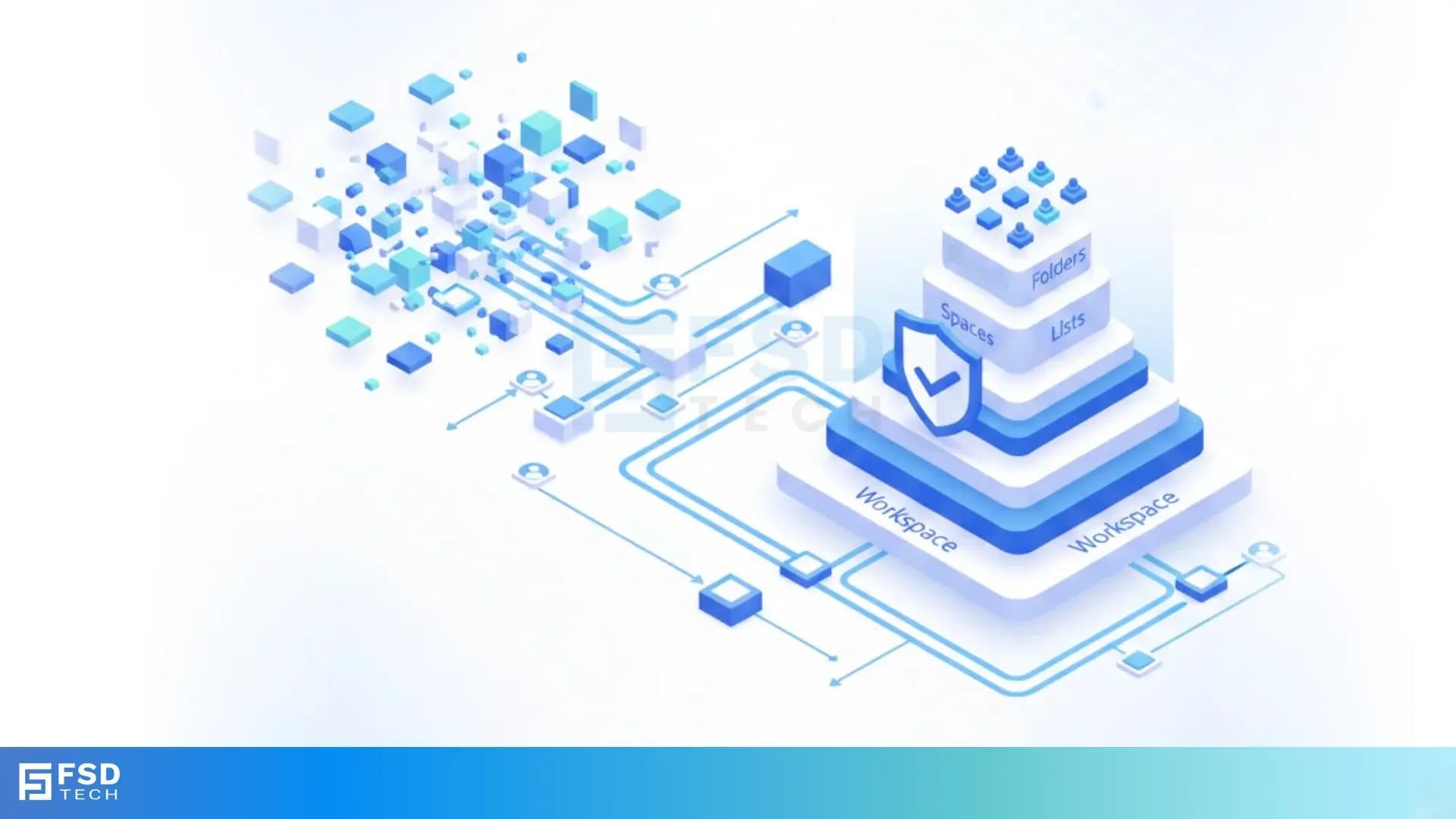
    isometric illustration of a centralized digital platform with a shield icon at the center, connected to dashboards, analytics panels, and structured data blocks, representing a unified enterprise system and secure single source of truth.

    As organizations grow, information spreads across tools, teams, and documents. Project updates live in spreadsheets, approvals happen over email, requirements sit in documents, and execution happens somewhere else entirely. The result is confusion, delays, and misalignment-especially at scale.
     

    Large organizations don’t struggle due to lack of tools. They struggle because there is no single place where work, context, ownership, and status come together reliably.

    This is where a centralized work management platform becomes critical.


    ClickUp enables organizations to create a true single source of truth-where strategy, execution, documentation, and reporting live together. In this blog, we explore how enterprises can use ClickUp to eliminate fragmentation, improve decision-making, and create organization-wide clarity without adding complexity.


    Why Large Organizations Lose Visibility as They Scale

    In growing enterprises, each department optimizes for its own needs. Marketing adopts one tool, operations another, finance relies on spreadsheets, and leadership depends on presentations compiled manually.

    This leads to common challenges:

    • Multiple versions of the same information
    • Conflicting project statuses across teams
    • Delays caused by missing or outdated data
    • Heavy reliance on meetings for alignment
    • No real-time visibility into execution

    When information is scattered, trust in data erodes. Teams stop relying on systems and revert to emails, messages, and manual follow-ups.

    A single source of truth solves this by ensuring everyone works from the same, always-updated system.


    What “Single Source of Truth” Really Means

    A single source of truth is not just a shared dashboard or a central document repository. It is a system where:

    • All work is captured in one place
    • Ownership and accountability are clearly defined
    • Status reflects real execution, not manual updates
    • Documentation stays connected to work
    • Reporting is generated automatically from live data

    ClickUp functions as this system by combining task management, documentation, goals, dependencies, and reporting within one unified workspace.


    Designing a Centralized Workspace Structure in ClickUp

    Creating a single source of truth starts with intentional workspace design. ClickUp’s hierarchy allows enterprises to mirror their organizational structure without creating silos.

    Recommended structure:

    • Workspace represents the organization
    • Spaces align with departments or business units
    • Folders group initiatives, programs, or portfolios
    • Lists represent projects or recurring workflows
    • Tasks capture execution-level activities

    This structure ensures that all work-regardless of department-follows a consistent logic, making cross-team visibility possible without forcing teams into identical workflows.


    Standardizing Work Without Restricting Teams

    One reason single-source initiatives fail is over-standardization. Teams resist systems that remove flexibility.

    ClickUp avoids this by allowing:

    • Shared statuses and fields for visibility
    • Team-specific views for execution
    • Consistent reporting without rigid workflows

    For example, while all teams may use common fields like “Priority,” “Owner,” or “Project Stage,” each department can still customize views that suit their daily work.

    This balance is essential for adoption at scale.


    Centralizing Documentation Where Work Happens

    In many organizations, documentation lives separately from execution—making it outdated the moment work begins.

    ClickUp Docs solve this by embedding documentation directly into workflows. Teams can:

    • Create project briefs linked to tasks
    • Maintain SOPs connected to execution steps
    • Store decisions, meeting notes, and requirements centrally
    • Update documents as work progresses

    When documentation and tasks live together, context is never lost—and teams don’t need to search across tools to understand what’s happening.


    Connecting Strategy, Projects, and Daily Work

    A true single source of truth must connect high-level strategy with execution.

    ClickUp enables this by linking:

    • Strategic goals to projects
    • Projects to tasks
    • Tasks to measurable outcomes

    Leadership can see how daily work contributes to business objectives—without relying on manual reporting or interpretation.

    This alignment improves prioritization, ensures focus on outcomes, and eliminates effort spent on low-impact work.


    Eliminating Conflicting Data Across Departments

    One of the biggest enterprise challenges is conflicting reports. Different teams often report different numbers for the same initiative.

    ClickUp resolves this by:

    • Using live task data for reporting
    • Eliminating manual status updates
    • Ensuring all teams reference the same system

    Dashboards, views, and summaries all pull from the same underlying data-ensuring consistency across leadership, operations, and delivery teams.


    Enabling Real-Time Decision-Making

    When leadership relies on static reports, decisions are always delayed.

    With ClickUp as the single source of truth:

    • Progress updates happen automatically
    • Risks are visible as soon as they appear
    • Dependencies surface before timelines break
    • Leadership sees the current state-not last week’s snapshot

    This allows executives and managers to act faster, with confidence that the data reflects reality.


    Managing Cross-Functional Work Without Information Gaps

    Enterprise initiatives rarely belong to one team. Product launches, transformations, compliance initiatives, and expansion programs span departments.

    ClickUp enables cross-functional clarity by:

    • Linking tasks across Spaces
    • Defining ownership across teams
    • Visualizing dependencies and timelines
    • Keeping all stakeholders aligned in one system

    No more chasing updates across tools or reconciling multiple reports.


    Improving Accountability Through Transparency

    When information is centralized, accountability becomes clear.

    ClickUp makes it easy to:

    • Identify owners for every task and project
    • Track commitments against deadlines
    • See blockers and dependencies transparently
    • Reduce ambiguity around responsibility

    This transparency drives accountability naturally-without constant follow-ups or micromanagement.


    Building Trust in Data Across the Organization

    For a single source of truth to work, teams must trust the system.

    ClickUp supports this by:

    • Reflecting real execution data
    • Reducing manual data manipulation
    • Making updates visible instantly
    • Creating consistency across reports

    Over time, teams stop questioning the data and start using it confidently for planning, execution, and decision-making.


    Best Practices for Maintaining a Single Source of Truth

    To ensure long-term success:

    • Enforce usage of ClickUp as the primary work system
    • Avoid parallel tracking in spreadsheets or emails
    • Standardize key fields and statuses across teams
    • Train teams on why accuracy matters
    • Review workspace structure quarterly

    A single source of truth is not a one-time setup-it’s an operational discipline.


    Final Thoughts: One System, One Reality

    Large organizations don’t need more tools. They need clarity.

    By using ClickUp as a single source of truth, enterprises can:

    • Eliminate information silos
    • Improve cross-team alignment
    • Enable real-time decision-making
    • Reduce operational friction
    • Build trust in execution data

    When everyone works from the same system, collaboration improves, decisions accelerate, and execution becomes predictable.

    With ClickUp, a single source of truth is not an aspiration-it’s a practical, scalable reality.


    Stop reconciling spreadsheets. Start trusting live data → See how ClickUp becomes your single source of truth.
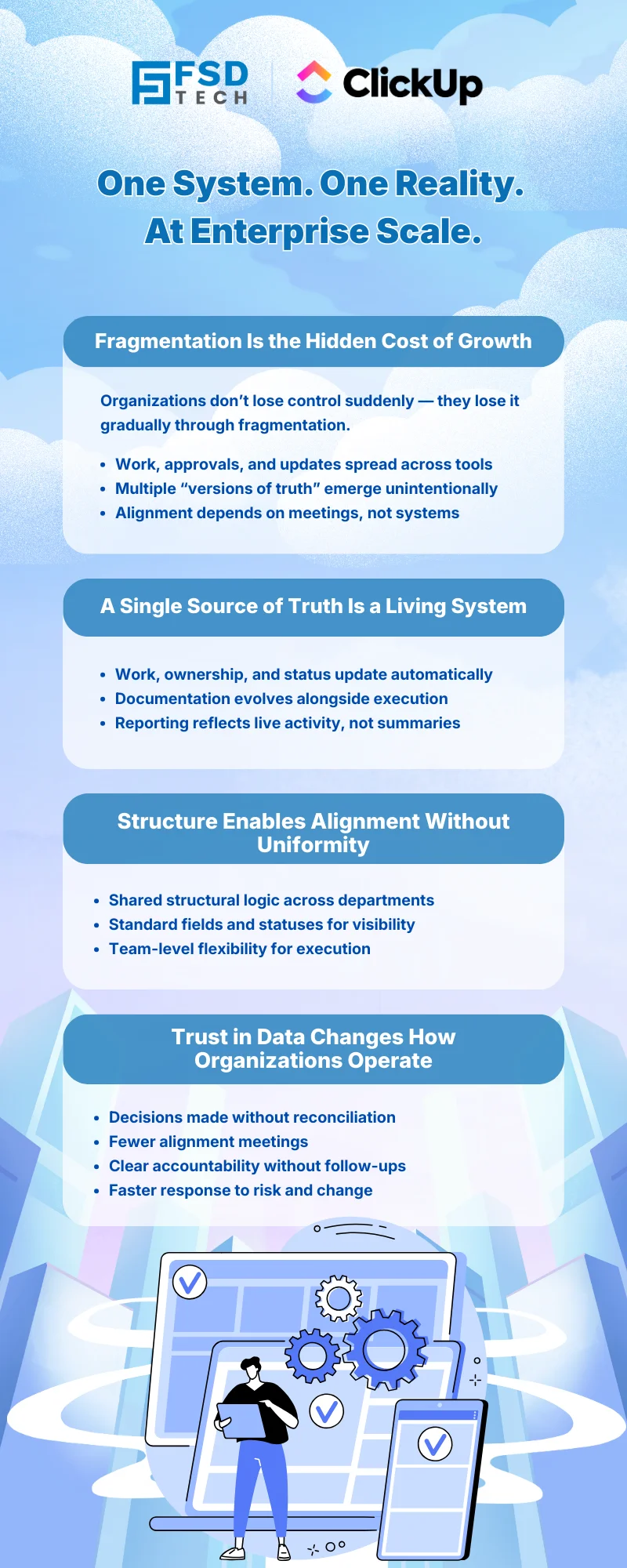
     

    Infographic titled “One System. One Reality. At Enterprise Scale.” explaining how ClickUp reduces fragmentation, creates a living single source of truth, standardizes structure across departments, and builds trust in real-time data, branded by FSD Tech and ClickUp.


    FAQs

    What does a single source of truth mean in ClickUp?

    It means ClickUp becomes the central system where tasks, documentation, ownership, and progress are managed and referenced across the organization.


    How does ClickUp reduce conflicting reports across teams?

    All reports and dashboards pull from live task data, eliminating manual updates and inconsistent reporting sources.


    Can different teams still work differently within a single system?

    Yes. ClickUp allows standardized visibility while giving teams flexibility in views and execution workflows.


    Is ClickUp suitable for large, multi-department organizations?

    Absolutely. ClickUp’s hierarchy, permissions, and reporting capabilities are designed for enterprise-scale operations.


    How do we ensure teams actually use ClickUp as the source of truth?

    Leadership alignment, standardized workflows, and eliminating parallel tools are key to successful adoption.


    Building a Single Source of Truth in ClickUp for Large Organizations

    About The Author

    NHAIF NOUSHAD

    Nhaif is an AI Automation Engineer & Business Analyst focused on ClickUp, AI, Automation, and Workflow Optimization. He helps businesses shift from scattered processes to streamlined, data-driven operations. With hands-on expertise, he simplifies complex tools into clear, easy-to-apply solutions.

    Like This Story?

    Share it with friends!

    Subscribe to our newsletter!

    Atera

    (55)

    Cato Networks

    (121)

    ClickUp

    (72)

    FishOS

    (7)

    Miradore

    (21)

    PointGuard AI

    (9)

    Vembu

    (22)

    Xcitium

    (33)

    ZETA HRMS

    (79)

    Workflow Automation(8)

    Workforce Automation(1)

    AI Project Management(1)

    HR Data Automation(1)

    RMM(1)

    IT Workflow Automation(1)

    GCC compliance(4)

    IT security(2)

    Payroll Integration(2)

    IT support automation(3)

    procurement automation(1)

    lost device management(1)

    IT Management(5)

    IoT Security(2)

    Cato XOps(2)

    IT compliance(4)

    Task Automation(1)

    Workflow Management(1)

    Kubernetes lifecycle management(2)

    AI-powered cloud ops(1)

    OpenStack automation(1)

    SMB Security(8)

    Data Security(1)

    MDR (Managed Detection & Response)(4)

    MSP Automation(3)

    Atera Integrations(2)

    XDR Security(2)

    Ransomware Defense(3)

    SMB Cyber Protection(1)

    HR Tech Solutions(1)

    Zero Trust Network Access(3)

    Zero Trust Security(2)

    Endpoint Management(1)

    SaaS Security(1)

    Payroll Automation(5)

    IT Monitoring(2)

    Xcitium EDR SOC(15)

    Ransomware Protection GCC(1)

    M&A IT Integration(1)

    Network Consolidation UAE(1)

    MSSP for SMBs(1)

    Antivirus vs EDR(1)

    Managed EDR FSD-Tech(1)

    FSD-Tech MSSP(25)

    SMB Cybersecurity GCC(1)

    Ransomware Protection(3)

    Cybersecurity GCC(12)

    Endpoint Security(1)

    Endpoint Protection(1)

    Data Breach Costs(1)

    SMB Cybersecurity(8)

    Zero Dwell Containment(31)

    Managed Security Services(2)

    Xcitium EDR(30)

    Hybrid Backup(1)

    Cloud Backup(1)

    Backup & Recovery(1)

    pointguard ai(4)

    backup myths(1)

    vembu(9)

    SMB data protection(9)

    disaster recovery myths(1)

    Disaster Recovery(4)

    Vembu BDR Suite(19)

    GCCBusiness(1)

    DataProtection(1)

    Secure Access Service Edge(4)

    GCC HR software(20)

    Miradore EMM(15)

    Cato SASE(7)

    Cloud Security(9)

    Hybrid Learning(1)

    GCC Education(1)

    Talent Development(1)

    AI Compliance(2)

    AI Governance(4)

    AI Cybersecurity(12)

    AI Risk Management(1)

    AI Security(2)

    GCC business security(1)

    GCC network integration(1)

    compliance automation(5)

    education security(1)

    GCC cybersecurity(3)

    Miradore EMM Premium+(5)

    App management UAE(1)

    BYOD security Dubai(8)

    HealthcareSecurity(1)

    MiddleEast(1)

    Team Collaboration(1)

    IT automation(12)

    Zscaler(1)

    SD-WAN(7)

    HR Integration(4)

    Cloud Networking(4)

    device management(9)

    VPN(1)

    ZeroTrust(2)

    RemoteWork(1)

    MPLS(1)

    share your thoughts

    isometric illustration of a centralized digital platform with a shield icon at the center, connected to dashboards, analytics panels, and structured data blocks, representing a unified enterprise system and secure single source of truth.

    Building a Single Source of Truth in ClickUp for Large Organizations

    🕓 February 14, 2026

    Isometric illustration of a centralized executive dashboard platform connected to analytics panels, performance charts, security indicators, and strategic milestones, representing real-time business visibility and decision control within ClickUp.

    Executive Visibility in ClickUp – How CXOs Gain Real-Time Control Without Micromanaging

    🕓 February 13, 2026

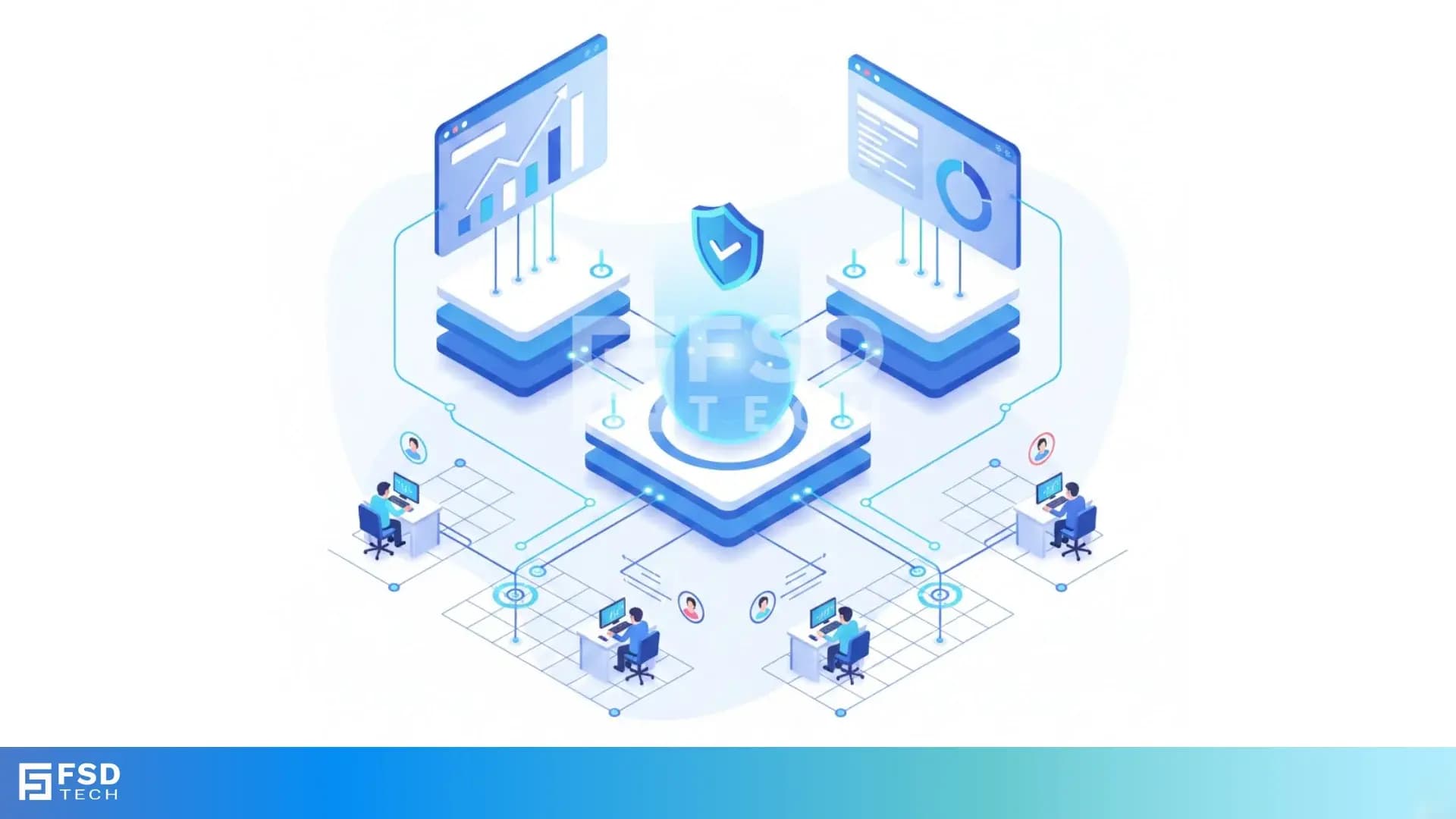
    Illustration depicting a structured ClickUp workspace architecture with multiple departments connected to a central system, highlighting scalable workflows, data visibility, security controls, and cross-team collaboration

    Structuring Multi-Department Workspaces in ClickUp for Scalable Team Management

    🕓 January 18, 2026

    Decoded(111)

    Cyber Security(118)

    BCP / DR(22)

    Zeta HRMS(78)

    SASE(21)

    Automation(72)

    Next Gen IT-Infra(118)

    Monitoring & Management(76)

    ITSM(22)

    HRMS(21)

    Automation(24)