.webp&w=3840&q=75)
How ClickUp Enables Outcome-Based Project Management (Not Just Task Tracking)
🕓 February 15, 2026
.webp&w=3840&q=75)
For many organizations, Human Resources is still perceived as a support function focused on payroll processing, policy enforcement, and administrative compliance. While these responsibilities remain essential, they no longer define the full scope of HR’s role in modern enterprises. Today, leadership expects HR to contribute directly to business strategy, workforce planning, and organizational performance.
The shift from administrative HR to strategic HR does not happen by intent alone. It requires structural change, data maturity, and system-driven execution. Zeta HRMS enables this transformation by providing HR teams with the tools, visibility, and governance required to operate as true business partners.
This blog explores how Zeta HRMS helps organizations elevate HR from an operational service provider to a strategic business partner that influences outcomes across the enterprise.
Historically, HR functions were designed to ensure operational continuity-processing salaries, maintaining employee records, and enforcing policies. Decision-making authority and strategic planning were typically confined to leadership and finance teams.
However, as organizations face rapid change driven by growth, competition, and workforce complexity, HR’s proximity to people data has become a strategic advantage. Workforce trends, skill availability, cost structures, and engagement levels directly impact business performance.
To act as a strategic partner, HR must transition from reactive execution to proactive insight generation. This shift requires reliable data, standardized processes, and systems that connect HR operations with organizational goals.
Despite good intent, many HR teams struggle to step into a strategic role due to structural and operational limitations.
Common barriers include:
When HR is consumed by transactional work, it becomes difficult to influence leadership decisions or proactively support business objectives.
Zeta HRMS addresses these challenges by enabling HR teams to operate with clarity, control, and confidence.
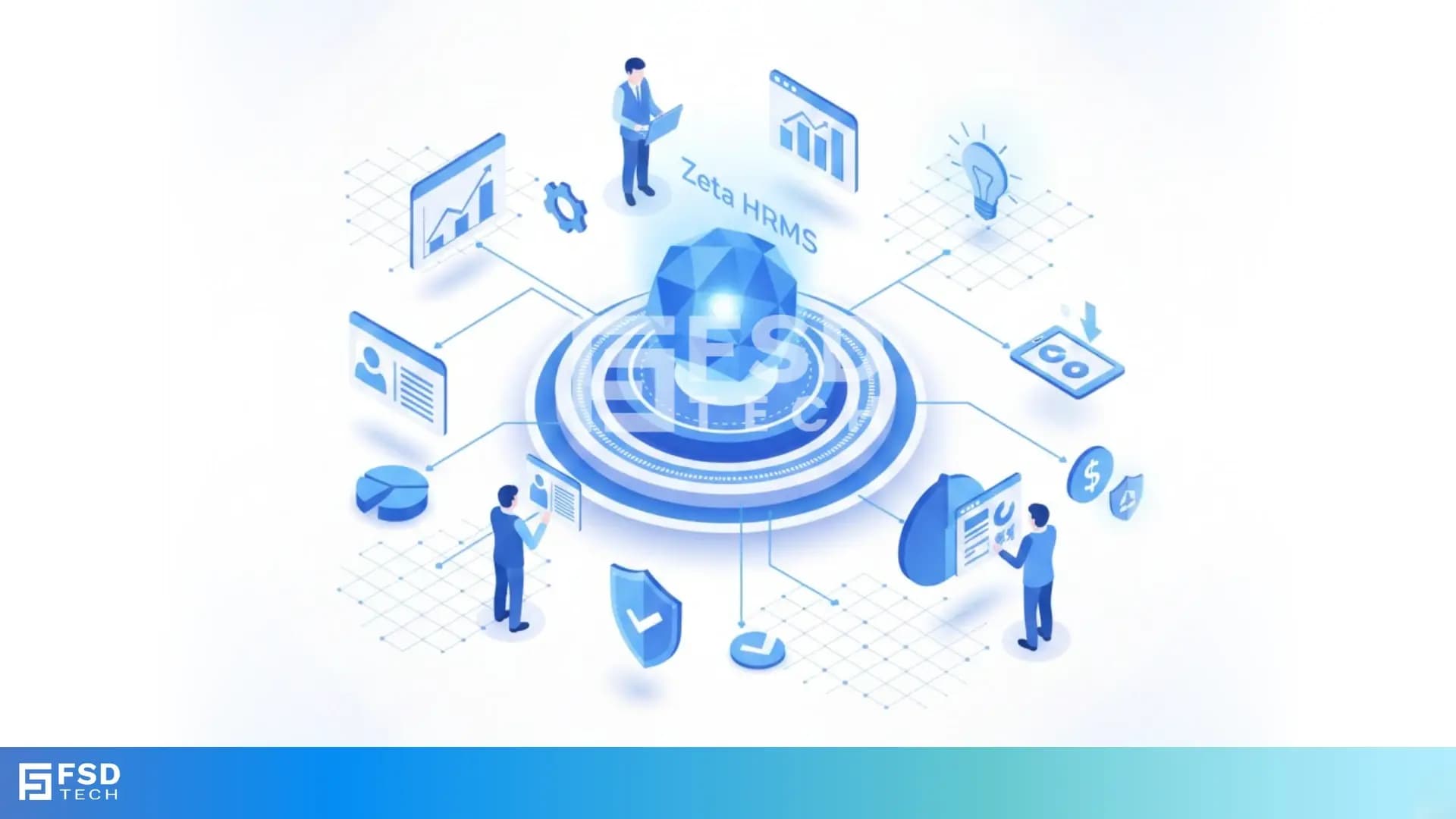
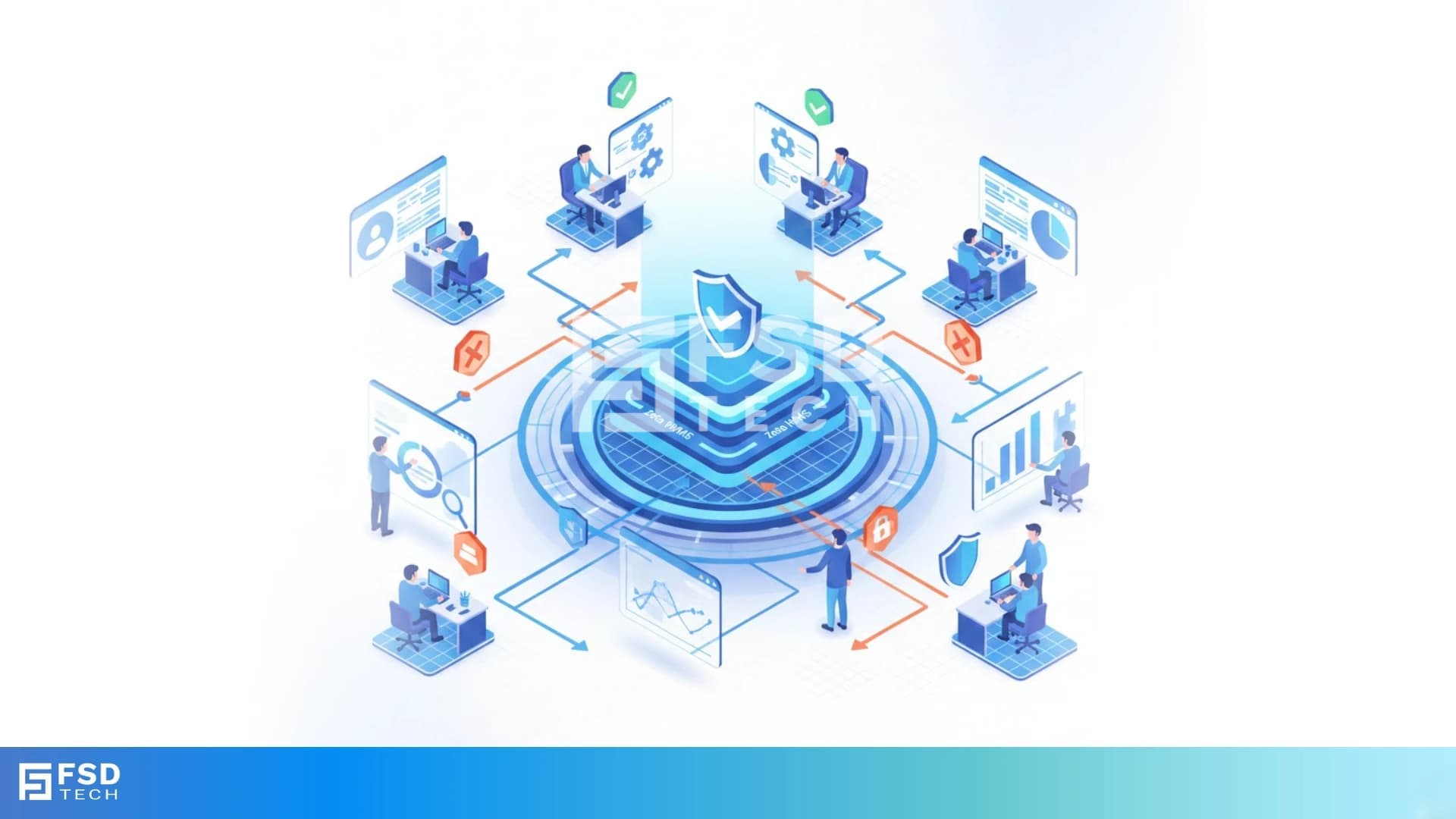
Zeta HRMS serves as the operational backbone that allows HR to shift focus from execution to strategy. By centralizing data and embedding intelligence into workflows, it creates the conditions necessary for HR to function as a business partner.
Instead of managing tasks in isolation, HR teams using Zeta HRMS can align people operations with organizational priorities, providing leadership with insights that support informed decision-making.
Strategic decisions require accurate data. Zeta HRMS consolidates workforce information into a single system, ensuring that employee records, approvals, and policies are consistent and up to date.
This reliability allows HR to present leadership with credible insights on workforce trends, cost implications, and capacity planning.
Administrative overload is one of the biggest barriers to strategic HR. Zeta HRMS standardizes and automates routine HR processes, reducing manual effort and eliminating repetitive tasks.
As operational efficiency improves, HR teams gain the bandwidth to focus on workforce strategy, organizational design, and leadership collaboration.
Strategic HR requires consistency and fairness. Zeta HRMS embeds organizational policies into workflows, ensuring that HR decisions are governed by predefined rules rather than ad-hoc judgment.
This structured approach strengthens trust between HR, employees, and leadership.
Zeta HRMS provides HR leaders with real-time visibility into workforce data, enabling meaningful discussions with business leaders. Instead of relying on static reports, HR can engage in data-backed conversations that influence planning and execution.
This transparency positions HR as a trusted advisor rather than a transactional function.
With access to accurate workforce data, HR teams can support leadership in planning future workforce needs. Zeta HRMS enables HR to analyze workforce structure, identify gaps, and align talent strategies with business growth plans.
This proactive involvement strengthens HR’s strategic relevance.
Workforce costs are one of the largest operational expenses for most organizations. Zeta HRMS allows HR to understand cost implications across departments and roles, enabling informed recommendations that balance productivity and financial sustainability.
HR moves from cost reporting to cost optimization.
Strategic HR connects people initiatives with measurable outcomes. Zeta HRMS enables HR teams to track how workforce decisions impact performance, stability, and engagement.
This alignment ensures HR initiatives directly support business objectives rather than operating in isolation.
When HR decisions are transparent, data-driven, and consistent, leadership confidence increases. Zeta HRMS provides the structure and insights necessary for HR to engage leadership with clarity and authority.
This confidence reinforces HR’s role as a strategic partner.
Zeta HRMS supports role-based access and accountability, enabling organizations to clearly define HR’s strategic and operational responsibilities. This clarity ensures HR leaders can focus on value-driven initiatives.
Strategic HR is not separate from daily operations. Zeta HRMS integrates strategic intent into everyday workflows, ensuring alignment between execution and long-term goals.
Zeta HRMS enables HR teams to measure outcomes such as workforce stability, cost efficiency, and organizational readiness, helping demonstrate HR’s contribution to business performance.
Organizations that empower HR as a strategic partner using Zeta HRMS experience significant benefits.
Leadership decisions are supported by accurate workforce insights rather than assumptions.
HR can respond quickly to change with structured processes and real-time data.
People strategies are aligned with business priorities, improving overall performance.
Automation and standardization reduce delays and internal conflicts.
HR earns a seat at the leadership table through consistency, insight, and strategic contribution.
Zeta HRMS is designed to support both operational excellence and strategic execution. Its ability to connect workforce data, processes, and governance makes it a critical enabler for organizations seeking to elevate HR’s role.
By adopting Zeta HRMS, organizations create the foundation needed for HR to function as a long-term business partner rather than a reactive support function.
Transforming HR into a strategic business partner requires more than changing job titles or expectations. It demands systems that provide clarity, consistency, and insight. Zeta HRMS empowers HR teams to move beyond administrative execution and actively shape business outcomes.
With Zeta HRMS, HR becomes a function that informs strategy, supports leadership decisions, and drives organizational success through people-centric intelligence.
Turn workforce data into strategic business decisions→ Book a 30-minute Zeta HRMS walkthrough with our experts.
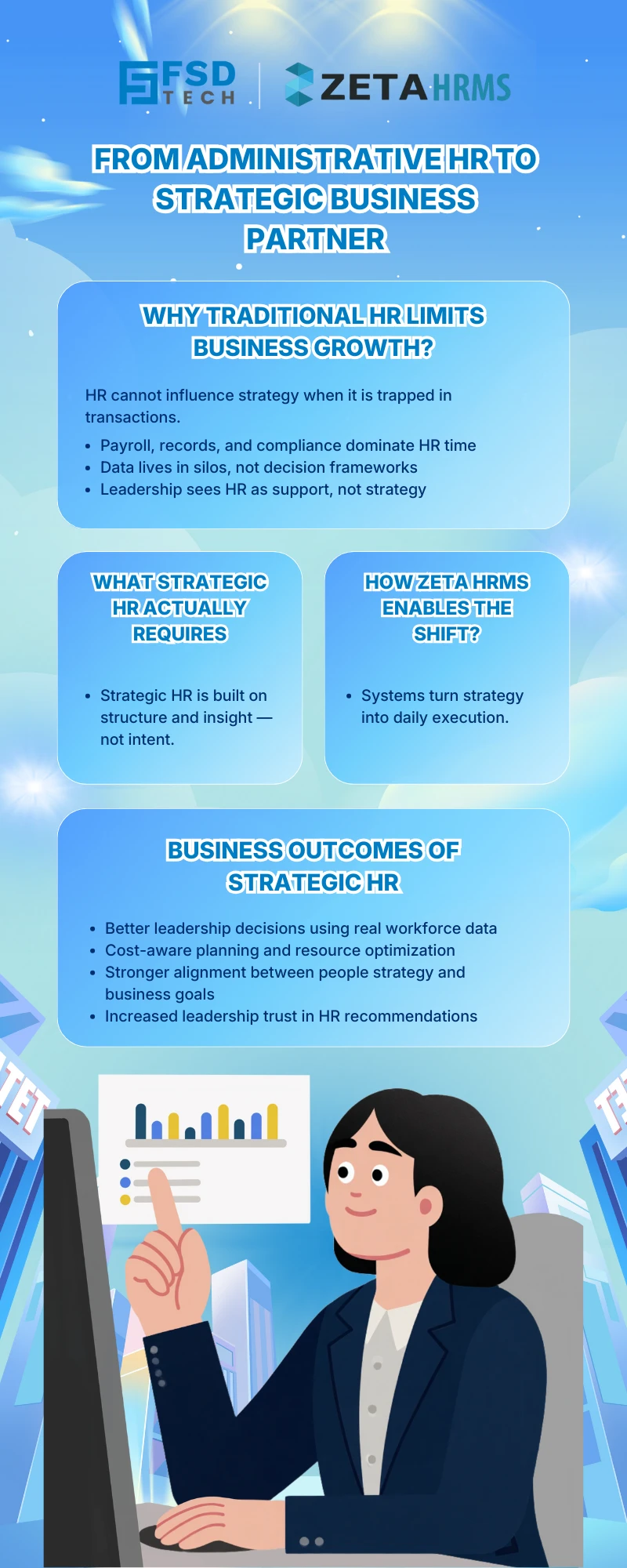
Zeta HRMS centralizes workforce data, standardizes processes, and provides real-time insights, enabling HR to support leadership with informed, strategic recommendations.
Yes, Zeta HRMS automates and standardizes routine HR operations, freeing HR teams to focus on strategic initiatives and workforce planning.
Zeta HRMS ensures HR decisions are data-driven, transparent, and policy-aligned, which strengthens leadership trust and collaboration.
Zeta HRMS provides visibility into workforce structure and costs, enabling HR to support cost-aware planning and resource optimization.
Yes, Zeta HRMS is designed to support modern, scalable, and strategic HR operations aligned with evolving business needs.

Anandhu holds a Master's degree in Computer Science and brings extensive expertise in Business Analysis and Project Management, delivering innovative solutions and driving success across diverse projects.
Share it with friends!

.webp&w=3840&q=75)
.webp&w=3840&q=75)
share your thoughts