.webp&w=3840&q=75)
How ClickUp Enables Outcome-Based Project Management (Not Just Task Tracking)
🕓 February 15, 2026
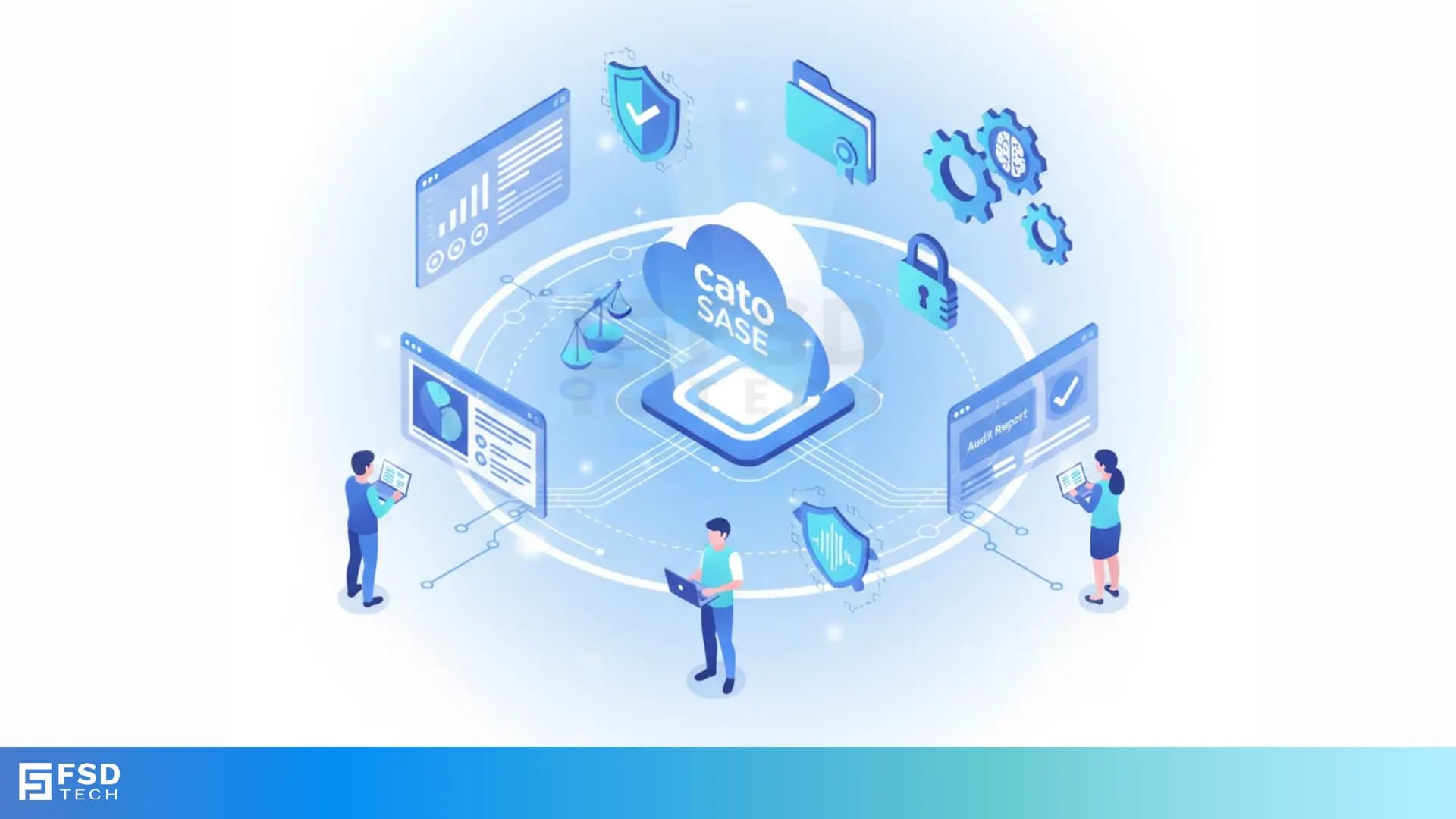
The price of failing a compliance audit is higher than ever. Between massive fines and a ruined reputation, UAE businesses can't afford a "wait and see" approach. New rules like NESA UAE and GDPR demand more than just basic security. They require proof that you're always watching and always protected.
But here’s the thing: most security setups are a mess of old hardware and manual steps. Are you still trying to manage your network with a dozen different tools? If so, you're likely leaving gaps for hackers and auditors to find.
To be honest, we've all been there—juggling spreadsheets and hoping the firewall rules are still right. That is where Cato SASE changes the game. By bringing everything into one cloud-native platform, FSD Tech helps you move from manual chaos to automated peace of mind.
Regulatory rules like ISO 27001 or NESA UAE have a few things in common. They want to see that you protect data, limit who can see what, and keep detailed logs. Doing this by hand is nearly impossible as you grow.
Get Your Free Security Assessment
Also Read: Is MAC Address Filtering Still Relevant for Your Network Security?
Regulatory frameworks share several core demands:
Yet, each framework—whether GDPR’s focus on personal data, ISO 27001’s information security controls, or NESA UAE’s sector-specific mandates—adds its own complexity. For multinational and GCC-based organizations, the challenge multiplies: enforcing consistent controls, demonstrating compliance everywhere, and adapting quickly as regulations evolve.
Many organizations still rely on a patchwork of hardware appliances and point solutions. This approach leads to:
The result is operational inefficiency and real exposure to compliance penalties.
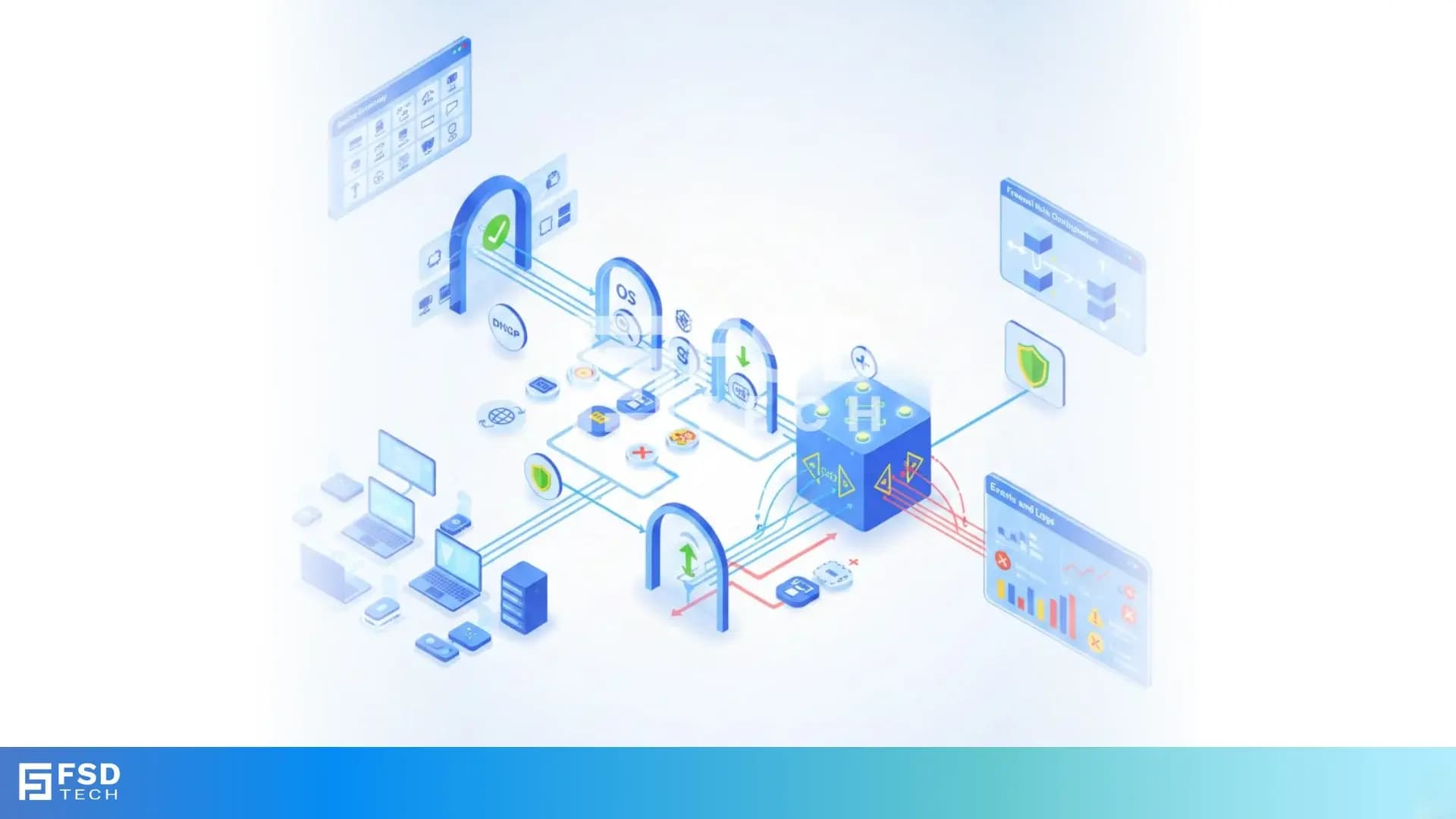
Cato SASE’s AI-driven Autonomous Policies transform compliance management. Instead of relying on periodic manual reviews, policies are continuously analyzed, optimized, and enforced across the entire network.
For compliance teams, this means less time spent on manual policy upkeep and more confidence that controls align with regulatory requirements.
Modern regulations expect organizations to detect and respond to threats before they become incidents. Cato SASE delivers:
This proactive approach not only reduces the likelihood of breaches but also provides the evidence needed to demonstrate compliance during audits.
Regulations like GDPR and NESA UAE require strict access controls and data minimization. Cato SASE’s identity-based, zero trust architecture ensures:
This directly supports regulatory mandates for data protection and access governance.
Also Read: Physical Layer Signaling: How Data Moves in Networking
Audit readiness depends on the ability to quickly produce comprehensive logs and demonstrate control enforcement. Cato SASE centralizes:
With all security and networking functions managed from a single interface, compliance teams can:
A multinational enterprise faces a GDPR audit. With Cato SASE, compliance officers access unified logs and real-time monitoring dashboards, quickly demonstrating data access controls and incident response procedures. What once took weeks of manual preparation is now accomplished in days, with full confidence in the accuracy and completeness of the evidence.
Regulatory environments change rapidly. Cato SASE’s cloud-native architecture ensures organizations can:
| Feature | Unified SASE (Cato) | Fragmented/Legacy Solutions |
|---|---|---|
| Policy Management | Single interface | Multiple consoles |
| Audit Readiness | Centralized logs | Siloed, manual exports |
| Automation | AI-driven | Manual, error-prone |
| Zero Trust Enforcement | Built-in | Add-on or absent |
| Scalability | Cloud-native | Hardware-dependent |
A unified, cloud-native approach not only reduces compliance risk but also lowers the total cost of ownership and operational overhead.
For organizations in the GCC, compliance with frameworks like NESA UAE requires both global best practices and local expertise. FSD Tech, as the regional enabler for Cato SASE, provides:
A financial services firm in the GCC leverages FSD Tech’s regional expertise and Cato SASE’s centralized policy management to align with NESA UAE requirements. Automated access controls and reporting are enforced across all branches, with local FSD Tech experts ensuring every control maps precisely to NESA requirements and audit cycles are supported with rapid, accurate reporting.
Begin with a gap analysis:
Begin your compliance transformation today.

Cato SASE automates policy enforcement, centralizes logging, and enables real-time monitoring, directly supporting access control, data protection, and audit requirements across GDPR, ISO 27001, and NESA UAE. Its unified platform streamlines compliance evidence collection and reporting, reducing manual effort and risk of oversight.
Yes. Cato SASE’s unified platform centralizes logs, policies, and reporting, making it easy for compliance teams to generate reports, demonstrate control enforcement, and respond to auditor requests quickly and accurately. This reduces audit preparation time from weeks to days.
AI-driven Autonomous Policies continuously analyze and optimize security rules, eliminating outdated or overly permissive controls. This automation reduces human error, ensures policies remain aligned with compliance requirements, and prevents policy drift.
FSD Tech provides local expertise and on-the-ground support for Cato SASE deployments in the GCC. This ensures that global best practices are tailored to regional regulatory requirements, such as NESA UAE, and that organizations receive ongoing assistance for audit cycles and compliance updates.
Cato SASE offers a unified, cloud-native platform with advanced automation and centralized management, reducing complexity and compliance risk. Unlike fragmented or hardware-based solutions, Cato SASE enables consistent policy enforcement, easier audit readiness, and rapid adaptation to regulatory changes.
Policy drift occurs when security rules become outdated or inconsistent due to manual updates or lack of oversight. Cato SASE’s AI-driven automation continuously reviews and optimizes policies, preventing drift and ensuring ongoing compliance.
Yes. Cato SASE supports real-time log export and API-driven automation, enabling seamless integration with SIEM and compliance management platforms. This enhances centralized visibility and accelerates audit response.
Cato SASE enforces identity-based, zero trust access controls, ensuring only authorized users and devices can reach sensitive resources. Access is dynamically adjusted based on context and risk, supporting regulatory requirements for data minimization and segmentation.
A cloud-native platform like Cato SASE offers instant scalability, rapid deployment of updates, and global policy consistency. This future-proofs compliance efforts and reduces the operational burden compared to hardware-dependent solutions.
Cato SASE provides real-time threat detection and continuous monitoring across all users, devices, and locations. This proactive approach supports ongoing risk assessment and incident response readiness, as required by modern regulatory standards.
Absolutely. Cato SASE’s unified platform enforces consistent security and compliance controls across global locations, remote users, and cloud environments. This is especially valuable for organizations operating in multiple regulatory jurisdictions.
FSD Tech brings deep regional expertise, mapping Cato SASE’s capabilities to local frameworks like NESA UAE. Their support covers deployment planning, policy customization, and ongoing compliance monitoring, ensuring organizations remain aligned with evolving GCC regulations.
Cato SASE maintains detailed logs of authentication, authorization, policy changes, and network activity. These audit trails are easily accessible through a centralized dashboard and can be exported for compliance reporting or forensic analysis.
Thanks to its cloud-native architecture and centralized management, Cato SASE enables rapid policy updates and feature deployments. Organizations can adapt to new regulatory requirements or business changes without hardware refreshes or lengthy change cycles.
Yes. By automating policy enforcement, centralizing visibility, and streamlining audit preparation, Cato SASE reduces the manual workload, operational overhead, and risk of costly compliance penalties. This results in a lower total cost of ownership and greater peace of mind for compliance teams.

Anas is an Expert in Network and Security Infrastructure, With over seven years of industry experience, holding certifications Including CCIE- Enterprise, PCNSE, Cato SASE Expert, and Atera Certified Master. Anas provides his valuable insights and expertise to readers.
Share it with friends!



.webp&w=3840&q=75)


.webp&w=3840&q=75)
share your thoughts