.webp&w=3840&q=75)
How ClickUp Enables Outcome-Based Project Management (Not Just Task Tracking)
🕓 February 15, 2026
Cloud adoption in the GCC is not a future plan anymore. It is happening now, at pace, across government, finance, healthcare, energy, and retail. Major cloud providers operate data centers in the region, making cloud migration practical for organizations with data residency requirements.
But there is a pattern that repeats itself across industries. Organizations move to the cloud quickly. Security follows more slowly. And in the gap between, misconfigurations sit open, workloads run unprotected, and containers carry vulnerabilities that nobody has reviewed.
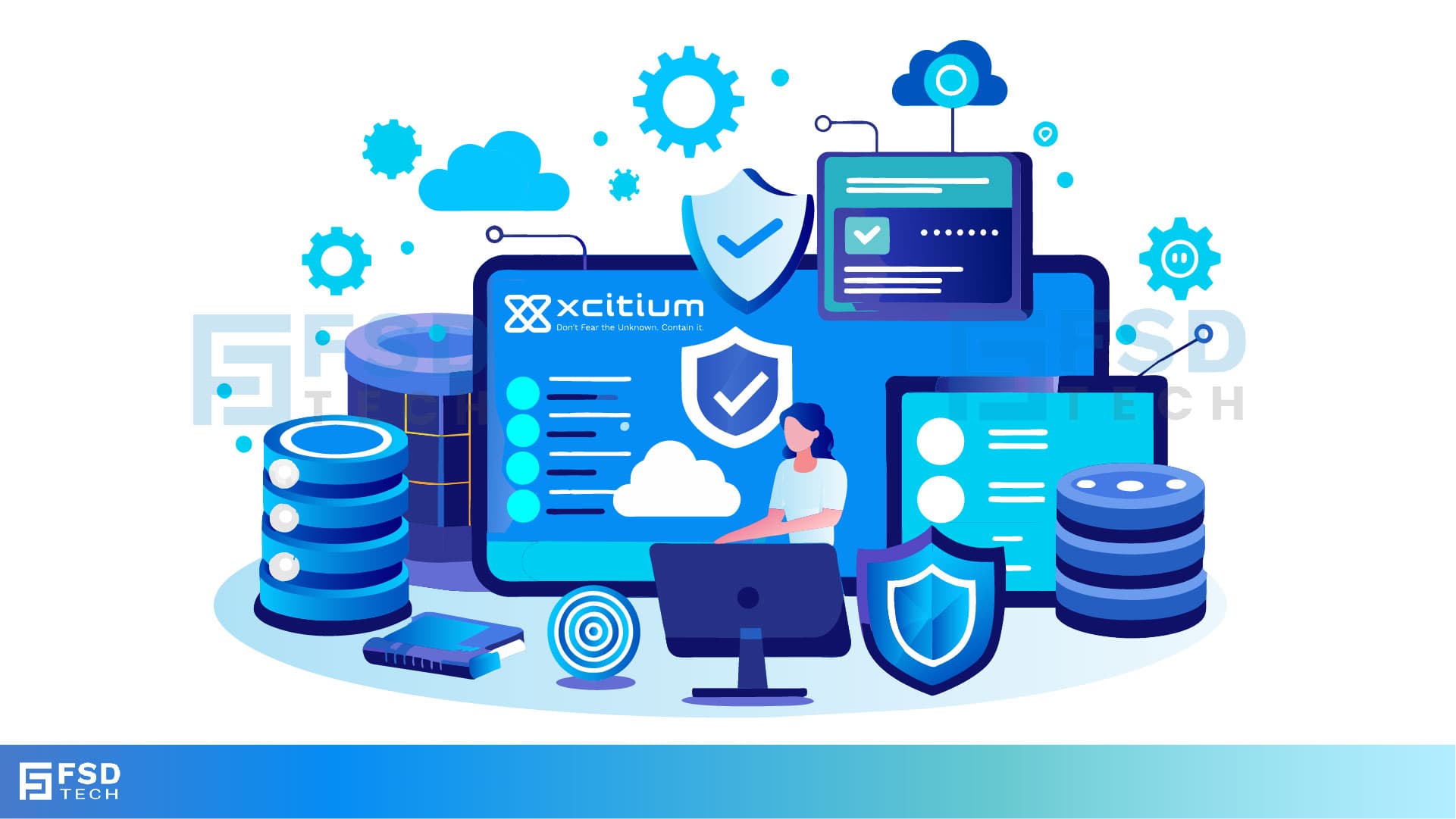
This guide explains what cloud security actually requires in 2026, how Xcitium's platform addresses the full picture, and what GCC organizations specifically need to think about as they continue their cloud journey.
Security in an on-premise environment is about protecting a defined perimeter. You know where your servers are. You control physical access. Your firewall sits at a known boundary.
Cloud environments do not work like that. Resources can be created in minutes. Configurations can be changed by anyone with the right credentials. Containers and Kubernetes clusters add layers of complexity that traditional security tools were never designed to handle.
The most common causes of cloud breaches are not sophisticated zero-day attacks. They are misconfigurations. A storage bucket left publicly readable. A network rule with overly permissive access. A Kubernetes workload running with elevated privileges. These are not hacking. They are mistakes. And they are very common.
Cloud security in 2026 is less about stopping attackers at the gate and more about making sure you have not accidentally left the gate open yourself.
GCC enterprises moving fast to adopt cloud face several specific challenges:
The answer is tooling that actively monitors and corrects the cloud environment continuously, not periodic manual reviews that leave gaps open for weeks at a time.
Xcitium's cloud security offering is built around a CNAPP: a Cloud-Native Application Protection Platform. This means a single platform that combines multiple cloud security functions instead of requiring separate tools for each one.
Xcitium lists four core cloud security components on their platform, each addressing a different layer of cloud security risk.
Xcitium describes CSPM as Cloud Security Posture Management. It continuously monitors your cloud environment's configuration against security best practices. When something is misconfigured, CSPM flags it and supports remediation.
For GCC organizations managing cloud environments, CSPM is what prevents the configuration mistakes that cause most cloud breaches. It is continuous, automated, and does not rely on periodic manual reviews.
Xcitium describes CWPP as Cloud Workload Protection Platform. Cloud workloads include virtual machines, containers, and serverless functions. CWPP protects these workloads from threats at the workload level, applying security controls that follow the workload wherever it runs.
For GCC organizations running business-critical applications in the cloud, CWPP ensures those workloads are protected regardless of which region or environment they are deployed in.
Xcitium's CNAPP is the Cloud-Native Application Protection Platform layer that covers security across the full cloud-native application lifecycle. Cloud-native applications built on microservices and APIs have specific security requirements that traditional tools do not address. CNAPP covers security from development through to runtime.
Xcitium describes KSPM as Kubernetes Security Posture Management. Kubernetes configurations are complex, and the security implications of a misconfigured cluster can be significant. KSPM continuously reviews Kubernetes configurations, identifies risky settings, and helps teams maintain a secure container environment.
For GCC enterprises adopting Kubernetes as part of their cloud strategy, KSPM is a necessary layer of control that most organizations do not have in place when they start.
Also Read: Cybersecurity ROI – Why Investing in Protection Saves SMBs More Than It Costs
One of the real advantages of Xcitium's platform is that cloud security does not sit in isolation. Xcitium's XDR — Extended Detection and Response from Endpoints to Networks and Cloud — connects cloud security with endpoint and network security under a single pane-of-glass view.
This means a security analyst in a GCC organization can see an endpoint alert alongside a cloud misconfiguration alert alongside a network anomaly, all in one dashboard. They can understand how these events relate to each other, rather than responding to them as unconnected events in separate tools.
For organizations building toward integrated security operations, this connected visibility is what makes Xcitium a unified platform rather than a collection of tools.
| Security Area | On-Premise Approach | Xcitium Cloud Solution |
| Configuration security | Manual reviews, periodic audits | CSPM: Continuous automated monitoring and flagging of misconfigurations |
| Workload protection | Agent-based, complex to scale across cloud environments | CWPP: Cloud-native workload protection that scales with your cloud |
| Container security | Often unmonitored or reviewed manually after deployment | KSPM: Continuous Kubernetes security posture management |
| Application security | Perimeter-focused, applied after deployment | CNAPP: Lifecycle security from development to runtime |
| Unified visibility | Multiple tools, fragmented dashboards with no shared context | XDR: Single pane-of-glass across endpoints, networks, and cloud |
GCC regulatory frameworks, including NCA in Saudi Arabia and UAE cybersecurity standards, require organizations to implement appropriate security controls across all their systems. Running workloads in the cloud does not reduce compliance obligations. The same standards apply.
Xcitium's CSPM and Compliance Management modules help GCC organizations demonstrate that their cloud environments meet required security standards. The Compliance Management module fixes compliance gaps and reduces risk, with documented evidence available for regulatory audits.
FSD-Tech also provides Xcitium's free Cloud Security Risk and Compliance Assessment, listed on Xcitium's free tools page, to help GCC organizations understand their current cloud security posture.
Also Read: Cyber Insurance & Cybersecurity – Why SMBs Need Both to Survive in GCC & Africa
CNAPP stands for Cloud-Native Application Protection Platform. Xcitium's CNAPP combines cloud configuration management, workload protection, application security, and container security into one platform. GCC organizations need it because managing these functions separately creates gaps and significant operational complexity.
CSPM (Cloud Security Posture Management) monitors and flags cloud configuration settings. CWPP (Cloud Workload Protection Platform) protects the actual workloads running inside the cloud. Both are needed and both are included in Xcitium's cloud security platform.
Xcitium's cloud security modules are designed to work across cloud environments. Contact FSD-Tech for specific configuration details relevant to your cloud setup.
Yes. Xcitium lists a Cloud Security Risk and Compliance Assessment on their free tools page. FSD-Tech delivers this for GCC organizations to assess current cloud security posture.
KSPM (Kubernetes Security Posture Management) continuously reviews Kubernetes configurations, identifies risky settings, and helps teams maintain a secure container environment. It is particularly important for GCC enterprises adopting Kubernetes who do not have dedicated container security tooling in place.
Moving to the cloud without securing it properly is one of the most common and costly mistakes organizations make in 2026. The good news is that cloud security does not have to be fragmented or complex.
Xcitium's CNAPP gives GCC organizations a single platform covering every layer of cloud security, from configuration monitoring to workload protection to container security to application lifecycle security. Combined with XDR for unified visibility, it turns cloud security from a source of uncertainty into a managed, demonstrable capability.
FSD-Tech deploys Xcitium cloud security across the UAE, Saudi Arabia, and the wider GCC. Whether you are just starting your cloud journey or managing a multi-cloud environment, we can help you secure it properly.
Book a free cloud security assessment with FSD-Tech to see where your cloud environment stands today.

Surbhi Suhane is an experienced digital marketing and content specialist with deep expertise in Getting Things Done (GTD) methodology and process automation. Adept at optimizing workflows and leveraging automation tools to enhance productivity and deliver impactful results in content creation and SEO optimization.
Share it with friends!


.webp&w=3840&q=75)
share your thoughts