.webp&w=3840&q=75)
How ClickUp Enables Outcome-Based Project Management (Not Just Task Tracking)
🕓 February 15, 2026
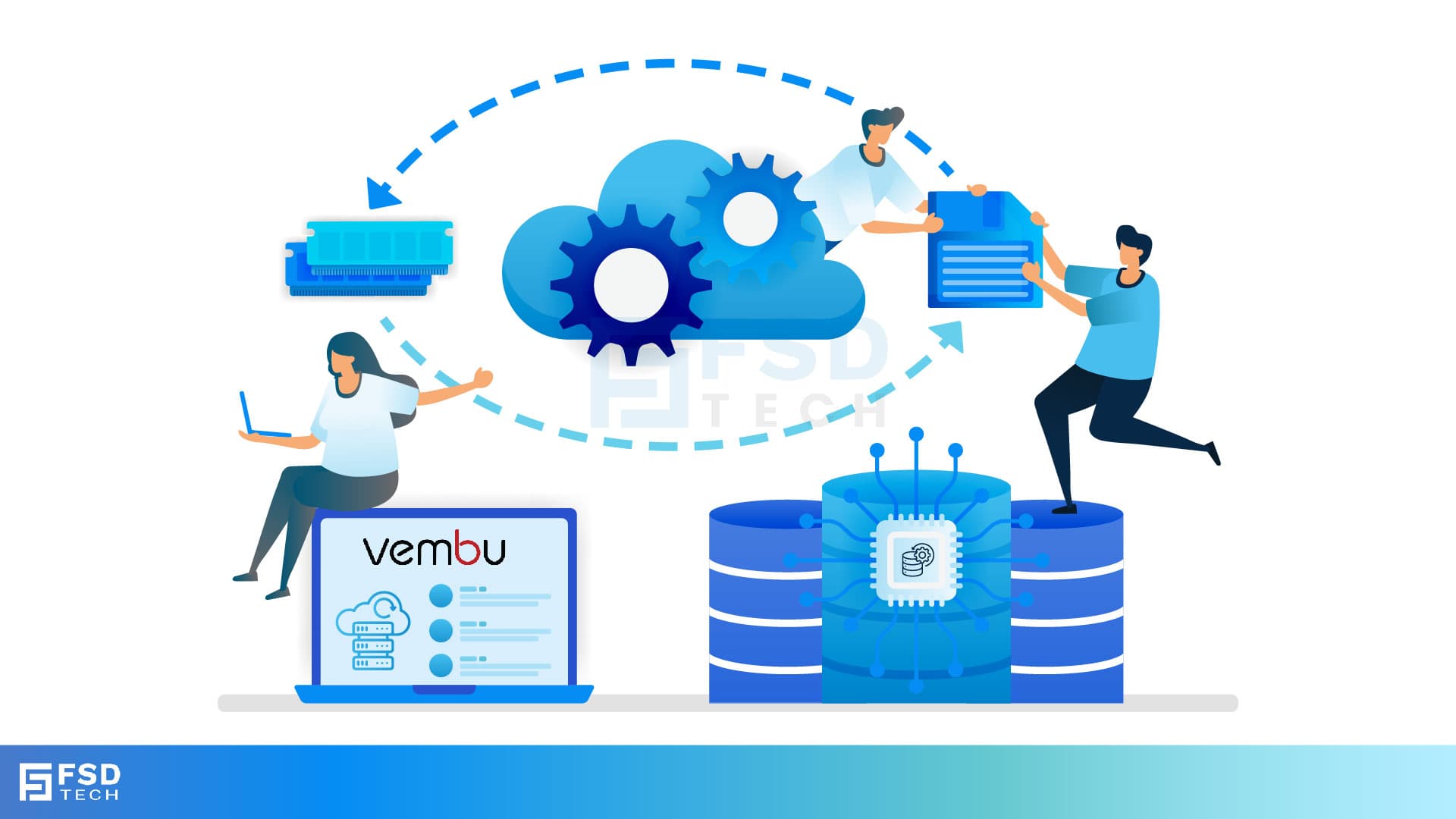
Millions of businesses across the GCC use Microsoft 365 every day. Email, documents, calendars, video calls, internal wikis. The platform has become the backbone of modern workplace communication. But most businesses assume that Microsoft handles their data protection. That assumption can be costly.
Microsoft 365 operates under a shared responsibility model. Microsoft protects its infrastructure. You are responsible for protecting the data inside it. That includes emails, OneDrive files, SharePoint sites, and Teams content.
This blog explains exactly what Microsoft 365 does and does not protect, and how BDRShield by Vembu fills the gap for GCC businesses.
According to Vembu, under Microsoft's Shared Responsibility Model, Microsoft focuses on:
Microsoft does provide native data protection features including in-place hold, litigation hold, data loss prevention, and role-based access control. However, these features have limitations and are not a substitute for a full backup and recovery solution.
Protect Your Microsoft 365 Data
According to Vembu, as a Microsoft 365 customer, your organization is responsible for:
Native Microsoft 365 protection does not cover every data loss scenario. Here are situations where businesses can lose data:
When a user deletes an email or file, it goes to a recycle bin or deleted items folder. After a set retention period, it is gone permanently. If the deletion is not caught in time, recovery is not possible without a third-party backup.
Ransomware can encrypt OneDrive files and SharePoint content. Microsoft provides versioning, but attackers can sometimes overwrite all versions if given enough time. A dedicated backup with immutable storage protects against this.
A disgruntled employee can delete shared mailboxes, SharePoint sites, or Team channels. Microsoft 365 retention policies may not catch every scenario, especially for bulk deletions.
Microsoft 365 retention periods are time-limited. If your organization needs to retain emails or files for regulatory or legal purposes beyond those limits, you need your own backup and archiving solution.
Also Read: The Importance of Offsite Backups in Disaster Recovery Planning
BDRShield provides complete Microsoft 365 backup and recovery. Here is what it covers:
BDRShield backs up user mailboxes, shared mailboxes, group mailboxes, and in-place archive mailboxes at the domain level or individual user level. Restoration options include entire mailbox recovery, individual email recovery, and granular calendar and contact recovery. Export formats include PST, EML, ICS, and VCF.
BDRShield protects OneDrive data for all users or specific users. Files can be restored to the original or a custom location, with folder structure preserved. Individual files can also be downloaded directly.
BDRShield provides comprehensive backup for SharePoint sites, libraries, lists, pages, and folders. Restoration options include complete site recovery or granular recovery of specific items to the original or a new location.
BDRShield backs up Teams channels, conversations, and files. It supports restoration of entire teams or specific channels with flexible recovery options.
Also Read: How to Choose the Right Backup Schedule for Your Business Needs
GCC businesses can store Microsoft 365 backup data on:
FSD-Tech deploys BDRShield Microsoft 365 backup for businesses across the GCC. We help configure backup policies, set retention rules, enable malware scanning, and verify recovery readiness. Our team ensures that your Exchange, OneDrive, SharePoint, and Teams data is fully protected and recoverable.
Microsoft protects its infrastructure and provides limited native retention features. Under the shared responsibility model, your organization is responsible for backing up and protecting the data stored in Microsoft 365 services.
BDRShield backs up Exchange Online (mailboxes, calendars, contacts), OneDrive for Business, SharePoint Online (sites, libraries, lists), and Microsoft Teams (channels, conversations, files).
Yes. BDRShield supports granular recovery, including individual email restoration. You can restore to the same or a different user account, and export in PST, EML, or MBOX formats.
BDRShield supports customizable retention policies. You can configure retention from days to years based on your business or regulatory requirements.
Microsoft 365 is a powerful platform, but it does not fully protect your data. Accidental deletions, ransomware, and retention gaps can all lead to permanent data loss if you rely solely on native protection.
BDRShield fills that gap with complete Microsoft 365 backup, immutable storage, encryption, and fast recovery options. For GCC businesses, FSD-Tech provides local expertise and deployment support to get you protected quickly.

Surbhi Suhane is an experienced digital marketing and content specialist with deep expertise in Getting Things Done (GTD) methodology and process automation. Adept at optimizing workflows and leveraging automation tools to enhance productivity and deliver impactful results in content creation and SEO optimization.
Share it with friends!



.webp&w=3840&q=75)



share your thoughts