HomeNext Gen IT-InfraMonitoring & ManagementCyber SecurityBCP / DRAutomationDecoded
Next Gen IT-Infra
Cato’s SASE Supports Cybersecurity Skills Development

How Cato’s SASE Supports Cybersecurity Skills Development

🕓 April 8, 2025

How SASE Supports the Security Needs of SMBs

How SASE Supports the Security Needs of SMBs

🕓 February 9, 2025

Attack Surface Reduction with Cato’s SASE

Attack Surface Reduction with Cato’s SASE

🕓 February 10, 2025

SASE for Digital Transformation in UAE

SASE for Digital Transformation in UAE

🕓 February 8, 2025

Monitoring & Management
Understanding Atera’s SLA Management

Understanding Atera’s SLA Management

🕓 February 7, 2025

Cost-Performance Ratio: Finding the Right Balance in IT Management Networks

Cost-Performance Ratio: Finding the Right Balance in IT Management Networks

🕓 June 16, 2025

Customizing Atera with APIs

Customizing Atera with APIs

🕓 March 3, 2025

Power Up Your IT Team’s Strategy with Atera’s Communication Tools

Power Up Your IT Team’s Strategy with Atera’s Communication Tools

🕓 February 8, 2025

Cyber Security
Illustration of the Cato Cloud architecture showing its role in delivering SASE for secure, optimized global connectivity.

Understanding the Cato Cloud and Its Role in SASE

🕓 January 29, 2025

Isometric illustration of professionals managing network performance, bandwidth analytics, and cloud-based optimization around the Cato Networks platform, symbolizing bandwidth control and QoS visibility.

Mastering Bandwidth Control and QoS in Cato Networks

🕓 July 26, 2025

Global network backbone powering Cato SASE solution for secure, high-performance connectivity across regions.

Global Backbone: The Engine Powering Cato’s SASE Solution

🕓 January 30, 2025

Illustration of team analyzing application traffic and usage insights on a large laptop screen using Cato’s dashboard, surrounded by network and cloud icons.

Cato Networks Application Visibility | Monitoring & Control

🕓 July 27, 2025

BCP / DR
Illustration showing diverse business and IT professionals collaborating with cloud, backup, and security icons, representing Vembu use cases for SMBs, MSPs, and IT teams.

Who Uses Vembu? Real-World Use Cases for SMBs, MSPs & IT Teams

🕓 July 12, 2025

Graphic showcasing Vembu’s all-in-one backup and disaster recovery platform with icons for cloud, data protection, and business continuity for IT teams and SMBs.

What Is Vembu? A Deep Dive Into the All in One Backup & Disaster Recovery Platform

🕓 July 6, 2025

Illustration showing Vembu backup and disaster recovery system with cloud storage, server racks, analytics dashboard, and IT professionals managing data.

The Rising Cost of Data Loss: Why Backup Is No Longer Optional?

🕓 August 14, 2025

3D isometric illustration of cloud backup and data recovery infrastructure with laptop, data center stack, and digital business icons — FSD Tech

RPO & RTO: The Heart of Business Continuity

🕓 August 15, 2025

Automation
Cross-Functional Collaboration with ClickUp

Fostering Cross-Functional Collaboration with ClickUp for Multi-Departmental Projects

🕓 February 11, 2025

ClickUp Project Reporting

Revolutionizing Enterprise Reporting with ClickUp’s Advanced Analytics and Dashboards

🕓 June 16, 2025

ClickUp’s Design Collaboration and Asset Management Tools

Empowering Creative Teams with ClickUp’s Design Collaboration and Asset Management Tools

🕓 February 26, 2025

ClickUp Communication and Collaboration Tools

ClickUp Communication and Collaboration Tools: Empowering Remote Teams

🕓 March 12, 2025

Decoded
Multi-Factor Authentication (MFA)

Multi-Factor Authentication (MFA): All You Need to Know

🕓 December 7, 2025

L3 Switch

What Is an L3 Switch? L2 vs L3 & Why You Need Layer 3?

🕓 December 8, 2025

IPSec

IPSec Explained: Protocols, Modes, IKE & VPN Security

🕓 December 3, 2025

 Datagram Transport Layer Security (DTLS)

What is Datagram Transport Layer Security (DTLS)? How it works?

🕓 December 4, 2025

    Subscribe to our newsletter!

    About Us

    Follow Us

    Copyright © 2024 | Powered by 

    Atera

    (55)

    Cato Networks

    (121)

    ClickUp

    (72)

    FishOS

    (7)

    Miradore

    (21)

    PointGuard AI

    (9)

    Vembu

    (22)

    Xcitium

    (33)

    ZETA HRMS

    (79)

    Table of Contents

    Secure Retail SASE for UAE & GCC: PCI-DSS 4.0.1

    Anas Abdu Rauf
    August 8, 2025
    Comments
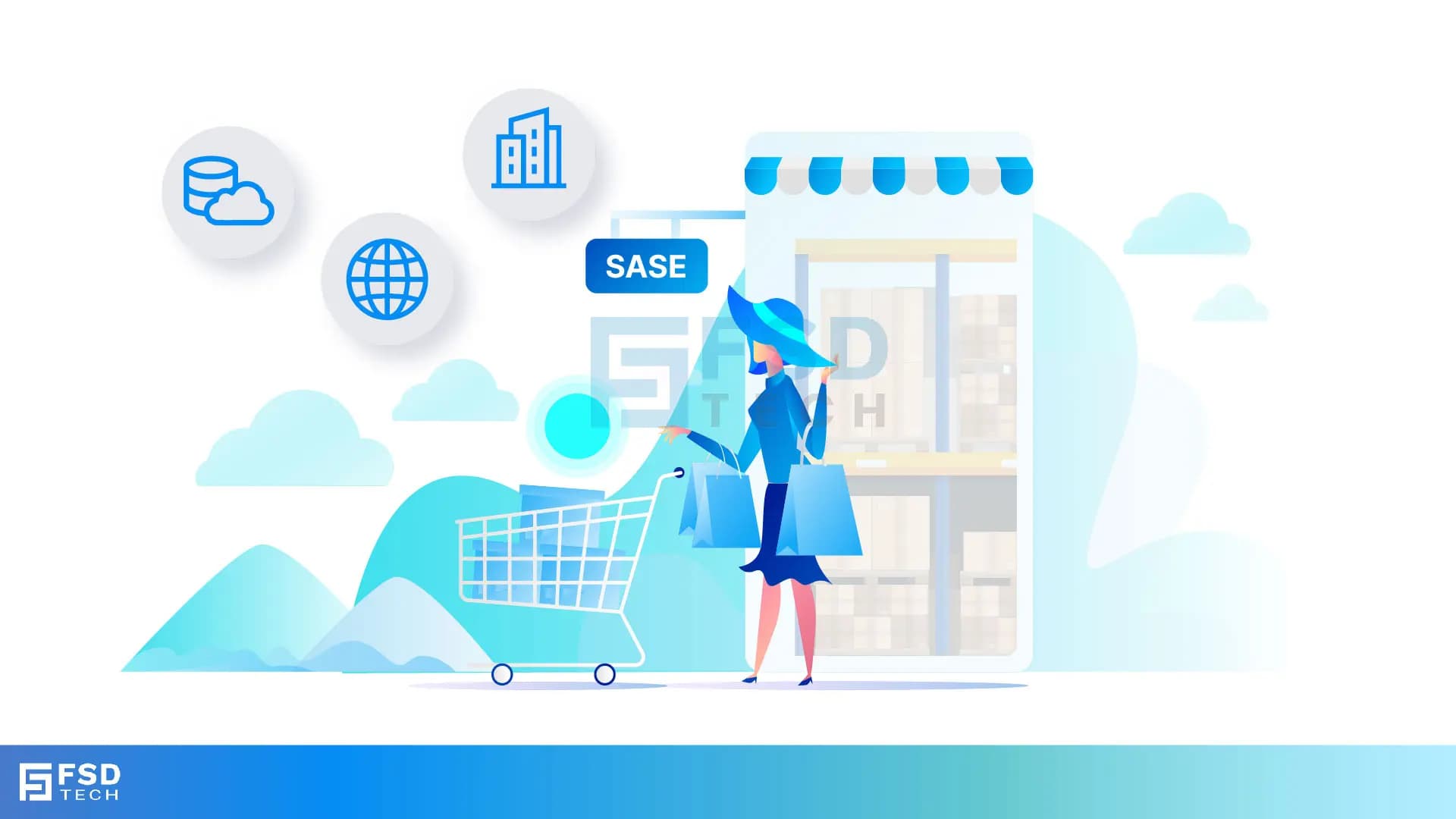
    Illustration of a woman shopping securely with SASE-enabled retail infrastructure, representing cloud security, data protection, and safe transactions in modern retail environments.

    Retailers in the Middle East are moving fast. Brands across the UAE, Saudi Arabia, and Qatar are embracing the cloud, e-commerce, and "omnichannel" shopping. But as you grow, so do the risks. Hackers are now targeting payment systems, customer data, and even in-store cameras. Old security tools simply can't keep up with this pace.


    To protect your business, you need a unified approach that doesn't slow down your sales. Cato SASE, brought to you by the regional experts at FSD Tech, is changing the game. It’s a cloud-native platform that joins your network and security into one powerful system built for the modern retail world.

    Key Takeaways

    • Secure remote teams with ease: Cato SASE gives your in-store and remote staff safe, identity-linked access, making hybrid work a breeze.
    • Why Cato works best in the UAE: With local Points-of-Presence (PoPs) in Dubai and Fujairah, your stores get the fast, low-latency connection they need.
    • PCI-DSS compliance made simple: Cato is certified for PCI-DSS 4.0.1 across its entire stack. This means faster audits and better protection for payment data.
    • Retail-specific threat protection: Use Zero Trust and smart segmentation to stop payment fraud and IoT risks (like smart shelves or cameras) from becoming entry points.
    • FSD Tech is your regional partner: We ensure your setup follows local GCC laws and helps you open new stores faster than ever.
    • Unified operations: Manage all your stores from one screen, reducing IT headaches as you scale across the region.
       

    Get Started with Cato SASE

    Why Retailers in the GCC Need Modern Security

    Unique Retail Security Challenges in the Region

    Retailers in the GCC operate in a complex, fast-evolving landscape:


    •  Multi-branch operations  spanning cities and countries, often with rapid store rollouts.
    •  Cloud adoption for inventory, POS, loyalty, and e-commerce platforms.
    •  Hybrid workforces  combining in-store, remote, and mobile teams.
    •  Stringent data privacy laws  and regulatory scrutiny unique to the Middle East.


    These dynamics expose retailers to a range of risks:

    •  Payment fraud and card data theft targeting POS systems.
    •  Unsecured IoT devices  (smart shelves, cameras, sensors) as new attack vectors.
    •  Weak endpoint access  on POS terminals and staff devices.
    •  E-commerce and loyalty program breaches  impacting customer trust and revenue.

    Compliance Pressures: PCI-DSS, Data Privacy, and Local Regulations

    Retailers must comply with:


    •  PCI-DSS 4.0.1 for payment data security and transaction integrity.
    •  Local data residency and privacy laws  (UAE, KSA, Qatar, Oman, and others).
    •  International standards  for customer data protection and privacy.


    Non-compliance can result in fines, reputational damage, and loss of customer trust—making robust, regionally aligned security essential.


    Also Read: Top Strategies to Address Multi-Cloud Security Risks with Cato SASE
     

    Cato SASE: The Foundation for Secure Retail Transformation

    What is Cato SASE?

     Cato SASE (Secure Access Service Edge)  is a cloud-native platform that converges networking and security into a single, unified service. It replaces legacy firewalls, VPNs, and point solutions with a centrally managed, always-on security stack delivered from the cloud.


    Key components include:


    •  SD-WAN for optimized, resilient connectivity between all branches and cloud resources.
    •  Next-Generation Firewall (NGFW)  and Advanced Threat Prevention  for deep inspection and real-time protection.
    •  Zero Trust Network Access (ZTNA)  to enforce least-privilege access for users and devices.
    •  Cloud Access Security Broker (CASB)  for secure SaaS and cloud app usage.
    •  Secure Web Gateway (SWG)  to block web-based threats and enforce browsing policies.

    Unified Security and Networking for Retail

    With Cato SASE, every connection—whether from a store, warehouse, or remote user—flows through a single, secure platform. This delivers:


    •  Consistent security policies  across all locations, users, and devices.
    •  No on-site firewalls  or patchwork security tools to manage.
    •  Centralized visibility and control  via a unified management console.


    Retailers can open new stores or onboard new users in hours, not weeks, with security built-in from day one. This agility is critical for retailers expanding across the GCC and responding to rapidly changing market demands.

    PCI-DSS 4.0.1 Compliance: What It Means for Retailers

    Cato SASE is the first SASE platform certified for  PCI-DSS version 4.0.1  across its entire stack. This provides:


    •  Enterprise-grade compliance  without operational complexity.
    •  Reduced PCI scope —fewer systems and processes to audit.
    •  Faster, simpler audits  for IT and compliance teams.


    Even though Cato SASE does not handle cardholder data directly, it secures the infrastructure and data paths that do, ensuring every transaction is protected and compliance is maintained across all retail locations.


    Also Read: Simplifying IT Operations with Cato SASE: Reducing Complexity and Enhancing Performance
     

    Protecting Customer Data and Transactions Across Every Store

    Securing POS Systems and Payment Data

    Point-of-sale (POS) systems are prime targets for attackers in the retail sector. Cato SASE protects POS environments by:


    •  Encrypting all traffic  between POS devices and payment processors, ensuring data confidentiality.
    •  Segmenting POS networks  from guest Wi-Fi, IoT devices, and other store systems.
    •  Monitoring for suspicious activity  and blocking threats in real time.


    Real-World Example: 

    A leading electronics retailer in the UAE used Cato SASE to isolate POS terminals from other store systems, preventing malware from spreading and ensuring PCI-DSS compliance during a rapid expansion.

    Defending Against Retail-Specific Threats: IoT, Fraud, and Endpoint Risks

    Retailers deploy a growing number of IoT devices—each a potential entry point for attackers. Cato SASE addresses these risks by:


    •  Segmenting networks  to contain IoT threats and prevent lateral movement.
    •  Applying Zero Trust principles  to restrict device access to only what is necessary.
    •  Detecting and blocking anomalous device behavior  before it impacts critical systems.


     Real-World Example: 

    A supermarket chain in KSA leveraged Cato SASE to isolate smart fridges and inventory sensors, ensuring that a breach in one device could not compromise payment systems or customer data.

    Enabling Secure In-Store Wi-Fi and Guest Access

    Customer Wi-Fi is a retail necessity but also a risk vector. With Cato SASE:


    •  Guest traffic is isolated  from business and payment networks, reducing attack surfaces.
    •  Threats are blocked  before reaching store systems, protecting both customers and business operations.
    •  Usage is monitored  for compliance and abuse, supporting regulatory requirements.
       

    Seamless Multi-Branch and Cloud Retail Operations

    Secure Cloud-Based Retail Platforms

    Retailers increasingly rely on cloud applications for inventory, loyalty, and e-commerce. Cato SASE:


    •  Secures access to cloud platforms from every store and device, ensuring data integrity.
    •  Applies consistent policies  across on-premises and cloud environments, reducing gaps.
    •  Protects data in transit  to and from the cloud, supporting compliance and privacy.

    Supporting Hybrid and Remote Retail Teams

    Modern retail teams are distributed—working from stores, headquarters, or remotely. Cato SASE:


    •  Enables secure remote access  with Zero Trust controls, supporting hybrid work models.
    •  Ensures only authorized users  can reach sensitive systems, reducing insider risk.
    •  Supports rapid onboarding  for new employees and locations, improving agility.


    Real-World Example: 

    During Ramadan, a retailer enabled secure remote work for finance and marketing teams, using Cato’s ZTNA to limit access to only the necessary systems.


    Also Read: Preventing Insider Threats and Unauthorized Access with Cato SASE’s Context-Aware Security

    Real-World Example: Multi-Store Rollout in the UAE

    A fashion retailer with 40+ stores partnered with FSD Tech to deploy Cato SASE across all locations. The results:


    •  PCI-DSS compliance  achieved in weeks, not months.
    •  Centralized management  for all stores, simplifying operations.
    •  Rapid onboarding  of new locations and staff, supporting business growth.
       

    FSD Tech: Your Strategic Partner for Regional Retail Security

    Expertise in GCC Regulations and Compliance

    FSD Tech brings deep knowledge of:


    •  Local data privacy and residency laws  in the UAE, KSA, Qatar, Oman, and across the GCC.
    •  PCI-DSS and other compliance frameworks  relevant to Middle East retail.
    •  Retail-specific security challenges  unique to the region.

    Accelerating Secure Store Rollouts with Cato SASE

    FSD Tech helps retailers:


    •  Design and implement  secure, scalable networks tailored to regional needs.
    •  Integrate Cato SASE  with existing systems and processes for minimal disruption.
    •  Roll out new stores  quickly and securely across the GCC, leveraging Cato’s cloud-native agility.

    Ongoing Support and Optimization

    Retail security is not a one-time project. FSD Tech provides:


    •  Continuous monitoring  and threat response to stay ahead of evolving risks.
    •  Regular compliance checks  and audits to maintain regulatory alignment.
    •  Tailored support  for evolving business needs, ensuring long-term value from Cato SASE investments.
       

    Best Practices for Retailers Adopting SASE

    Network Segmentation and Zero Trust

    •  Segment networks  to isolate POS, IoT, and guest traffic, reducing attack surfaces.
    •  Apply Zero Trust principles —never trust, always verify, for every user and device.
    •  Regularly review and update  access policies to reflect changing business needs.

    Safeguarding Loyalty Programs and E-Commerce Integrations

    •  Encrypt customer data  in transit and at rest, protecting sensitive information.
    •  Monitor for unusual activity  in loyalty and e-commerce systems, detecting fraud early.
    •  Integrate SASE with fraud detection tools  for layered defense.

    Continuous Monitoring and Threat Response

    •  Leverage Cato’s centralized console  for real-time visibility across all locations.
    •  Automate threat detection  and response workflows for faster mitigation.
    •  Partner with experts  like FSD Tech for ongoing optimization and incident response.
       

    Conclusion: Building the Future of Secure Retail in the Middle East

    Retailers in the GCC are embracing digital innovation at an unprecedented pace—but with innovation comes risk.  Cato SASE , delivered by trusted partners like  FSD Tech , empowers retailers to secure every transaction, protect customer data, and achieve compliance at scale. Whether you’re opening your next store or modernizing your entire retail footprint, the future of secure, agile retail starts with a unified, cloud-native platform built for the Middle East.


     For a personalized consultation or to learn how FSD Tech can accelerate your secure retail transformation, contact our team today. Click Here
     

    FAQ

    How does Cato SASE help retailers achieve PCI-DSS compliance?

    Cato SASE is certified for PCI-DSS 4.0.1 across its entire stack, reducing the number of systems in PCI scope and simplifying audits by securing all network edges and payment data paths. This streamlines compliance for retailers handling payment data.
     

    Can Cato SASE protect both in-store and cloud-based retail platforms?

    Yes. Cato SASE provides unified security for on-premises systems (like POS) and cloud applications, ensuring consistent protection and access control across all environments.
     

    How does FSD Tech support retailers in the GCC?

    FSD Tech offers deep expertise in regional compliance, rapid multi-site rollouts, and ongoing support, ensuring that Cato SASE deployments align with local regulations and business needs.
     

    What retail-specific threats does Cato SASE address?

    Cato SASE protects against payment fraud, IoT vulnerabilities, weak endpoint access, and e-commerce threats through Zero Trust, advanced threat prevention, and network segmentation.
     

    Is Cato SASE suitable for retailers with hybrid or remote teams?

    Absolutely. The platform enables secure, seamless access for both in-store and remote employees, supporting modern retail workforce models.
     

    How does Cato SASE enable secure in-store Wi-Fi for customers?

    Cato SASE isolates guest Wi-Fi traffic from business networks, applies advanced threat prevention, and monitors usage to ensure customer and business data remain protected.
     

    What is the benefit of Cato SASE’s regional Points-of-Presence in the UAE?

    Local PoPs in Dubai and Fujairah provide low-latency, high-performance connectivity for Middle East retailers, ensuring optimal application performance and secure access to cloud services.
     

    How does network segmentation with Cato SASE protect retail environments?

    Network segmentation isolates critical systems like POS and IoT devices, preventing lateral movement in case of a breach and reducing the impact of potential attacks.
     

    Can Cato SASE help with e-commerce protection?

    Yes. Cato SASE secures e-commerce platforms by enforcing consistent security policies, monitoring for threats, and protecting customer transaction data across all digital channels.
     

    How does Cato SASE support rapid multi-store rollouts?

    Centralized management and cloud-native deployment enable retailers to open new stores quickly, apply security policies instantly, and onboard users without complex on-site hardware.
     

    What makes FSD Tech a strategic Cato Networks partner in the GCC?

    FSD Tech combines regional compliance expertise, technical know-how, and local presence to deliver tailored Cato SASE solutions for Middle East retailers, ensuring regulatory alignment and ongoing support.
     

    How does Cato SASE handle IoT security in retail?

    Cato SASE segments IoT devices from critical business systems, applies Zero Trust access controls, and monitors device behavior to detect and block anomalous activity.
     

    What are the operational benefits of unified security and networking with Cato SASE?

    Retailers benefit from simplified operations, reduced IT overhead, and faster response to threats, all managed from a single cloud-based console.
     

    How does Cato SASE help safeguard loyalty programs?

    By encrypting data, monitoring for unusual access, and integrating with fraud detection tools, Cato SASE protects loyalty program data and customer identities from compromise.
     

    What ongoing support does FSD Tech provide after deployment?

    FSD Tech offers continuous monitoring, compliance checks, threat response, and optimization services to ensure retailers maintain robust security as their business evolves.
     

    How does Cato SASE align with local data privacy and residency laws in the Middle East?

    Cato SASE, deployed with FSD Tech’s guidance, ensures data flows and storage comply with local regulations, supporting data residency and privacy requirements unique to the GCC.

    Secure Retail SASE for UAE & GCC: PCI-DSS 4.0.1

    About The Author

    Anas Abdu Rauf

    Anas is an Expert in Network and Security Infrastructure, With over seven years of industry experience, holding certifications Including CCIE- Enterprise, PCNSE, Cato SASE Expert, and Atera Certified Master. Anas provides his valuable insights and expertise to readers.

    Like This Story?

    Share it with friends!

    Subscribe to our newsletter!

    Isometric illustration of a centralized performance platform connected to analytics dashboards and team members, representing goal alignment, measurable outcomes, risk visibility, and strategic project tracking within ClickUp.

    How ClickUp Enables Outcome-Based Project Management (Not Just Task Tracking)

    🕓 February 15, 2026
    Isometric illustration of a centralized executive dashboard platform connected to analytics panels, performance charts, security indicators, and strategic milestones, representing real-time business visibility and decision control within ClickUp.

    Executive Visibility in ClickUp – How CXOs Gain Real-Time Control Without Micromanaging

    🕓 February 13, 2026

    Cato SASE Architecture

    Inside Cato’s SASE Architecture: A Blueprint for Modern Security

    🕓 January 26, 2025

    Workflow Automation(8)

    Workforce Automation(1)

    AI Project Management(1)

    HR Data Automation(1)

    RMM(1)

    IT Workflow Automation(1)

    GCC compliance(4)

    IT security(2)

    Payroll Integration(2)

    IT support automation(3)

    procurement automation(1)

    lost device management(1)

    IT Management(5)

    IoT Security(2)

    Cato XOps(2)

    IT compliance(4)

    Task Automation(1)

    Workflow Management(1)

    Kubernetes lifecycle management(2)

    AI-powered cloud ops(1)

    OpenStack automation(1)

    SMB Security(8)

    Data Security(1)

    MDR (Managed Detection & Response)(4)

    MSP Automation(3)

    Atera Integrations(2)

    XDR Security(2)

    Ransomware Defense(3)

    SMB Cyber Protection(1)

    HR Tech Solutions(1)

    Zero Trust Network Access(3)

    Zero Trust Security(2)

    Endpoint Management(1)

    SaaS Security(1)

    Payroll Automation(5)

    IT Monitoring(2)

    Xcitium EDR SOC(15)

    Ransomware Protection GCC(1)

    M&A IT Integration(1)

    Network Consolidation UAE(1)

    MSSP for SMBs(1)

    Antivirus vs EDR(1)

    Managed EDR FSD-Tech(1)

    FSD-Tech MSSP(25)

    SMB Cybersecurity GCC(1)

    Ransomware Protection(3)

    Cybersecurity GCC(12)

    Endpoint Security(1)

    Endpoint Protection(1)

    Data Breach Costs(1)

    SMB Cybersecurity(8)

    Zero Dwell Containment(31)

    Managed Security Services(2)

    Xcitium EDR(30)

    Hybrid Backup(1)

    Cloud Backup(1)

    Backup & Recovery(1)

    pointguard ai(4)

    backup myths(1)

    vembu(9)

    SMB data protection(9)

    disaster recovery myths(1)

    Disaster Recovery(4)

    Vembu BDR Suite(19)

    GCCBusiness(1)

    DataProtection(1)

    Secure Access Service Edge(4)

    GCC HR software(20)

    Miradore EMM(15)

    Cato SASE(7)

    Cloud Security(9)

    Hybrid Learning(1)

    GCC Education(1)

    Talent Development(1)

    AI Compliance(2)

    AI Governance(4)

    AI Cybersecurity(12)

    AI Risk Management(1)

    AI Security(2)

    GCC business security(1)

    GCC network integration(1)

    compliance automation(5)

    education security(1)

    GCC cybersecurity(3)

    Miradore EMM Premium+(5)

    App management UAE(1)

    BYOD security Dubai(8)

    HealthcareSecurity(1)

    MiddleEast(1)

    Team Collaboration(1)

    IT automation(12)

    Zscaler(1)

    SD-WAN(7)

    HR Integration(4)

    Cloud Networking(4)

    device management(9)

    VPN(1)

    ZeroTrust(2)

    RemoteWork(1)

    MPLS(1)

    share your thoughts

    Illustration showing identity-centric Zero Trust security with the Cato Client acting as a continuous identity signal, connecting users, devices, cloud resources, and OT systems through unified policy enforcement.”

    How the Cato Client Becomes the Identity Anchor for Zero Trust Access

    🕓 January 25, 2026

    Context-aware firewall enforcement in Cato SASE illustrating how device platform, country, and origin of connection enhance Zero Trust security beyond basic device context.

    Platforms, Countries, and Origin of Connection: Advanced Device Criteria in Cato Firewall

    🕓 January 24, 2026

    Cato SASE platform visual showing device-aware WAN firewall enforcement with centralized security controls, analytics dashboards, IPS, and Zero Trust policy monitoring across enterprise infrastructure.

    Device-Aware WAN Firewall Policies in Cato SASE

    🕓 January 23, 2026