.webp&w=3840&q=75)
How ClickUp Enables Outcome-Based Project Management (Not Just Task Tracking)
🕓 February 15, 2026

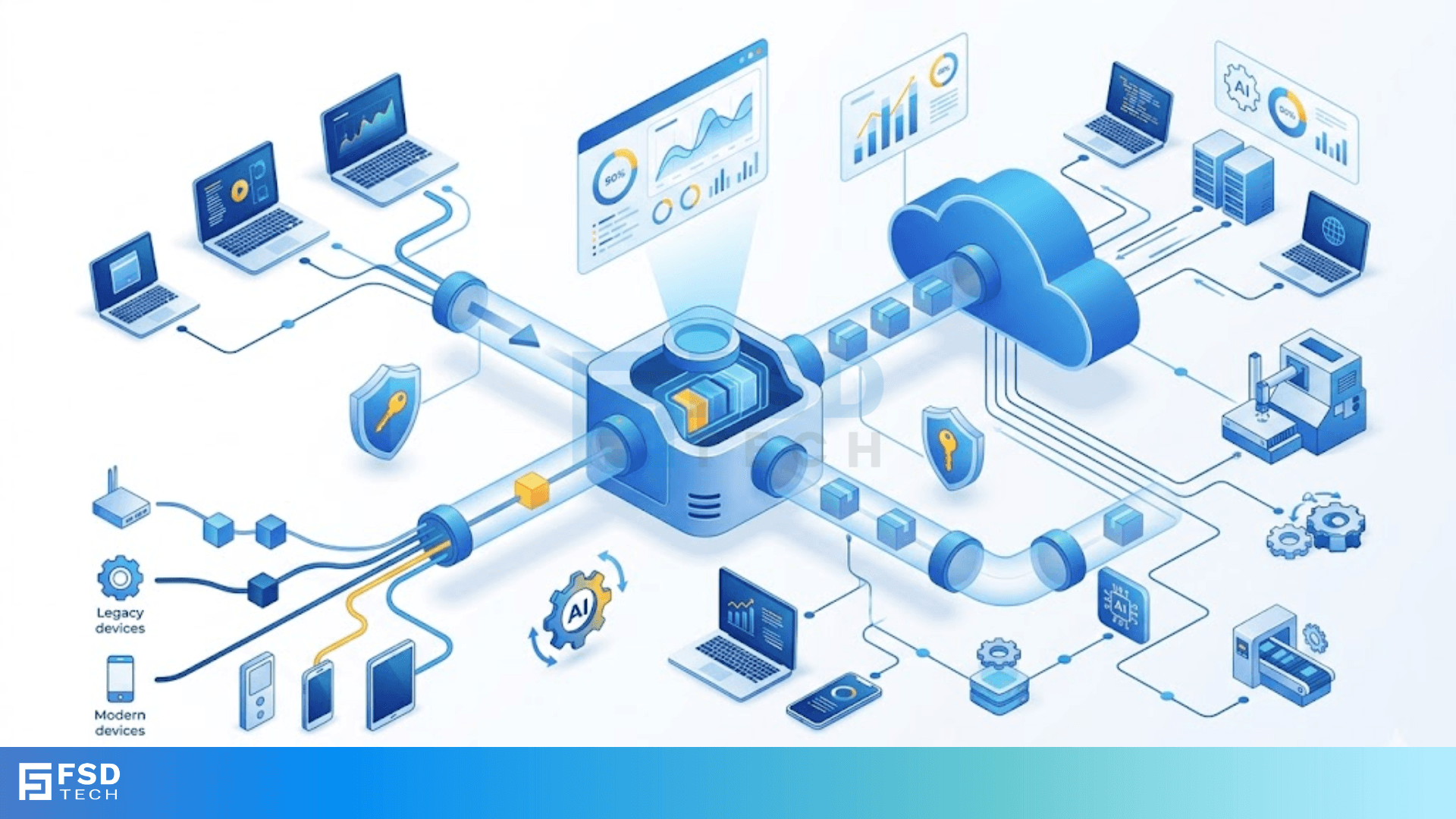
A Cato Socket is a proprietary physical or virtual appliance developed by Cato Networks that connects your sites — offices, branches, or data centers — directly to the Cato SASE Cloud. Unlike generic routers or traditional CPE devices, the Socket is purpose-built for cloud-native SASE, meaning it's designed from the ground up to accelerate, optimize, and secure every packet that crosses your WAN.
Think of it as the "last-mile intelligence layer" between your physical network and the Cato Cloud. Once a Socket is plugged in and registered, it automatically discovers the nearest and best-performing Cato PoP (Point of Presence), establishes an encrypted DTLS tunnel, and begins optimizing traffic in real time — all within minutes, and with zero complex manual configuration.
Most enterprise network appliances require hours of manual configuration, firmware management, and ongoing tuning. Cato Sockets automate all of this, dramatically reducing the operational burden on IT teams.
Cato offers multiple Socket hardware models to fit specific physical site requirements — from small branch offices to high-throughput data centers. And for cloud environments, there's the Cato vSocket (virtual Socket), available on AWS, Azure, GCP, and VMware.
Before diving deeper into Sockets, it's important to understand where they fit in the broader Cato product portfolio. Cato offers two primary service models.
Cato SASE is a comprehensive cloud-native service that converges networking and security. It uses Cato Sockets as the primary CPE, leverages the Cato backbone for SD-WAN, and delivers full visibility and control across the enterprise.
Cato SSE focuses exclusively on security services. Customers bring their own SD-WAN (third-party) and integrate with Cato via IPsec. This is ideal for organizations already invested in a different network fabric and not ready for a full SASE migration.
If you're deploying Cato SASE, Cato Sockets are the recommended — and superior — choice for physical and virtual site connectivity. If you're on the SSE path, IPsec tunnels allow your existing infrastructure to connect to Cato's security services, but you won't get the full performance and visibility benefits that Sockets deliver.
For new deployments or organizations fully committed to SASE, Cato Sockets unlock the platform's full potential. For phased migrations or hybrid environments, IPsec bridges the gap — but Sockets should be your end-state architecture.
Cato supports three methods to connect a site to the Cato Cloud. Each serves a different use case and comes with distinct trade-offs.
Cato Socket / vSocket is the flagship option. A hardware or virtual appliance that automates setup, provides encrypted DTLS tunnels, and dynamically optimizes connectivity. Best for branch offices, campuses, and cloud data centers seeking maximum performance and operational simplicity. Supports up to 10 Gbps, full analytics including packet loss visibility, both upstream and downstream QoS, and up to 4 HA tunnels with recovery mechanisms.
IPsec Tunnel connects existing third-party firewalls, routers, or SD-WAN appliances to the Cato Cloud over the public Internet. Good for organizations with existing CPE investments or SSE-only deployments. Caps at 3 Gbps, offers partial analytics with no packet loss visibility, downstream-only QoS, and up to 3 HA tunnels.
Cloud Interconnect is a direct physical connection from a high-traffic data center to the Cato Cloud — bypassing the public Internet entirely. Ideal for large-scale data center workloads requiring ultra-low latency and very high bandwidth. Matches Socket performance at 10 Gbps but is limited to active/passive HA across 2 PoP locations, only available at specific PoP locations, and requires a minimum of 400 Mbps.
Also Read: Why DHCP Configuration Matters for Device-Based Firewall Enforcement in Cato SASE
The most common comparison IT teams face is Cato Socket vs IPsec. While both provide encrypted site connectivity to the Cato Cloud, they differ dramatically in capability, resilience, and ease of management.
The most critical difference is PoP selection. IPsec sites are statically tied to one PoP location. If that PoP experiences performance issues, your site suffers and there is no automatic recovery. Cato Sockets dynamically identify the best PoP at all times and automatically failover to a better-performing one without any manual intervention — a capability that alone can eliminate entire categories of network escalations.
On throughput, Sockets support up to 10 Gbps versus IPsec's 3 Gbps ceiling — more than three times the bandwidth. On visibility, Sockets provide per-second metrics for packet loss, jitter, latency, and distance. IPsec provides no packet loss visibility at all. On QoS, Sockets manage both upstream and downstream bandwidth. IPsec manages downstream only. On High Availability, Sockets support up to 4 simultaneous tunnels with WAN Recovery and Internet Recovery fallback. IPsec supports up to 3 tunnels with no comparable recovery mechanisms.
For teams managing dozens or hundreds of sites, the combination of dynamic PoP selection, richer analytics, and automated failover translates directly into lower MTTR, fewer escalations, and significantly better end-user experience.
1. Last-Mile Optimization. Cato Sockets include TCP acceleration to reduce round-trip time, packet size optimization to fit the best TCP parameters for the MTU, MTU optimization that continuously monitors and adjusts for upstream and downstream traffic, and per-packet load balancing that sends traffic over the optimal link in active/active configurations.
2. Packet Loss Mitigation. Cato's proprietary technology duplicates packets across multiple links so that even when loss occurs on one path, the data is still delivered. This happens transparently without any user impact and is entirely unavailable with IPsec tunnels.
3. Real-Time Full Visibility. Sockets provide a single pane of glass with metrics measured every second, including packet loss, jitter, latency, distance, and — with a DEM license — Experience Monitoring probes. IPsec requires comparing data across multiple consoles and cannot show packet loss at all.
4. Dynamic PoP Selection. Sockets continuously monitor and calculate the best network performance path to the Cato Cloud. When a PoP underperforms, all affected Sockets automatically switch to a better option. IPsec connections have no such adaptability.
5. Simplified High Availability. Two Sockets operate in active/passive HA mode for hardware-level protection. Additionally, Sockets support up to 4 simultaneous tunnels, WAN Recovery (direct site-to-site links), and Internet Recovery, providing layered resilience that IPsec cannot replicate without significant additional complexity.
6. Automatic Encryption. DTLS tunnels are established automatically at setup. There is no risk of misconfiguration leaving vulnerabilities exposed — a real concern with manually managed IPsec deployments.
7. Zero-Touch Upgrades. The Cato platform manages all Socket firmware upgrades automatically, including security patches for published vulnerabilities, performance enhancements, and new feature releases. No maintenance windows. No manual effort. No version drift across sites.
8. Centralized Management. All Sockets — physical and virtual — are managed through a single interface in the Cato Management Application. Bandwidth policies, QoS profiles, and HA configurations are set once and applied consistently. IPsec sites may require separate configurations per appliance vendor, leading to inconsistent settings and higher operational risk.
Also Read: Reducing IoT Attack Surface with Cato Internet Firewall Policies
For organizations running workloads in public cloud environments, Cato offers the vSocket — a virtual version of the physical Socket appliance. vSockets are available for Amazon Web Services (AWS), Microsoft Azure, Google Cloud Platform (GCP), and VMware private cloud environments.
The vSocket provides all the same benefits as a physical Socket: dynamic PoP selection, full analytics, last-mile optimization, active/active support, and automated upgrades — in a software-only form factor that deploys as a virtual machine inside your cloud environment.
This makes it straightforward to extend your SASE architecture to cloud-hosted workloads without deploying physical hardware, while maintaining the same centralized management and consistent security policy enforcement across your entire network — from branch office to cloud VPC.
A practical example: a company running production workloads in AWS and a disaster recovery environment in Azure can deploy vSockets in both cloud accounts, connecting them to the Cato Cloud with identical setup, visibility, and performance guarantees as their physical branch offices. No special treatment, no separate management plane.
When choosing a site connectivity method, four metrics matter most: bandwidth ceiling, observability, PoP flexibility, and QoS control.
On bandwidth, Cato Sockets and Cloud Interconnect both reach 10 Gbps. IPsec caps at 3 Gbps.
On observability, only Cato Sockets provide real-time packet loss monitoring, jitter tracking, and per-second latency data. IPsec and Cloud Interconnect both lack packet loss visibility.
On PoP flexibility, Sockets are fully dynamic and auto-optimizing. IPsec PoPs are statically assigned. Cloud Interconnect is fixed to specific physical locations.
On QoS, Sockets enforce policies in both upstream and downstream directions. IPsec and Cloud Interconnect are limited to downstream only.
For architects designing latency-sensitive workloads — VoIP, video conferencing, real-time financial systems — Cato Socket's active/active configuration with per-packet load balancing and packet loss mitigation is the only architecture that delivers carrier-grade reliability over commodity Internet links without requiring dedicated MPLS circuits.
For organizations building a modern, cloud-native network, Cato Sockets are the clear choice for site connectivity. They deliver superior performance up to 10 Gbps with dynamic PoP selection and last-mile optimization. They provide unmatched visibility with real-time packet loss, jitter, and latency metrics that IPsec simply cannot offer. They deliver enterprise-grade resilience through active/active HA, WAN Recovery, Internet Recovery, and automatic PoP failover.
They require zero-touch operations with automated setup, centralized management, and hands-free upgrades. And they are cloud-ready, with vSocket support for AWS, Azure, GCP, and VMware ensuring consistent policy enforcement everywhere.
IPsec remains a valid bridge for organizations with existing infrastructure investments or SSE-only deployments. Cloud Interconnect fits niche high-volume data center scenarios. But if you're architecting for the long term — and especially if you're moving toward SASE — Cato Sockets are your foundation.
A Cato Socket is a proprietary hardware or virtual appliance that connects a physical office or cloud data center to the Cato SASE Cloud. It automates setup, dynamically selects the best Cato PoP, and provides an encrypted DTLS tunnel with built-in last-mile optimization and full analytics.
Cato Sockets use DTLS encryption and connect dynamically to the best-performing PoP, while IPsec tunnels are statically assigned to one PoP. Sockets support full analytics including packet loss, active/active HA with up to 4 tunnels, last-mile optimization, and automated upgrades — none of which are available with IPsec.
A Cato vSocket is a software-based virtual version of the physical Socket, available for AWS, Azure, GCP, and VMware. It delivers the same features and benefits as a hardware Socket but deploys as a virtual machine in a cloud environment — no physical hardware required.
Cato Sockets support throughput up to 10 Gbps — more than three times the maximum throughput of IPsec tunnels which cap at 3 Gbps. This matches Cloud Interconnect performance while offering far greater flexibility and lower operational complexity.
Yes. Two Cato Sockets can operate in active/passive HA mode for hardware-level failover. Additionally, a single Socket supports up to 4 simultaneous tunnels to different PoPs, with WAN Recovery and Internet Recovery fallback mechanisms for maximum resilience.
No. The Cato platform manages all Socket upgrades automatically. This includes security patches, performance enhancements, and new feature releases — all delivered as a hands-free, zero-downtime process.
Cloud Interconnect is best suited for physical or cloud-based data centers with very high traffic volumes (400 Mbps minimum) that require a dedicated private link to the Cato Cloud. It is not suited for branch offices and has limited PoP availability compared to Sockets, which work at any location with Internet access.

Surbhi Suhane is an experienced digital marketing and content specialist with deep expertise in Getting Things Done (GTD) methodology and process automation. Adept at optimizing workflows and leveraging automation tools to enhance productivity and deliver impactful results in content creation and SEO optimization.
Share it with friends!

.webp&w=3840&q=75)
share your thoughts