.webp&w=3840&q=75)
How ClickUp Enables Outcome-Based Project Management (Not Just Task Tracking)
🕓 February 15, 2026

To be honest, it is likely already happening in your office right now. Imagine an employee who feels your company’s file-sharing tool is too slow. To hit a deadline, they upload a sensitive contract to their personal Dropbox instead. They didn’t mean any harm, but they just created a massive security blind spot.
In my experience, this isn't about "bad" employees. It is about people trying to do their jobs faster. But here is the thing: every time someone bypasses your tech team, they open a window for hackers. From hidden AI bots to smart coffee machines, the "unknown unknowns" are growing.
Are you sure you know every device on your network? Most leaders don’t. In this guide, we will look at how these hidden tools work and how a unified platform like Cato SASE can stop them without slowing down your team.
The term Shadow IT refers to any software, hardware, or cloud service used inside a company without the IT department’s approval. It’s not just about a stray USB drive anymore. Today, it includes massive SaaS platforms and even autonomous AI agents.
Most workers don't want to break the rules. However, they often find official tools clunky. We've all been there—waiting three days for a software ticket to be approved while a project sits idle.
Fast-forward to today, and we have a new player: Shadow AI. Roughly 80% of office workers now use public AI tools like ChatGPT for work. If your team is pasting proprietary code into an unvetted bot, your intellectual property might be training someone else's model. We've seen this happen in real-world scenarios where private company data ends up in public AI responses!
Also Read: What is Cato Business Continuity Planning (BCP)?
You can't protect what you can't see. That is the fundamental problem with Shadow IT. When a tool lives outside your security stack, it misses out on your firewalls, encryption, and updates.
1. Massive Data Leaks
When data moves to a personal account, the company loses control. What happens if that employee leaves? They still have the data. In fact, research shows that unsanctioned apps increase the risk of sensitive data exposure by 25%.
2. Compliance and Legal Nightmares
Are you in a regulated field like healthcare or finance? Using unapproved tools can trigger huge fines. Regulators don't care if the employee was "just being productive." If PII (Personally Identifiable Information) sits on an unencrypted personal drive, you are at risk.
3. Expanding the Attack Surface
Every hidden app is a new door for a hacker. These tools often have weak passwords or old software. Criminals love finding these "forgotten" entry points to slip into your main corporate network.
Picture this: You have a "smart" office with Ring cameras or Echo devices. Even if you secure your Wi-Fi, these devices might be using Amazon Sidewalk. This is a shared network that lets devices talk to each other over long distances.
The trouble with Sidewalk is that it can create a "bridge" between your neighbor's network and yours. It uses a low-bandwidth frequency that traditional security often ignores. This is a classic "unknown unknown."
Cato Networks research found hundreds of thousands of flows from Alexa-enabled devices on enterprise networks. These flows are often invisible to legacy firewalls. How can you claim your network is secure if it's talking to the Echo Dot in the apartment next door?
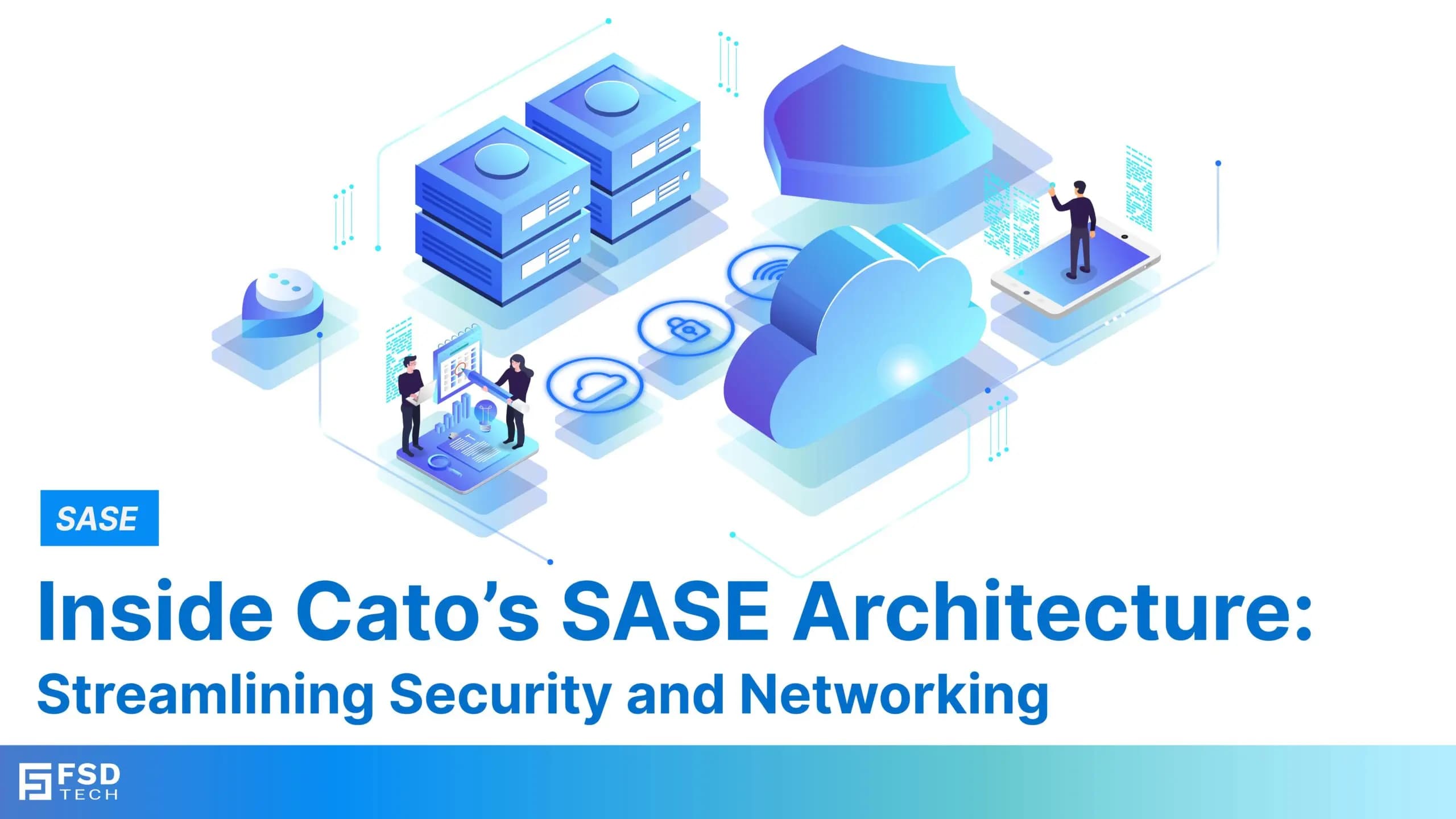
So, how do we fix this? The old way was to block everything. But let’s be real—that just makes employees find sneakier ways to work. A better approach is to use a Secure Access Service Edge (SASE) platform like the one offered by Cato Networks.
Also Read: Cato ZTNA in Practice: Combining Identity, Device, and Context in One Policy Engine
A Cloud Access Security Broker (CASB) acts like a security guard between your users and the cloud. Cato's CASB is built directly into their global private backbone. It doesn't just block apps; it watches what is happening inside them.
While other vendors offer separate tools that don't talk to each other, Cato SASE converges networking and security into one cloud-native platform. This gives you a "single pane of glass" view.
Whether an employee is in the office or working from home, Cato sees every flow. It can spot a rogue IoT device or an unauthorized AI bot in real-time. In my view, this is the only way to catch the threats you didn't even know existed.
Managing Shadow IT isn't about being the "department of no." It’s about building a resilient environment where your team can thrive without leaving the door unlocked. At Cato Networks, we believe that security should empower your people, not hinder them. By gaining total visibility and choosing the right platform, you can turn these "unknown unknowns" into a secure, productive future.
Not necessarily. It often highlights a gap in your official technology. If 20 people are using a specific project tool, it might be time to officially license and secure it.
Since Cato is cloud-native, it protects users wherever they are. The same security policies apply to a laptop in a coffee shop as they do to a desktop in the main office.
Traditional firewalls struggle with encrypted cloud traffic and mobile devices. You need identity-based security like Zero Trust Network Access (ZTNA) to be truly safe.

Surbhi Suhane is an experienced digital marketing and content specialist with deep expertise in Getting Things Done (GTD) methodology and process automation. Adept at optimizing workflows and leveraging automation tools to enhance productivity and deliver impactful results in content creation and SEO optimization.
Share it with friends!


.webp&w=3840&q=75)



share your thoughts