.webp&w=3840&q=75)
How ClickUp Enables Outcome-Based Project Management (Not Just Task Tracking)
🕓 February 15, 2026
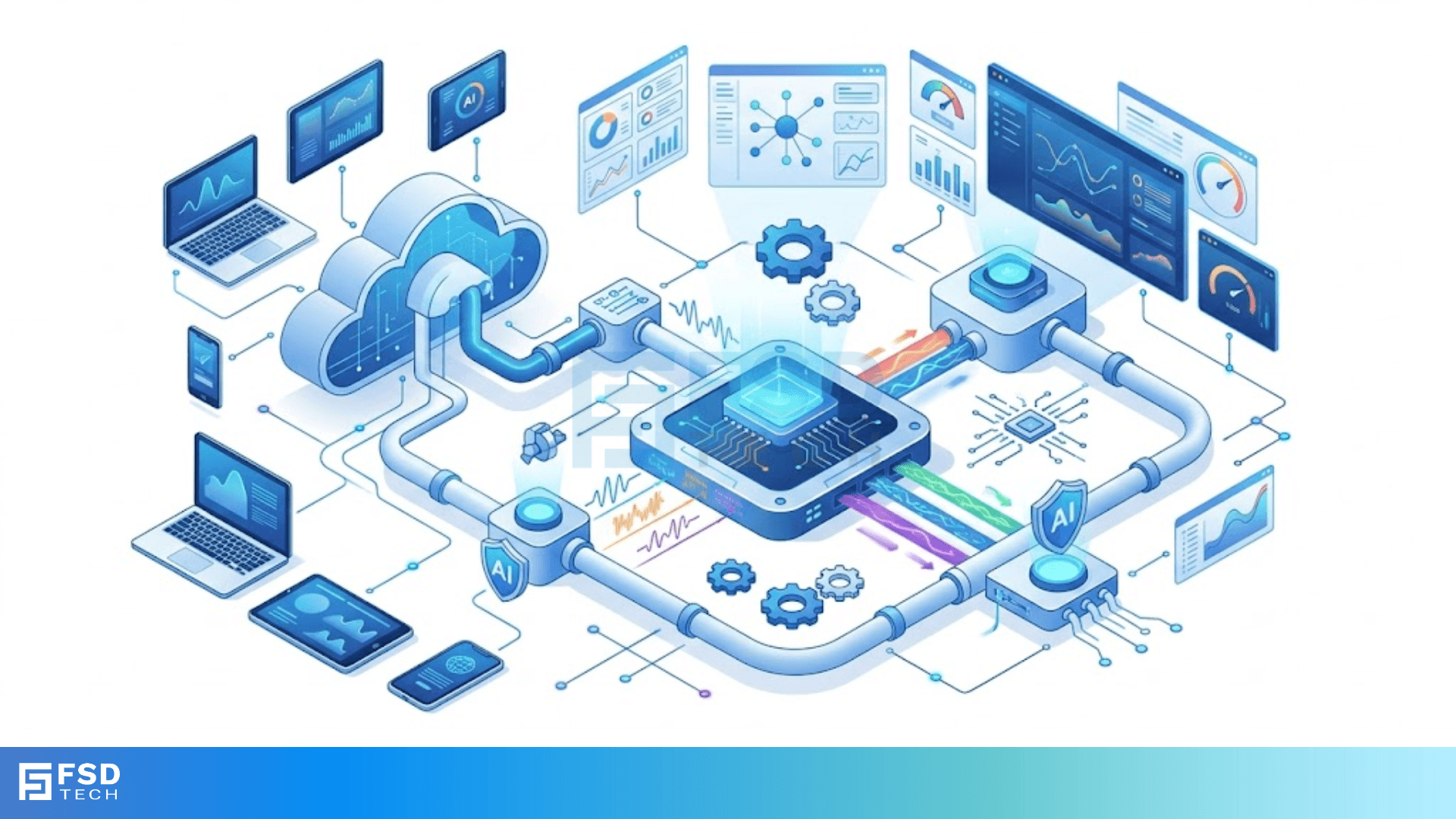
Modem modulation roles involve more than just connecting you to the internet; they act as the essential bridge between your digital devices and the physical world of wires or airwaves. Have you ever wondered how a simple picture of your cat turns into an electrical pulse that travels across the globe in seconds? It feels like magic, but it is actually a clever bit of engineering. We use modems every day, yet most of us don't know what happens inside those little blinking boxes.
Here is the thing: your computer speaks in bits—zeros and ones. On the other hand, cables and radio waves prefer smooth, continuous waves. Without a way to translate between these two "languages," your laptop would just be a very expensive paperweight. In this guide, we'll look at how these devices use modulation to keep our digital lives moving.
To understand modem modulation roles, we first need to look at the name itself. The word "modem" is a mix of two words: Modulator and Demodulator. A modulator takes your digital data and hitches it onto a carrier signal. Think of it like putting a letter into an envelope before mailing it. The demodulator on the other end opens that envelope to read the message.
In my experience, people often confuse modems with routers. While a router shares the signal around your house, the modem is the one doing the heavy lifting of translation. It changes the properties of a wave—like its height or timing—to represent your data. This process ensures that information travels long distances without getting lost or scrambled.
When we talk about the modem modulation roles, the modulator is the "speaker." Its job is to prepare data for a journey. Digital signals are "square" and don't travel well over long copper wires or through the air. They fade out or get distorted very quickly.
The modulator solves this by using a "carrier wave." This is a steady, high-frequency signal that can travel long distances. By tweaking this carrier wave, the modulator "hides" your bits inside it. Without this step, global communication would be impossible. It essentially turns a fragile digital pulse into a hardy analog wave that can survive the trip to a cell tower or a central office.
The second half of modem modulation roles happens at the receiving end. If modulation is speaking, demodulation is listening. The receiver gets an analog wave that has been bounced around and maybe weakened by distance.
The demodulator has a tough job. It must look at that messy wave and figure out exactly where the zeros and ones are. It strips away the carrier wave and leaves behind the original digital data. If the modem does this job well, you get a perfect download. If it fails, you get "lag" or corrupted files.
We don't use just one way to send data. Depending on your connection—be it Wi-Fi, fiber, or old-school phone lines—the modem chooses a specific method. Let's look at the three big players in the world of modulation.
Amplitude Shift Keying (ASK)
In ASK, the modem changes the height (amplitude) of the wave. To send a "1," the wave might be tall. To send a "0," the wave might be short or even silent. It’s very simple, much like a flashlight turning on and off to send Morse code.
However, ASK has a weakness. It is very sensitive to noise. If a lightning storm or a nearby microwave messes with the wave height, the modem might get confused. This is why we usually only see ASK in very basic or low-speed systems.
Frequency Shift Keying (FSK)
FSK is a bit more reliable. Instead of changing height, the modem changes how fast the wave vibrates. A "1" might be a high-pitch wiggle, while a "0" is a low-pitch wiggle.
Because FSK doesn't rely on the "volume" or height of the wave, it handles noise much better than ASK. Have you ever heard the screeching sound of an old dial-up modem? That was FSK in action! It’s still used today in some radio systems and caller ID services because it is tough and hard to break.
Phase Shift Keying (PSK)
Now we're getting into the high-tech stuff. PSK is one of the most vital modem modulation roles in modern Wi-Fi and LTE. Instead of changing height or speed, it changes the timing of the wave.
Imagine a swing moving back and forth. If you suddenly pull the swing back while it’s in the middle of a forward arc, you've "shifted its phase." The modem does this with waves. By shifting the start point of a wave, it can represent data very quickly. It is much more efficient and allows us to pack more data into the same amount of space.
Also Read: NIC Duplex Modes: Guide to Half vs Full Duplex
You might wonder, "Why can't computers just talk directly?" The truth is, the physical world is messy. Digital signals are "baseband" signals. They occupy low frequencies and cannot be shifted to different channels.
Analog vs digital signal vector illustration. Educational explanation scheme
The carrier signal is the unsung hero of modem modulation roles. It’s like a blank canvas. By itself, it carries no information. It just sits there at a specific frequency. When the modem begins modulation, it starts "painting" the data onto that canvas. This allows your internet provider to send thousands of different "paintings" (data streams) over one fiber optic cable without them mixing together.
As our hunger for 4K video and gaming grows, simple ASK or FSK isn't enough. We need to squeeze more bits into every second. This is where Quadrature Amplitude Modulation (QAM) comes in.
QAM is a "hybrid" method. It changes both the height and the phase of the wave at the same time. Think of it like a complex dance where every movement of the arms and legs represents a different combination of bits.
In my experience, the jump to higher QAM levels is why your internet feels so much faster today than it did ten years ago. We aren't necessarily using "more" airwaves; we are just getting much better at the modem modulation roles.
The world is a noisy place for a signal. Your modem doesn't just modulate; it also cleans up the mess. Between the modulator and the line, there are filters. These ensure that the signal stays within its lane and doesn't bleed into other frequencies.
On the receiving side, the modem uses "Equalization." This is a fancy way of saying it corrects for the bumps and bruises the signal took during its trip. If the high frequencies got muffled by a long cable, the equalizer boosts them back up. This is a crucial part of the modem's job that we rarely see.
Another key role of a modem is helping with multiplexing. This allows multiple data streams to travel together.
Modems use these techniques to make sure your Netflix stream doesn't crash just because your neighbor is also watching a movie.
Also Read: Telnet Clear-Text Risks: Why Plain Text Protocols Threaten Your Security
Let's look at how this works in real life. When you click "Send" on an email, here is the journey:
This happens millions of times a second. It’s a seamless handoff that defines the modern age.
Understanding modem modulation roles helps us appreciate the complex tech that keeps us connected. From simple pitch shifts to complex phase changes, these devices are the hard-working translators of the digital world. Whether you are gaming, working, or just browsing, a modem is quietly doing the heavy lifting in the background. At our company, we value this kind of precision and reliability. We believe that clear communication—both in tech and in person—is the key to a better future for all our clients.
The primary role is to convert digital signals from a computer into analog signals for transmission over phone lines or cables, and vice versa.
A router can create a local network (LAN) so your devices can talk to each other, but it cannot connect you to the internet without a modem to translate the ISP's signal.
Different environments require different tools. FSK is great for noisy environments, while QAM is perfect for high-speed fiber where the signal is cleaner.
Yes! Higher levels of modulation (like 256-QAM) allow more data to be sent in the same amount of time, leading to faster download speeds.

Surbhi Suhane is an experienced digital marketing and content specialist with deep expertise in Getting Things Done (GTD) methodology and process automation. Adept at optimizing workflows and leveraging automation tools to enhance productivity and deliver impactful results in content creation and SEO optimization.
Share it with friends!




.webp&w=3840&q=75)

share your thoughts