HomeManaged ServicesNext Gen IT-InfraMonitoring & ManagementCyber SecurityBCP / DRAutomation
Managed Services
msp-dubai-accounting-firms-managed-it

Why accounting firms in Dubai need an MSP before they think they do?

🕓 April 24, 2026

How FSD-Tech Deploys Xcitium Managed Security in the GCC

How FSD-Tech Deploys Xcitium Managed Security in the GCC

🕓 May 11, 2026

Next Gen IT-Infra
Cato’s SASE Supports Cybersecurity Skills Development

How Cato’s SASE Supports Cybersecurity Skills Development

🕓 April 8, 2025

How SASE Supports the Security Needs of SMBs

How SASE Supports the Security Needs of SMBs

🕓 February 9, 2025

Attack Surface Reduction with Cato’s SASE

Attack Surface Reduction with Cato’s SASE

🕓 February 10, 2025

SASE for Digital Transformation in UAE

SASE for Digital Transformation in UAE

🕓 February 8, 2025

Monitoring & Management
Cost-Performance Ratio: Finding the Right Balance in IT Management Networks

Cost-Performance Ratio: Finding the Right Balance in IT Management Networks

🕓 June 16, 2025

Atera’s Communication Tools

Atera’s Communication Tools: Boosting IT Team Productivity in the UAE

🕓 February 8, 2025

Emerging Trends in IT Management

Emerging Trends in IT Management

🕓 February 10, 2025

Atera Disaster Recovery

Atera Disaster Recovery: Top Strategies for UAE IT Teams

🕓 February 9, 2025

Cyber Security
Illustration of the Cato Cloud architecture showing its role in delivering SASE for secure, optimized global connectivity.

Understanding the Cato Cloud and Its Role in SASE

🕓 January 29, 2025

Isometric illustration of professionals managing network performance, bandwidth analytics, and cloud-based optimization around the Cato Networks platform, symbolizing bandwidth control and QoS visibility.

Mastering Bandwidth Control and QoS in Cato Networks

🕓 July 26, 2025

Global network backbone powering Cato SASE solution for secure, high-performance connectivity across regions.

Global Backbone: The Engine Powering Cato’s SASE Solution

🕓 January 30, 2025

Illustration of team analyzing application traffic and usage insights on a large laptop screen using Cato’s dashboard, surrounded by network and cloud icons.

Cato Networks Application Visibility | Monitoring & Control

🕓 July 27, 2025

BCP / DR
Illustration showing diverse business and IT professionals collaborating with cloud, backup, and security icons, representing Vembu use cases for SMBs, MSPs, and IT teams.

Who Uses Vembu? Real-World Use Cases for SMBs, MSPs & IT Teams

🕓 July 12, 2025

Graphic showcasing Vembu’s all-in-one backup and disaster recovery platform with icons for cloud, data protection, and business continuity for IT teams and SMBs.

What Is Vembu? A Deep Dive Into the All in One Backup & Disaster Recovery Platform

🕓 July 6, 2025

Illustration showing Vembu backup and disaster recovery system with cloud storage, server racks, analytics dashboard, and IT professionals managing data.

The Rising Cost of Data Loss: Why Backup Is No Longer Optional?

🕓 August 14, 2025

3D isometric illustration of cloud backup and data recovery infrastructure with laptop, data center stack, and digital business icons — FSD Tech

RPO & RTO: The Heart of Business Continuity

🕓 August 15, 2025

Automation
Cross-Functional Collaboration with ClickUp

Fostering Cross-Functional Collaboration with ClickUp for Multi-Departmental Projects

🕓 February 11, 2025

ClickUp Project Reporting

Revolutionizing Enterprise Reporting with ClickUp’s Advanced Analytics and Dashboards

🕓 June 16, 2025

ClickUp’s Design Collaboration and Asset Management Tools

Empowering Creative Teams with ClickUp’s Design Collaboration and Asset Management Tools

🕓 February 26, 2025

ClickUp Communication and Collaboration Tools

ClickUp Communication and Collaboration Tools: Empowering Remote Teams

🕓 March 12, 2025

    Subscribe to our newsletter!

    About Us

    Follow Us

    Copyright © 2024 | Powered by 

    Atera

    (60)

    Cato Networks

    (131)

    ClickUp

    (78)

    FishOS

    (7)

    Miradore

    (21)

    PointGuard AI

    (9)

    Vembu

    (24)

    Xcitium

    (35)

    ZETA HRMS

    (79)

    Table of Contents

    What is GRE Tunnel Encapsulation and How Does It Work?

    Surbhi Suhane
    May 6, 2026
    Comments
    GRE Tunnel Encapsulation

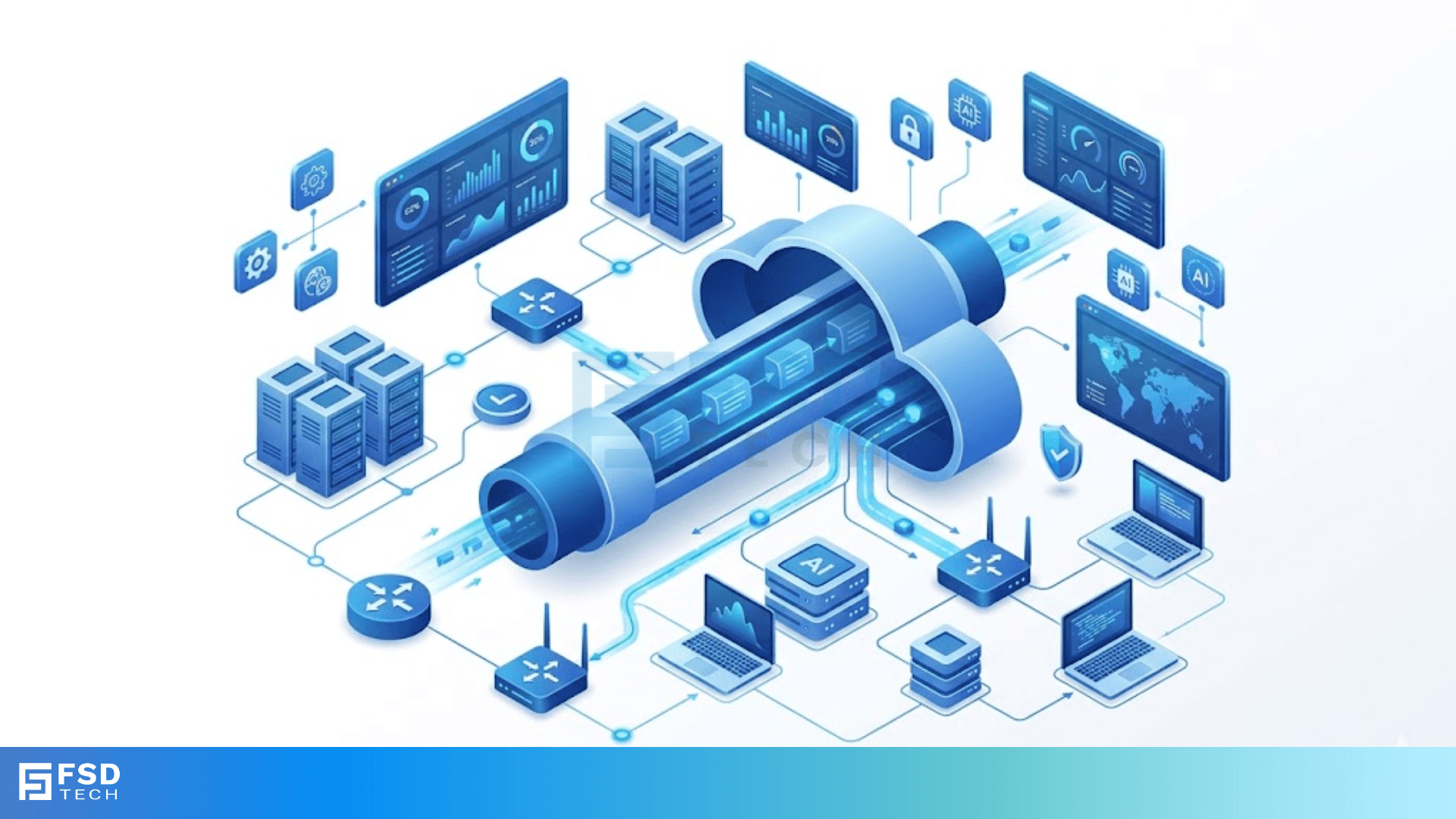
    GRE tunnel encapsulation is a powerful way to move data across a network by wrapping one physical packet inside another. Imagine you need to send a private letter through a public mail system, but the mail carriers don't speak your language. You put your letter inside a standard envelope that the mailman understands. That is essentially what Generic Routing Encapsulation (GRE) does for your data.


    To be honest, the networking world can feel a bit messy with so many protocols flying around. You might wonder why we still use a technology developed back in the 90s. Well, in my experience, it's because GRE is incredibly flexible. Whether you are connecting two offices over the internet or moving weird types of traffic that standard routers hate, this protocol has your back.


    Let's look at how this works and why it might be the missing piece in your network setup.


    Understanding the Basics of GRE Tunnel Encapsulation

    What exactly is GRE tunnel encapsulation when we strip away the jargon? At its core, it's a protocol that hides one type of data inside a standard IP packet. We call the original data the "passenger" and the new header the "carrier."


    When you set up a GRE tunnel, you create a virtual link between two points. This link looks like a direct connection to your routers, even if they are thousands of miles apart. Think of it like a private pipe running through the chaotic ocean of the public internet.


    Optimize Your Network Today


    Why do we need GRE tunnels?

    The internet mostly speaks one language: IPv4. But what if you need to send something else, like routing updates or older protocols? Standard routers might drop those packets. GRE saves the day by wrapping that "illegal" traffic in a standard IPv4 skin. This allows it to pass through any network without being questioned.


    The Technical Breakdown: How Encapsulation Happens

    When we talk about GRE tunnel encapsulation, we are really talking about adding "hats" to your data. Most people think of data as a single unit, but it's more like a Russian nesting doll.


    1. The Original Packet: This is your actual data (like a file transfer or a VoIP call).
    2. The GRE Header: We add a small 4-byte or 8-byte header. This tells the receiving end, "Hey, there's a special package inside here!"
    3. The Delivery Header: Finally, we add a new IP header. This header has the source and destination of the tunnel endpoints.


    Does GRE encrypt your data?

    Here is a big truth: GRE by itself is naked. It does not provide any security or encryption. If someone intercepts your packet, they can see everything inside. That is why we often pair it with IPsec. We've all been there—thinking a tunnel is "secure" just because it's a tunnel. That’s a mistake you don't want to make!


    Also Read: Repeater Signal Boosting: How to Improve Your Wireless Coverage Instantly


    Core Features of Generic Routing Encapsulation

    You’ll find that GRE tunnel encapsulation stands out because of its simplicity. Unlike other protocols that require complex handshakes, GRE is stateless. This means the sender doesn't need to check if the receiver is ready before sending data.


    Key Characteristics:

    • Protocol Agnostic: It can carry almost any Layer 3 protocol.
    • Multicast Support: This is the "killer feature." It allows routing protocols like OSPF or EIGRP to work across the tunnel.
    • Low Overhead: It adds very little extra weight to your packets compared to complex VPNs.


    "But wait," you might ask, "if it's not secure, why use it?" In many enterprise setups, we use GRE to handle the routing logic and IPsec to handle the "locks and keys." It’s a best-of-both-worlds scenario.


    How to Set Up a GRE Tunnel

    Setting up a tunnel sounds hard, but it's actually quite logical. Most modern routers, like Cisco ASRs or even software routers, follow a similar path.


    Step 1: Define the Tunnel Interface

    You create a virtual interface on both routers. We usually call this "Tunnel 0." You give this interface its own private IP address.


    Step 2: Set the Source and Destination

    You must tell the router where the tunnel starts and where it ends. Usually, these are the public IP addresses of your branch offices.


    Step 3: Enable GRE Tunnel Encapsulation

    By default, most tunnel interfaces use GRE. Once you turn it on, the router starts wrapping every packet destined for that tunnel in the GRE header.


    Pro Tip: Watch your MTU! Since we are adding extra headers, the packet gets bigger. If it gets too big, it might get chopped up (fragmented), which slows down your network. Roughly 1400 to 1476 bytes is usually the sweet spot for the Maximum Transmission Unit.


    Real-World Use Cases for GRE

    Why would you actually use GRE tunnel encapsulation in your daily work? From my time in the field, I’ve seen three main reasons why engineers reach for this tool.


    1. Connecting Remote Offices

    If you have two offices and you want them to act like they are on the same local network, a GRE tunnel is the easiest way. It allows employees in Office A to see printers in Office B without any complex NAT rules.


    2. Passing Routing Traffic

    If you run a large network, your routers need to talk to each other using protocols like BGP or OSPF. These protocols often use "multicast" traffic. The internet doesn't like multicast. GRE wraps that traffic so it can travel across the web safely.


    3. DDoS Protection

    Many security companies use GRE to "scrub" traffic. When a website is under attack, they redirect all traffic through a GRE tunnel to a cleaning center. The clean traffic is then sent back to the original server.


    Also Read: What is VLAN ID Tagging? Guide to Network Segregation


    GRE vs. Other Tunneling Protocols

    It’s easy to get confused between GRE, IPsec, and L2TP. Let's clear that up.

    FeatureGREIPsecL2TP
    EncryptionNoYesNo
    MulticastYesNo (usually)Yes
    ComplexityVery LowHighMedium
    Best ForRoutingSecurityMobile Users

    As we can see, GRE is the "utility truck" of the networking world. It’s not fancy, but it moves the heavy stuff that other protocols can't handle.


    Common Issues with GRE Tunnels

    Nothing is perfect, right? Even though GRE tunnel encapsulation is reliable, you might hit some speed bumps.


    • Recursion Errors: This happens when a router tries to send the tunnel traffic through the tunnel itself. It's like a snake eating its own tail.
    • Firewall Blocks: Some firewalls block Protocol 47 (the ID for GRE). If your tunnel is "up" but no data is moving, check your firewall rules!
    • Latency: Since you are adding headers and potentially routing through multiple points, you might see a slight delay in your connection.


    Have you ever spent hours debugging a "down" tunnel only to find out a single firewall rule was the culprit? It’s a rite of passage for every network admin.


    The Future of GRE Encapsulation

    Is GRE dying? Not at all. Even as we move toward SD-WAN and cloud-native networking, the core logic of GRE tunnel encapsulation remains. Many cloud providers like AWS and Google Cloud still use variations of GRE to connect their internal data centers.


    We've seen how this protocol simplifies complex routing tasks. It stays relevant because it does one job and does it very well: it moves data from point A to point B without asking questions.


    Conclusion

    In summary, GRE tunnel encapsulation is a vital tool for any modern network. It solves the problem of moving diverse traffic across restrictive environments. While it lacks built-in security, its ability to handle multicast and various protocols makes it a favorite for engineers worldwide.


    At our company, we believe in building networks that are both flexible and resilient. We focus on providing solutions that grow with your business, ensuring your data moves fast and stays connected. Whether you're a small startup or a global enterprise, we are here to help you navigate these technical waters with ease.


    Speak to a Tunneling Expert


    Key Takeaways on GRE Tunnel Encapsulation

    • Simple Wrap: GRE wraps one packet inside another to cross incompatible networks.
    • No Security: It provides no encryption by default; always use IPsec if you need privacy.
    • Multicast King: It's the best way to run routing protocols over the internet.
    • Watch the Size: Always adjust your MTU settings to avoid packet fragmentation.
    • Protocol 47: Make sure your firewalls allow GRE traffic, which uses IP protocol 47.


    Frequently Asked Questions (FAQs) on GRE Tunnel Encapsulation

    What is the header size of a GRE packet?

    A standard GRE header is 4 bytes. However, if you use optional features like checksums or keys, it can grow to 8 or 12 bytes.


    Can GRE work over NAT?

    Yes, but it can be tricky. Since GRE doesn't use "ports" like TCP or UDP, some basic home routers might struggle to translate it correctly.


    Is GRE faster than IPsec?

    Generally, yes. Because GRE doesn't have to perform complex math for encryption, it requires less CPU power from your router.


    How do I check if my GRE tunnel is working?

    You can use the "show interfaces tunnel" command on most routers. Look for "up/up" status. You should also try to "ping" the IP address of the other end of the tunnel.

    What is GRE Tunnel Encapsulation and How Does It Work?

    About The Author

    Surbhi Suhane

    Surbhi Suhane is an experienced digital marketing and content specialist with deep expertise in Getting Things Done (GTD) methodology and process automation. Adept at optimizing workflows and leveraging automation tools to enhance productivity and deliver impactful results in content creation and SEO optimization.

    TRY OUR PRODUCTS

    Like This Story?

    Share it with friends!

    Subscribe to our newsletter!

    FishOSCato SASEVembuXcitiumZeta HRMSAtera
    Isometric illustration of a centralized performance platform connected to analytics dashboards and team members, representing goal alignment, measurable outcomes, risk visibility, and strategic project tracking within ClickUp.

    How ClickUp Enables Outcome-Based Project Management (Not Just Task Tracking)

    🕓 February 15, 2026
    Isometric illustration of a centralized executive dashboard platform connected to analytics panels, performance charts, security indicators, and strategic milestones, representing real-time business visibility and decision control within ClickUp.

    Executive Visibility in ClickUp – How CXOs Gain Real-Time Control Without Micromanaging

    🕓 February 13, 2026

    Cato SASE Architecture

    Inside Cato’s SASE Architecture: A Blueprint for Modern Security

    🕓 January 26, 2025

    Workflow Automation(8)

    Workforce Automation(1)

    AI Project Management(1)

    HR Data Automation(1)

    RMM(2)

    Firewall Security(1)

    IT Workflow Automation(1)

    IT security(2)

    GCC compliance(4)

    Payroll Integration(2)

    IT support automation(3)

    procurement automation(1)

    lost device management(1)

    IT Management(5)

    IoT Security(3)

    Cato XOps(1)

    IT compliance(5)

    Task Automation(1)

    Workflow Management(1)

    Kubernetes lifecycle management(2)

    OpenStack automation(1)

    AI-powered cloud ops(1)

    SMB Security(8)

    Data Security(1)

    MDR (Managed Detection & Response)(3)

    Atera Integrations(2)

    MSP Automation(3)

    XDR Security(2)

    Threat Detection & Response(1)

    SMB Cyber Protection(1)

    Ransomware Defense(3)

    HR Tech Solutions(1)

    Zero Trust Network Access(3)

    Post-Quantum Cryptography(1)

    Quantum Threat UAE & GCC(1)

    Quantum Security(1)

    Zero Trust Security(2)

    Cloud IDE Security(1)

    Endpoint Management(1)

    SaaS Security(2)

    Payroll Automation(5)

    IT Monitoring(2)

    Xcitium EDR SOC(15)

    Ransomware Protection GCC(1)

    M&A IT Integration(1)

    Network Consolidation UAE(1)

    MSSP for SMBs(1)

    Antivirus vs EDR(1)

    Managed EDR FSD-Tech(1)

    FSD-Tech MSSP(25)

    Ransomware Protection(3)

    SMB Cybersecurity GCC(1)

    Endpoint Security(1)

    Cybersecurity GCC(15)

    Data Breach Costs(1)

    Endpoint Protection(1)

    SMB Cybersecurity(8)

    Managed Security Services(2)

    Xcitium EDR(30)

    Zero Dwell Containment(31)

    Hybrid Backup(1)

    Cloud Backup(1)

    Backup & Recovery(1)

    pointguard ai(4)

    vembu(9)

    disaster recovery myths(1)

    SMB data protection(9)

    backup myths(1)

    Disaster Recovery(4)

    Vembu BDR Suite(19)

    GCCBusiness(1)

    DataProtection(1)

    Secure Access Service Edge(4)

    Unified Network Management(1)

    GCC IT Solutions(1)

    GCC HR software(20)

    financial cybersecurity(2)

    open banking(1)

    CC compliance(1)

    Miradore EMM(15)

    Cato SASE(9)

    Government Security(1)

    Cloud Security(9)

    GCC Education(1)

    Hybrid Learning(1)

    Talent Development(1)

    AI Governance(4)

    AI Risk Management(1)

    AI Cybersecurity(13)

    AI Security(2)

    AI Compliance(2)

    Secure Remote Access(1)

    GCC business security(1)

    GCC network integration(1)

    compliance automation(5)

    GCC cybersecurity(3)

    education security(1)

    App management UAE(1)

    Miradore EMM Premium+(5)

    BYOD security Dubai(8)

    share your thoughts

    SLIP Serial Encapsulation

    What is SLIP Serial Encapsulation? How it works?

    🕓 May 9, 2026

    PPP Authentication CHAP

    What is PPP Authentication CHAP? Dive into Secure Networking

    🕓 May 9, 2026

    HDLC Bit-Oriented Framing

    HDLC Bit-Oriented Framing: Guide to Data Link Control

    🕓 May 8, 2026

    Managed Services(2)

    Decoded(245)

    Cyber Security(129)

    BCP / DR(24)

    Zeta HRMS(78)

    SASE(21)

    Automation(80)

    Next Gen IT-Infra(128)

    Monitoring & Management(81)

    ITSM(22)

    HRMS(21)

    Automation(24)