HomeManaged ServicesNext Gen IT-InfraMonitoring & ManagementCyber SecurityBCP / DRAutomation
Managed Services
msp-dubai-accounting-firms-managed-it

Why accounting firms in Dubai need an MSP before they think they do?

🕓 April 24, 2026

How FSD-Tech Deploys Xcitium Managed Security in the GCC

How FSD-Tech Deploys Xcitium Managed Security in the GCC

🕓 May 11, 2026

Next Gen IT-Infra
Cato’s SASE Supports Cybersecurity Skills Development

How Cato’s SASE Supports Cybersecurity Skills Development

🕓 April 8, 2025

How SASE Supports the Security Needs of SMBs

How SASE Supports the Security Needs of SMBs

🕓 February 9, 2025

Attack Surface Reduction with Cato’s SASE

Attack Surface Reduction with Cato’s SASE

🕓 February 10, 2025

SASE for Digital Transformation in UAE

SASE for Digital Transformation in UAE

🕓 February 8, 2025

Monitoring & Management
Cost-Performance Ratio: Finding the Right Balance in IT Management Networks

Cost-Performance Ratio: Finding the Right Balance in IT Management Networks

🕓 June 16, 2025

Atera’s Communication Tools

Atera’s Communication Tools: Boosting IT Team Productivity in the UAE

🕓 February 8, 2025

Emerging Trends in IT Management

Emerging Trends in IT Management

🕓 February 10, 2025

Atera Disaster Recovery

Atera Disaster Recovery: Top Strategies for UAE IT Teams

🕓 February 9, 2025

Cyber Security
Illustration of the Cato Cloud architecture showing its role in delivering SASE for secure, optimized global connectivity.

Understanding the Cato Cloud and Its Role in SASE

🕓 January 29, 2025

Isometric illustration of professionals managing network performance, bandwidth analytics, and cloud-based optimization around the Cato Networks platform, symbolizing bandwidth control and QoS visibility.

Mastering Bandwidth Control and QoS in Cato Networks

🕓 July 26, 2025

Global network backbone powering Cato SASE solution for secure, high-performance connectivity across regions.

Global Backbone: The Engine Powering Cato’s SASE Solution

🕓 January 30, 2025

Illustration of team analyzing application traffic and usage insights on a large laptop screen using Cato’s dashboard, surrounded by network and cloud icons.

Cato Networks Application Visibility | Monitoring & Control

🕓 July 27, 2025

BCP / DR
Illustration showing diverse business and IT professionals collaborating with cloud, backup, and security icons, representing Vembu use cases for SMBs, MSPs, and IT teams.

Who Uses Vembu? Real-World Use Cases for SMBs, MSPs & IT Teams

🕓 July 12, 2025

Graphic showcasing Vembu’s all-in-one backup and disaster recovery platform with icons for cloud, data protection, and business continuity for IT teams and SMBs.

What Is Vembu? A Deep Dive Into the All in One Backup & Disaster Recovery Platform

🕓 July 6, 2025

Illustration showing Vembu backup and disaster recovery system with cloud storage, server racks, analytics dashboard, and IT professionals managing data.

The Rising Cost of Data Loss: Why Backup Is No Longer Optional?

🕓 August 14, 2025

3D isometric illustration of cloud backup and data recovery infrastructure with laptop, data center stack, and digital business icons — FSD Tech

RPO & RTO: The Heart of Business Continuity

🕓 August 15, 2025

Automation
Cross-Functional Collaboration with ClickUp

Fostering Cross-Functional Collaboration with ClickUp for Multi-Departmental Projects

🕓 February 11, 2025

ClickUp Project Reporting

Revolutionizing Enterprise Reporting with ClickUp’s Advanced Analytics and Dashboards

🕓 June 16, 2025

ClickUp’s Design Collaboration and Asset Management Tools

Empowering Creative Teams with ClickUp’s Design Collaboration and Asset Management Tools

🕓 February 26, 2025

ClickUp Communication and Collaboration Tools

ClickUp Communication and Collaboration Tools: Empowering Remote Teams

🕓 March 12, 2025

    Subscribe to our newsletter!

    About Us

    Follow Us

    Copyright © 2024 | Powered by 

    Atera

    (60)

    Cato Networks

    (131)

    ClickUp

    (78)

    FishOS

    (7)

    Miradore

    (21)

    PointGuard AI

    (9)

    Vembu

    (24)

    Xcitium

    (35)

    ZETA HRMS

    (79)

    Table of Contents

    Frame Relay DLCI: The Ultimate Technical Guide

    Surbhi Suhane
    May 7, 2026
    Comments
    Frame Relay DLCI

    Frame Relay DLCI acts as the primary address system that allows data to find its way across a complex shared network. In the world of legacy wide-area networking, understanding how these identifiers work is the key to mastering virtual circuits.


    Have you ever wondered how a single physical cable can carry data for ten different office branches without getting the files mixed up? It feels like magic, but it’s actually just clever labeling. To be honest, when I first started working with wide-area networks (WANs), the concept of "local significance" used to trip me up.


    But once you see how a Data Link Connection Identifier (DLCI) functions, the whole Frame Relay puzzle clicks into place.


    What is a Frame Relay DLCI?

    At its heart, a Frame Relay DLCI is a 10-bit number used to identify a specific virtual circuit. Think of it as a gate number at an airport. The airport is the big physical network, but your specific "gate" tells the plane exactly where to dock. In technical terms, the DLCI (pronounced "dill-see") resides in the header of a frame.


    When your router sends data into the cloud, it attaches this number so the provider’s switch knows which destination the data belongs to. Since it uses a 10-bit field, the numbers usually range from 0 to 1023, though many of these are reserved for management tasks.


    Contact an Engineer


    Why Do We Call It Locally Significant?

    Here is the thing: your DLCI number doesn’t have to stay the same all the way to the other side of the country. We call these numbers "locally significant." This means that the number only matters between your router and the service provider’s switch.


    In my experience, this is where most students get confused. Picture this: Branch A uses DLCI 100 to talk to the Headquarters. Meanwhile, Branch B might also use DLCI 100 to talk to that same Headquarters. Because they are on different physical wires, the network doesn't get confused. The service provider simply maps your local number to a different number inside their "cloud."


    How Frame Relay DLCI Creates Virtual Circuits

    A Frame Relay DLCI is the backbone of what we call Virtual Circuits (VCs). Instead of having a dedicated copper wire between every single office, we share one big wire and use DLCIs to keep the traffic separate.


    There are two main types of circuits you should know:


    1. Permanent Virtual Circuits (PVCs): These are like a leased line that is always "on." Most businesses use PVCs because they need a constant connection between offices.
    2. Switched Virtual Circuits (SVCs): These are created on-demand, much like a phone call. They exist only while data is being sent and then disappear.


    The Role of the Switch

    When a frame reaches the provider’s switch, the switch looks at the incoming Frame Relay DLCI. It checks its internal mapping table. For example, it might see that traffic coming in on Port 1 with DLCI 20 should go out of Port 4 with DLCI 50.


    This process is lightning-fast. Because Frame Relay is a "Layer 2" protocol, it doesn't do a lot of error checking. It trusts the physical lines are good. If a frame is corrupted, it just drops it. This makes it much faster than older protocols like X.25.


    Also Read: What is GRE Tunnel Encapsulation and How Does It Work?


    Mapping the Frame Relay DLCI to an IP Address

    How does your router know which Frame Relay DLCI to use for a specific IP address? It needs a map. There are two ways to build this map:


    • Inverse ARP (IARP): This is the "plug and play" method. Your router asks the network, "Hey, I have DLCI 100, who is on the other end?" The other router replies with its IP address. We use this most of the time because it’s easy.
    • Static Mapping: Sometimes, Inverse ARP doesn't work (like in complex Hub-and-Spoke designs). In these cases, we manually tell the router: "To reach IP 192.168.1.1, use DLCI 102."


    To be honest, I always suggest checking your maps first if a connection goes down. A mismatched map is the number one cause of network headaches.


    The Structure of a Frame Relay Frame

    To understand the Frame Relay DLCI, we have to look inside the frame itself. The DLCI isn't just one big block; it is actually split across two bytes in the header.


    Header Components

    • DLCI Bits: The actual identifier.
    • C/R (Command/Response): Usually not used for much today.
    • EA (Extended Address): Tells the hardware if the header continues or ends.
    • Congestion Bits (FECN/BECN): These are like "slow down" signs when the network gets crowded.


    Have you ever noticed your internet slowing down during peak hours? In a Frame Relay network, the Forward Explicit Congestion Notification (FECN) and Backward Explicit Congestion Notification (BECN) bits help the routers manage that traffic jam.


    Benefits of Using Frame Relay DLCI

    Why did companies spend decades using this technology? It all comes down to cost and flexibility.


    • Cost Efficiency: You only pay for one physical connection to the provider. From that one wire, you can reach hundreds of locations using different Frame Relay DLCI values.
    • Speed: As we discussed, it has very low overhead.
    • Flexibility: You can easily add a new virtual circuit just by asking your provider for a new DLCI number. No new wires needed!


    That said, many companies are moving to MPLS or SD-WAN today. However, understanding the DLCI is still vital for network engineers because these core concepts of "tagging" traffic are used in almost every modern technology.


    Also Read: Bluetooth Pairing Modes: Guide to Secure Connections


    Comparison: Static vs. Dynamic DLCI Mapping

    FeatureInverse ARP (Dynamic)Static Mapping
    Ease of UseHigh (Automatic)Low (Manual)
    ReliabilityGood for simple setupsBest for Hub-and-Spoke
    ControlNetwork decidesYou decide
    Common UseStandard point-to-pointComplex topologies


    Troubleshooting Your Frame Relay DLCI

    If you're working on a router and things aren't working, what should you do? In my view, you should always start with the command show frame-relay pvc.


    This command tells you the status of your Frame Relay DLCI. You want to see the status as "ACTIVE."


    • ACTIVE: Everything is great. The circuit is up.
    • INACTIVE: Your router is fine, but the router on the other end isn't talking.
    • DELETED: The provider switch doesn't recognize your DLCI number.


    Isn't it easier to fix a problem when the router tells you exactly where the break is?


    Common DLCI Issues

    We've all been there—the configuration looks perfect, but the pings fail. Usually, it’s one of three things:


    1. LMI Mismatch: The Local Management Interface (LMI) is the "keepalive" language between your router and the switch. If they don't speak the same dialect (Cisco, ANSI, or Q933a), the DLCI will never come up.
    2. Split Horizon: This is a routing rule that stops loops. In a Frame Relay environment, it can actually stop Branch A from talking to Branch B through a central Hub.
    3. Over-subscription: If you try to send too much data through a small "Committed Information Rate" (CIR), the switch will drop frames marked as "Discard Eligible."


    Conclusion

    Understanding the Frame Relay DLCI is like learning the alphabet of networking. It teaches you how service providers manage multiple customers on shared hardware. While the technology might be older, the lessons about virtual circuits, local significance, and traffic mapping are timeless.


    At our company, we believe in grounded, reliable engineering. We don't just follow trends; we understand the "why" behind the technology. Whether you're maintaining a legacy system or building the next big cloud network, we're here to support your journey with expert advice and deep technical knowledge.


    Get a Network Audit


    Key Takeaways on Frame Relay DLCI

    • The DLCI is a local ID: It only needs to be unique on your local wire.
    • Mapping is essential: You must link the Frame Relay DLCI to an IP address via Inverse ARP or static commands.
    • Check the Status: Use "show" commands to ensure your PVC is "ACTIVE."
    • Low Overhead: Frame Relay is fast because it doesn't waste time checking for errors at every hop.


    Frequently Asked Questions (FAQs) on Frame Relay DLCI

    Q: Can I use the same DLCI number for two different offices?

    A: Yes, as long as they are connected to different physical ports on the provider's network. Remember, it's locally significant!


    Q: What is the range of usable DLCI numbers?

    A: Generally, numbers 16 through 1007 are available for user data. Numbers 0-15 and 1008-1023 are reserved for things like LMI and management.


    Q: Is Frame Relay still used today?

    A: It is becoming rare. Most businesses have switched to Fiber, MPLS, or VPNs. However, it is still a core topic in networking certifications like CCNA because the logic is fundamental.


    Q: What happens if a frame arrives with an unknown DLCI?

    A: The switch or router will simply discard it. It doesn't send a "return to sender" message, it just drops it.

    Frame Relay DLCI: The Ultimate Technical Guide

    About The Author

    Surbhi Suhane

    Surbhi Suhane is an experienced digital marketing and content specialist with deep expertise in Getting Things Done (GTD) methodology and process automation. Adept at optimizing workflows and leveraging automation tools to enhance productivity and deliver impactful results in content creation and SEO optimization.

    TRY OUR PRODUCTS

    Like This Story?

    Share it with friends!

    Subscribe to our newsletter!

    FishOSCato SASEVembuXcitiumZeta HRMSAtera
    Isometric illustration of a centralized performance platform connected to analytics dashboards and team members, representing goal alignment, measurable outcomes, risk visibility, and strategic project tracking within ClickUp.

    How ClickUp Enables Outcome-Based Project Management (Not Just Task Tracking)

    🕓 February 15, 2026
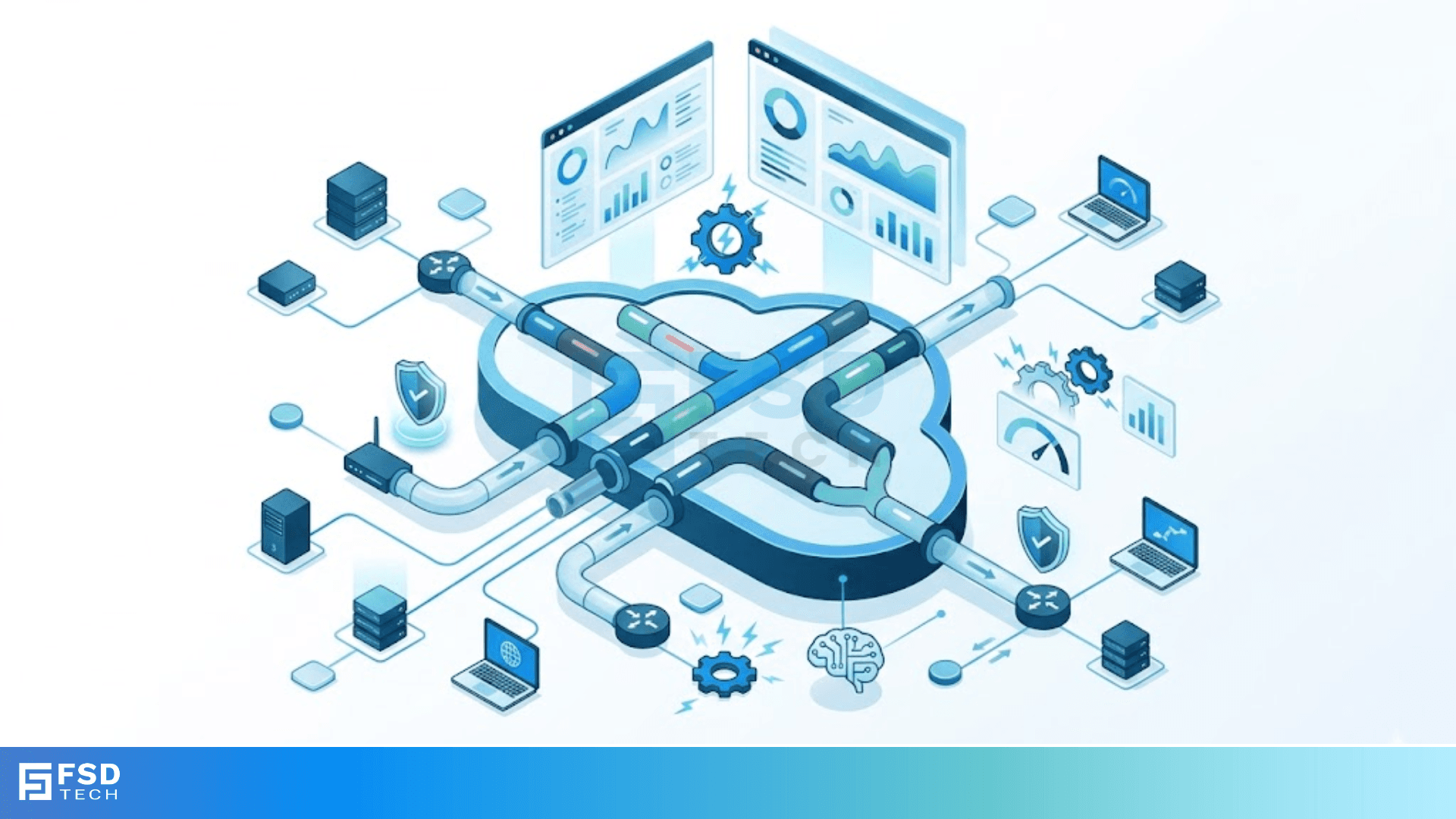
    Isometric illustration of a centralized executive dashboard platform connected to analytics panels, performance charts, security indicators, and strategic milestones, representing real-time business visibility and decision control within ClickUp.

    Executive Visibility in ClickUp – How CXOs Gain Real-Time Control Without Micromanaging

    🕓 February 13, 2026

    Cato SASE Architecture

    Inside Cato’s SASE Architecture: A Blueprint for Modern Security

    🕓 January 26, 2025

    Workflow Automation(8)

    Workforce Automation(1)

    AI Project Management(1)

    HR Data Automation(1)

    RMM(2)

    Firewall Security(1)

    IT Workflow Automation(1)

    IT security(2)

    GCC compliance(4)

    Payroll Integration(2)

    IT support automation(3)

    procurement automation(1)

    lost device management(1)

    IT Management(5)

    IoT Security(3)

    Cato XOps(1)

    IT compliance(5)

    Task Automation(1)

    Workflow Management(1)

    Kubernetes lifecycle management(2)

    OpenStack automation(1)

    AI-powered cloud ops(1)

    SMB Security(8)

    Data Security(1)

    MDR (Managed Detection & Response)(3)

    Atera Integrations(2)

    MSP Automation(3)

    XDR Security(2)

    Threat Detection & Response(1)

    SMB Cyber Protection(1)

    Ransomware Defense(3)

    HR Tech Solutions(1)

    Zero Trust Network Access(3)

    Post-Quantum Cryptography(1)

    Quantum Threat UAE & GCC(1)

    Quantum Security(1)

    Zero Trust Security(2)

    Cloud IDE Security(1)

    Endpoint Management(1)

    SaaS Security(2)

    Payroll Automation(5)

    IT Monitoring(2)

    Xcitium EDR SOC(15)

    Ransomware Protection GCC(1)

    M&A IT Integration(1)

    Network Consolidation UAE(1)

    MSSP for SMBs(1)

    Antivirus vs EDR(1)

    Managed EDR FSD-Tech(1)

    FSD-Tech MSSP(25)

    Ransomware Protection(3)

    SMB Cybersecurity GCC(1)

    Endpoint Security(1)

    Cybersecurity GCC(15)

    Data Breach Costs(1)

    Endpoint Protection(1)

    SMB Cybersecurity(8)

    Managed Security Services(2)

    Xcitium EDR(30)

    Zero Dwell Containment(31)

    Hybrid Backup(1)

    Cloud Backup(1)

    Backup & Recovery(1)

    pointguard ai(4)

    vembu(9)

    disaster recovery myths(1)

    SMB data protection(9)

    backup myths(1)

    Disaster Recovery(4)

    Vembu BDR Suite(19)

    GCCBusiness(1)

    DataProtection(1)

    Secure Access Service Edge(4)

    Unified Network Management(1)

    GCC IT Solutions(1)

    GCC HR software(20)

    financial cybersecurity(2)

    open banking(1)

    CC compliance(1)

    Miradore EMM(15)

    Cato SASE(9)

    Government Security(1)

    Cloud Security(9)

    GCC Education(1)

    Hybrid Learning(1)

    Talent Development(1)

    AI Governance(4)

    AI Risk Management(1)

    AI Cybersecurity(13)

    AI Security(2)

    AI Compliance(2)

    Secure Remote Access(1)

    GCC business security(1)

    GCC network integration(1)

    compliance automation(5)

    GCC cybersecurity(3)

    education security(1)

    App management UAE(1)

    Miradore EMM Premium+(5)

    BYOD security Dubai(8)

    share your thoughts

    SLIP Serial Encapsulation

    What is SLIP Serial Encapsulation? How it works?

    🕓 May 9, 2026

    PPP Authentication CHAP

    What is PPP Authentication CHAP? Dive into Secure Networking

    🕓 May 9, 2026

    HDLC Bit-Oriented Framing

    HDLC Bit-Oriented Framing: Guide to Data Link Control

    🕓 May 8, 2026

    Managed Services(2)

    Decoded(245)

    Cyber Security(129)

    BCP / DR(24)

    Zeta HRMS(78)

    SASE(21)

    Automation(80)

    Next Gen IT-Infra(128)

    Monitoring & Management(81)

    ITSM(22)

    HRMS(21)

    Automation(24)