.webp&w=3840&q=75)
How ClickUp Enables Outcome-Based Project Management (Not Just Task Tracking)
🕓 February 15, 2026




.webp&w=3840&q=75)



Surbhi Suhane is an experienced digital marketing and content specialist with deep expertise in Getting Things Done (GTD) methodology and process automation. Adept at optimizing workflows and leveraging automation tools to enhance productivity and deliver impactful results in content creation and SEO optimization.
Share it with friends!
If you've spent any time evaluating modern enterprise network security, you've encountered two acronyms that appear everywhere — often used interchangeably, occasionally contradicted between vendors, and almost never explained clearly enough to make a confident architectural decision.
SASE. SSE. Same DNA. Different scope. And the difference matters enormously when you're deciding how to secure a distributed workforce, modernize a legacy WAN, or consolidate a stack of point-product security tools that no longer fit how your organization works.
The confusion is understandable. Both frameworks are cloud-delivered. Both embrace Zero Trust principles. Both converge multiple security capabilities — ZTNA, SWG, CASB, FWaaS — into a unified platform. And virtually every major vendor in the space offers one, the other, or both, often with marketing language that makes the distinction even harder to parse.
This guide cuts through all of it. You'll understand exactly what SASE and SSE are, what each includes and excludes, how Cato Networks delivers both as a cloud-native platform, and — most importantly — how to decide which architecture is right for your organization based on where you are today and where you need to be.
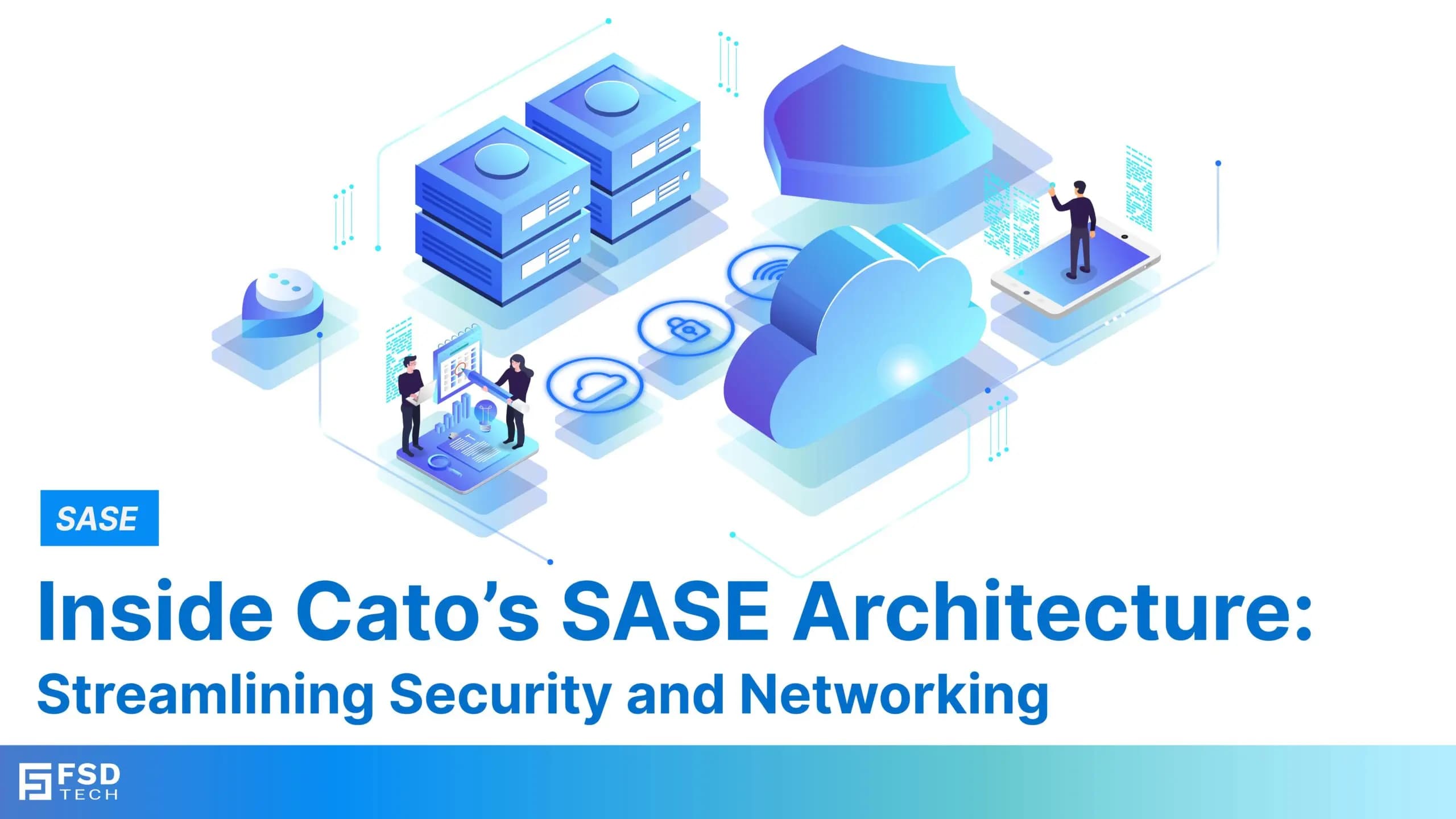
Secure Access Service Edge (SASE) — pronounced "sassy" — was coined by Gartner in 2019 to describe a new architectural model that converges wide-area networking and security into a single, cloud-native, globally distributed platform.
The defining characteristic of SASE is convergence. Not integration in the traditional sense of connecting separate tools through APIs, but genuine architectural convergence where networking and security share the same policy engine, the same data plane, the same management interface, and the same Points of Presence (PoPs) that sit at the edge of the global network.
SASE is a converged cloud-based security model that merges software-defined wide area networking (SD-WAN) with security capabilities, including secure web gateway (SWG), cloud access security broker (CASB), firewall as a service (FWaaS), and zero trust network access (ZTNA) into one platform.
The five core components of a complete SASE architecture are:
SD-WAN (Software-Defined Wide Area Network) — the networking foundation of SASE. SD-WAN replaces static MPLS circuits and point-to-point VPN tunnels with dynamic, policy-driven routing across multiple transport links. It optimizes traffic paths in real time, provides WAN-level QoS, and connects branch offices, data centers, and cloud environments through a cloud-managed overlay network.
Secure Web Gateway (SWG) — inspects and filters outbound Internet traffic, enforcing acceptable use policies, blocking malicious URLs, performing SSL inspection, and providing DNS security. SWG is the primary control point for users accessing Internet resources.
Cloud Access Security Broker (CASB) — enforces security policies for SaaS application usage, providing visibility into cloud application activity, data loss prevention (DLP) for cloud data, and compliance controls for regulated industries.
Zero Trust Network Access (ZTNA) — replaces VPN-based remote access with application-level, identity-verified access control. Users access only the specific applications they are authorized to reach, verified continuously against identity, device posture, and risk signals — never granted broad network access.
Firewall as a Service (FWaaS) — delivers next-generation firewall capabilities from the cloud, including intrusion prevention (IPS), application-layer inspection, and threat intelligence, without requiring physical or virtual firewall appliances at each location.
SD-WAN + SSE = SASE. This equation is the cleanest way to understand the relationship between the two frameworks — and it also reveals exactly what SSE is.
Security Service Edge (SSE) was introduced by Gartner in 2021 as the security-focused subset of the broader SASE framework. SSE focuses strictly on the security aspect, delivering critical services such as threat protection and access control without the SD-WAN component. While SASE provides an integrated network and security service, SSE is not concerned with network optimization or routing.
SSE includes the same core security components as SASE — SWG, CASB, ZTNA, and FWaaS — but deliberately excludes SD-WAN. SSE delivers comprehensive protection through the cloud, without requiring changes to an organization's existing network architecture.
This distinction is precisely what makes SSE valuable for a specific category of organization: those that already have a solid, functional WAN — whether built on MPLS, existing SD-WAN, or another transport — and need to modernize their security posture without simultaneously undertaking a full network transformation.
If you already run SD-WAN or another network stack, SSE layers modern protection on top: least-privilege access, inline data protection, and centralized visibility across SaaS and cloud apps. It is the fastest route to Zero Trust controls when networking is already sorted.
SSE is not a compromise or a lesser version of SASE. It is a deliberate architectural choice that reflects a security-first approach — prioritizing rapid deployment of cloud-native security controls over the broader transformation that full SASE requires.
The relationship between SASE and SSE is best understood not as a competition between two alternatives, but as a spectrum — with SSE representing the security layer and SASE representing the complete stack that adds networking to that security layer.
Scope: SASE covers both networking and security. SSE covers security only. This is the fundamental, non-negotiable difference between the two frameworks.
SD-WAN: SASE includes SD-WAN as a core component, providing WAN optimization, dynamic traffic routing, multi-link management, and branch office connectivity. SSE does not include SD-WAN and works alongside whatever network infrastructure the organization already has.
Network Performance: SASE incorporates software-defined WAN (SD-WAN) functionality, which optimizes network performance and routing across multiple different transport links. SSE lacks the networking capabilities of SASE.
Management: SASE incorporates both network and security functionality, enabling centralized management of both functions. SSE integrates only security functionality, which enhances security management but leaves network management as an independent task.
Deployment Complexity: Deploying SASE is likely more involved for an organization as it transitions from its existing networking solution to SASE's integrated SD-WAN capabilities. SSE deploys alongside existing network infrastructure with significantly less disruption.
Time to Value: SSE typically delivers faster time to value because it does not require network transformation. Organizations can deploy SSE in weeks rather than the months a full SASE transformation requires.
Security Capabilities: Both SASE and SSE deliver the same core security stack — SWG, CASB, ZTNA, FWaaS. The security capabilities are not meaningfully different between the two frameworks. SASE and SSE offer the same range of security functions as SSE is the security side of SASE.
Scalability: Both SASE and SSE are designed as cloud-native solutions, enabling them to take advantage of the massive scalability of cloud infrastructure. However, the integration of network management and optimization capabilities into SASE solutions enables them to scale both network and security functions, while SSE only provides scalability benefits for an organization's security architecture.
Also Read: SNMP Monitoring for Network Infrastructure
Cato Networks occupies a unique position in the SASE and SSE market: it is one of the few vendors that built a genuinely cloud-native SASE platform from the ground up — not through acquisition of separate networking and security products bolted together, but as a single unified architecture designed for convergence from day one.
The Cato SASE Cloud is a global network of PoPs that delivers the complete SASE stack — SD-WAN, SWG, CASB, ZTNA, FWaaS, IPS, DLP, and more — through a single platform with a single management interface and a single policy engine. Every site, every remote user, every cloud environment connects to the Cato Cloud and receives consistent networking and security services without the hairpinning, backhauling, and tool sprawl of traditional architectures.
For customers deploying full SASE, Cato Sockets connect physical sites and cloud environments to the Cato Cloud, delivering SD-WAN connectivity alongside the complete security stack through the same PoPs. Traffic optimization, dynamic path selection, WAN QoS, and full security inspection all operate through a single architecture.
For customers deploying SSE — those with existing WAN infrastructure they want to retain while modernizing security — Cato provides the same security stack through IPsec tunnel integration, allowing existing SD-WAN or MPLS infrastructure to connect to the Cato Cloud and benefit from SWG, CASB, ZTNA, FWaaS, and the rest of the security platform without replacing the underlying network.
This flexibility means organizations are not forced to choose between starting with SSE and eventually migrating to full SASE on a single platform versus selecting separate point solutions for networking and security. Cato supports both deployment models and a phased migration path from SSE to SASE on the same platform — protecting the security investment while allowing network transformation to occur at the organization's own pace.
The architectural decision between SASE and SSE is not primarily a technology question — it is a business and operational question that depends on the current state of the organization's network, the urgency of the security transformation, and the availability of resources and budget for a broader infrastructure change.
Are due for a WAN refresh. If MPLS contracts are expiring, existing SD-WAN is underperforming, or you are expanding to new locations that would require new circuit provisioning, SASE provides an opportunity to simultaneously modernize the network and deploy cloud-native security — achieving both outcomes without running two separate transformation programs.
Manage multiple branch offices or sites. SASE provides end-to-end consistency across both traffic and security for organizations with many distributed locations, replacing per-site appliance configurations with centrally managed policies applied consistently at every edge.
Need unified policy across users and locations. Organizations that require the same security policy to apply to users connecting from a branch office, a home office, and a cloud environment — with the same inspection, the same QoS, and the same access controls — need SASE's unified architecture to achieve true policy consistency.
Want to eliminate networking and security tool sprawl. If the organization is managing separate SD-WAN appliances, firewalls, proxies, CASB tools, and VPN concentrators across multiple vendors and management consoles, SASE consolidation delivers operational simplification alongside security improvement.
Your network is solid but your security is lagging. Pick SSE first if your network's solid but your security is a problem area. Organizations with functional, performant WAN infrastructure that have fallen behind on cloud security, SaaS visibility, and Zero Trust access controls can address the security gap through SSE without touching the network.
You need faster time to value. SSE deployments are typically faster and less disruptive than full SASE transformations because they do not require network changes. Organizations with urgent security requirements — regulatory deadlines, audit findings, or active threat exposure — can deploy SSE in weeks and address network modernization separately on a longer timeline.
Most of your users access SaaS and cloud applications. Are your users primarily accessing SaaS and cloud workloads from anywhere? SSE gives fast wins with ZTNA, SWG, and CASB delivered from the cloud. For organizations where the primary security problem is securing cloud and SaaS access rather than optimizing site-to-site WAN, SSE addresses the problem directly without SD-WAN complexity.
You want to replace VPN without replacing your network. ZTNA within an SSE framework provides a direct path to eliminating VPN-based remote access — replacing broad network access with application-level Zero Trust access — while retaining all existing network infrastructure.
Also Read: DHCP Configuration for Firewall Enforcement: The Ultimate Guide to Modern Security
One of the most strategically sound approaches to SASE adoption — and the one reflected in the architecture of platforms like Cato Cloud — is a phased migration that begins with SSE and evolves to full SASE as network transformation becomes operationally and financially appropriate.
Start with SSE — get off VPNs and gain visibility. When contracts expire or expansion hits, evolve into SASE.
This phased approach works because SSE and SASE share the same security stack. An organization that deploys SSE through Cato Cloud today — getting ZTNA, SWG, CASB, FWaaS, and security inspection on a cloud-native platform — has not made a dead-end investment. When the time comes to replace MPLS circuits or upgrade WAN appliances, adding Cato Sockets and enabling the SD-WAN capabilities completes the SASE architecture on the same platform without migrating to a new vendor, retraining administrators, or rebuilding security policies.
The risk of the phased approach is choosing an SSE vendor that cannot deliver full SASE — locking the organization into a security-only platform when the network transformation eventually arrives and requiring a vendor change at that point. Evaluating SSE vendors with an eye toward their SASE roadmap and architectural completeness is therefore critical for organizations that anticipate eventually needing full convergence.
A critical consideration in evaluating both SASE and SSE is whether to pursue a single-vendor platform or assemble a best-of-breed stack from multiple specialized vendors.
The multi-vendor approach has intuitive appeal — selecting the best SWG, the best CASB, the best ZTNA, and the best SD-WAN from different providers. In practice, this approach consistently underperforms on the dimension that matters most: operational simplicity.
Multiple vendors mean multiple management consoles, multiple policy languages, multiple support relationships, and multiple integration points that require ongoing maintenance. Policies that should be consistent across security functions are instead expressed separately in each tool, creating gaps at the seams — exactly the attack surface that sophisticated adversaries exploit.
If your organization needs to simplify fragmented networks and move toward a single-vendor solution, SASE can consolidate management and reduce operational costs.
Single-vendor SASE platforms — where networking and security are genuinely architected together rather than acquired and integrated after the fact — provide consistent policy, shared visibility, unified management, and support accountability that multi-vendor stacks cannot replicate. The quality of the integration is the most important evaluation criterion, more important than any individual component's feature set.
Both SASE and SSE are evolving rapidly as artificial intelligence and automation capabilities become integral to cloud-delivered security platforms. The next generation of SASE and SSE solutions is moving beyond static policy enforcement toward adaptive, AI-driven architectures that continuously learn, detect, and respond.
Integration with AI and automation will make them even more intelligent, capable of identifying and neutralizing threats before they escalate. Real-time analytics and predictive threat detection will continue to drive the next generation of SASE and SSE solutions, giving organizations smarter, faster defenses and more efficient operations.
For organizations evaluating SASE and SSE platforms today, AI integration is an increasingly important criterion — not just for threat detection, but for policy optimization, anomaly identification, and automated response that reduces the operational burden on security teams.
The most important realization when evaluating SASE and SSE is that the question is not which is better — it is which is right for your organization at this point in its infrastructure maturity and transformation timeline.
If you need to modernize both networking and security, have multiple sites, and are ready for a comprehensive WAN transformation, SASE delivers the full convergence that eliminates tool sprawl, provides consistent policy across all users and locations, and reduces the long-term operational cost of managing separate networking and security stacks.
If your network is functional, your primary gap is security, and you need to move fast — deploy SSE, replace VPN with ZTNA, gain SaaS visibility through CASB, and enforce Zero Trust access controls without touching the network. Then add SD-WAN when the time is right.
What matters most is the platform choice, not the starting point. Organizations that choose a platform capable of delivering both — and that architecturally integrates networking and security rather than stitching together acquired products — protect their investment regardless of where they start.
Cato Cloud is built for exactly this journey: starting wherever you are, delivering value immediately, and scaling to full SASE convergence on your timeline.
SASE (Secure Access Service Edge) combines networking — specifically SD-WAN — with a full security stack (SWG, CASB, ZTNA, FWaaS) in a single cloud-native platform. SSE (Security Service Edge) includes the same security stack but excludes SD-WAN, making it a security-only framework that works alongside existing network infrastructure. The simplest equation: SSE + SD-WAN = SASE.
Neither is universally better — they serve different organizational needs. SSE is better for organizations with a solid WAN that need faster security modernization without network disruption. SASE is better for organizations that need to modernize both networking and security simultaneously, particularly those with multiple branch offices and expiring MPLS contracts.
Gartner introduced SASE in 2019. SSE followed in 2021 as a defined subset of SASE, recognizing that many organizations needed the security capabilities of SASE without the networking transformation that full SASE requires.
Yes. Cato's cloud-native platform supports both full SASE deployment — using Cato Sockets for SD-WAN connectivity alongside the complete security stack — and SSE deployment for organizations connecting existing infrastructure via IPsec tunnels. Both models share the same PoP infrastructure, management interface, and security policy engine.
Yes, and this is a recommended phased approach — particularly when deploying on a platform like Cato Cloud that supports both models. Starting with SSE delivers immediate security value while allowing network transformation to occur when operationally and financially appropriate. On a platform that supports both, the migration adds SD-WAN capabilities without changing the security architecture or vendor.
share your thoughts