.webp&w=3840&q=75)
How ClickUp Enables Outcome-Based Project Management (Not Just Task Tracking)
🕓 February 15, 2026
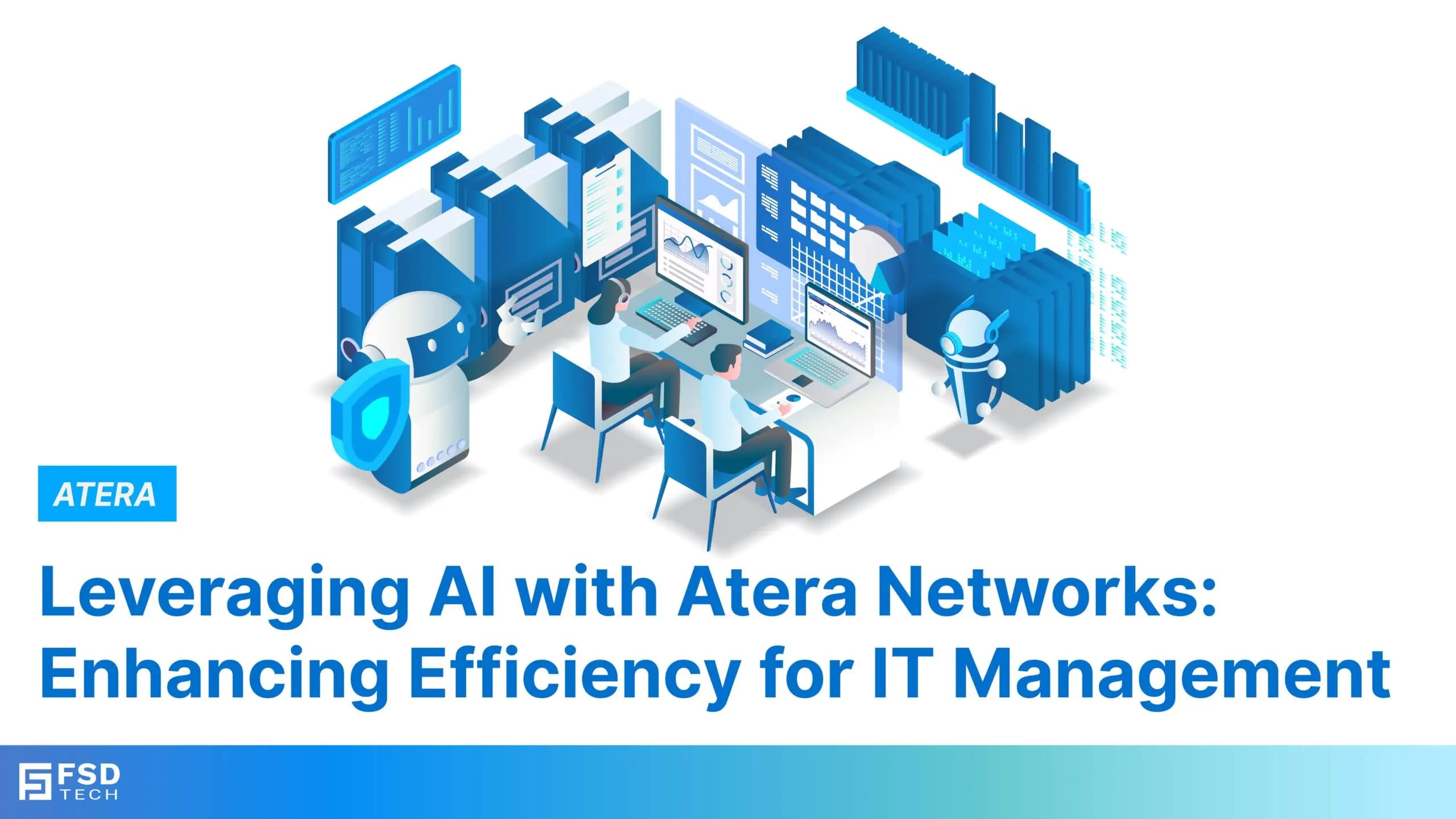
How does Atera use AI in IT management?
Atera offers two AI tools as part of its Autonomous IT platform. AI Copilot works alongside technicians to speed up troubleshooting, generate scripts, summarize tickets, and write responses. Robin is an autonomous AI agent that resolves end-user IT issues independently, without a technician needing to get involved. Together, they can reduce IT workload by up to 40%, according to Atera.
The ticket queue never really empties. Password resets, software installs, slow devices, recurring errors — the same problems come in day after day. And the team that should be focused on infrastructure, security, and strategic projects is stuck triaging Tier-1 requests.
This is the challenge Atera's AI tools were built to address. Not by replacing IT professionals, but by taking the repetitive work off their plates so they can focus on what actually needs their skills.
This guide covers every AI feature Atera offers, how each one works, and what it actually means for your day-to-day IT operations. All information is drawn directly from Atera's official platform pages and support documentation.
Atera's AI capability sits under a product called Autonomous IT. It includes two distinct tools:
| Tool | Who It Serves | What It Does |
|---|---|---|
| AI Copilot | IT technicians | Assists with diagnostics, scripts, ticket replies, summaries, and KB articles |
| Robin | End users | Resolves IT issues autonomously via chat, email, Slack, and Teams |
Both tools are available as part of Atera's platform. AI Copilot is available as an add-on for all Atera plans, with a 14-day free trial. Robin is a separate add-on. Pricing for both is available through Atera's pricing page under the Add-ons section.
Important: AI Copilot and Robin are add-ons, not included in Atera's base subscription plans. Contact Atera or your local partner to confirm current pricing before purchasing.
AI Copilot is Atera's AI tool built specifically for IT technicians. It is accessible from anywhere within the Atera platform — directly from a device, a ticket, an alert, or a contact view.
It is powered by Azure OpenAI and operates with enterprise-grade security. Your data stays within your account context. It is not shared with other customers and is not used to train public AI models, according to Atera's AI FAQ.
Here is what AI Copilot can do:
AI Copilot can run health checks on Windows and macOS devices in real time. When you open a device or alert in Atera, Copilot can analyze the device's current state, suggest actions, and in many cases execute one-click fixes.
It can answer account-specific questions like:
This is especially useful in larger IT environments where manually sorting through device lists would take significant time.
Note: AI Copilot functionality is limited if the device being diagnosed is offline.
One of AI Copilot's most practical features is its script generator. Technicians describe what they need in plain language, and Copilot creates a ready-to-use script in seconds.
For example, you could type: "Write something that checks disk space on all servers and alerts if below 20%." AI Copilot produces a script you can review and deploy.
This covers automation for maintenance tasks, troubleshooting complex issues, and any scenario where a custom script would normally take time to write or search for.
Important: Atera's own documentation recommends always reviewing, testing, and validating AI-generated scripts before running them in a production environment.
When AI Copilot detects a recurring issue across multiple devices, it can also generate a script to fix it fleet-wide, replacing what would otherwise require a separate remote session on each device.
Long ticket histories take time to read, especially when you are picking up someone else's case or returning to a ticket after time away. AI Copilot automatically generates a clear summary of every ticket so technicians can get immediate context and move straight into resolution.
According to Atera, one user reported a 25–35% reduction in tickets after deploying AI Copilot, with the tool also assisting in knowledge base generation.
AI Copilot can generate a response to a support ticket based on the ticket's content and context. Technicians can adjust the tone — more formal, more casual — or rephrase the response with a single click.
This is particularly useful when translating complex technical information into language that non-technical users can understand. The feature is called Compose with AI in Atera's platform.
Setting up SNMP monitoring requires Object Identifiers (OIDs) for each device type. Finding and entering the right OID manually can be time-consuming.
AI Copilot simplifies this. Technicians describe the device or monitoring need, and Copilot provides tailored OID recommendations. This makes SNMP monitoring setup faster and reduces the chance of configuration errors.
Technicians can describe what they need to do in plain language, and AI Copilot converts that description into the correct terminal command, executed directly on the device. This removes the need to search command references and reduces trial-and-error in command-line operations.
After resolving a ticket, technicians can click to generate a knowledge base article from the resolution. AI Copilot drafts a detailed article automatically.
This keeps your knowledge base current without requiring technicians to write documentation manually. Over time, the knowledge base becomes a resource that both Robin and your team can draw from, making future resolutions faster.
After a remote support session, AI Copilot generates a summary of the actions taken. This creates a clear record without requiring technicians to write notes manually. It also helps with team handoffs and client accountability.
AI Copilot can fill in custom ticket fields automatically using a feature called Set Field Value by Copilot. When built into ticket automation rules, Copilot reads each incoming ticket and populates the relevant custom fields. This reduces manual data entry and keeps ticket records consistent.
Atera's AI Center gives administrators a central dashboard to track the impact of AI Copilot and Robin. It shows how AI is resolving tickets over time, surfaces actionable insights from recurring trends, and identifies knowledge base gaps that, once filled, improve future automated resolutions.
Note: Full admin permissions are required to access the AI Center.
Also Read: Atera Mobile App – Managing Your IT Environment On-the-Go
Robin is Atera's autonomous AI agent. It handles first-tier IT support requests from end users, without a technician needing to be involved at every step.
Robin was previously called IT Autopilot in Atera's platform. It is now officially named Robin across all of Atera's documentation and product pages.
When a user submits a request through email, chat, Slack, Teams, or Atera's Service Portal, Robin takes over:
Robin operates within a defined set of approved actions. These include password resets, software installations from an approved list, common troubleshooting steps, and specific remediation tasks set by the IT administrator. If a request falls outside its defined scope, Robin escalates to a technician with a full summary of the conversation, reducing the time the technician needs to get up to speed.
One customer quote published on Atera's platform: "Robin resolves 85% of our help desk tickets, delivered ROI in the first quarter, and flipped our reactive/proactive ratio to 80/20."
Another: "In just the first few weeks with Robin, we were already saving our technicians two full days a week."
Both are published on Atera's official homepage and AI pages.
Also Read: Best Practices for Organizing Your Atera Device Groups
The two tools are designed to function as a team:
This loop means the system gets more effective with every resolved ticket.
Being clear about limitations matters. Here is what Atera's own documentation states:
Atera's AI tools are powered by Azure OpenAI with enterprise-grade security.
Key security points, confirmed by Atera's AI FAQ:
Also Read: Integrating Atera with Third-Party Tools (Slack, Teams, Zoom, etc.)
AI Copilot is Atera's AI assistant for IT technicians. It assists with real-time device diagnostics, script generation, ticket summaries, response drafting, OID recommendations, terminal command generation, and knowledge base article creation. It is accessible from any device, ticket, alert, or contact view within Atera.
Robin (formerly called IT Autopilot) is Atera's autonomous AI agent for end users. It resolves first-tier IT requests independently through email, chat, Slack, Microsoft Teams, and the service portal. It escalates to a technician only when an issue falls outside its defined scope.
AI Copilot is available as an add-on for all Atera plans. It is not included in the base subscription by default. A 14-day free trial of AI Copilot is available. Contact Atera or your local partner for current pricing.
AI Copilot's scripts are powerful but may contain inaccuracies. Atera's own documentation recommends always reviewing, testing, and validating AI-generated scripts before deploying them in a production environment.
AI Copilot currently supports English, French, German, Italian, and Spanish. Some features may be fully supported in English only.
No. According to Atera's AI FAQ, prompts, queries, and knowledge base content from AI Copilot and Robin do not train public AI models and remain within your account context.
AI Copilot is designed for IT technicians and assists with technical tasks during the resolution process. Robin is designed for end users and resolves issues autonomously without requiring technician involvement. They work together: Robin handles the first line of contact, and AI Copilot assists the technician when escalation is needed.
Atera's AI tools are not a single feature — they are a two-part system. AI Copilot reduces the time technicians spend on repetitive diagnostics, script writing, and ticket management. Robin takes an entire category of requests off the technician's plate by resolving them autonomously.
Used together, they allow IT teams to do more without adding headcount. The system also improves over time: every resolved ticket can become a knowledge base article, which Robin uses to handle similar issues in the future.
For teams in the GCC region, FSD-Tech is a certified Atera partner that deploys and supports Atera locally.

Anas is an Expert in Network and Security Infrastructure, With over seven years of industry experience, holding certifications Including CCIE- Enterprise, PCNSE, Cato SASE Expert, and Atera Certified Master. Anas provides his valuable insights and expertise to readers.
Share it with friends!
.webp&w=3840&q=75)
share your thoughts