.webp&w=3840&q=75)
How ClickUp Enables Outcome-Based Project Management (Not Just Task Tracking)
🕓 February 15, 2026
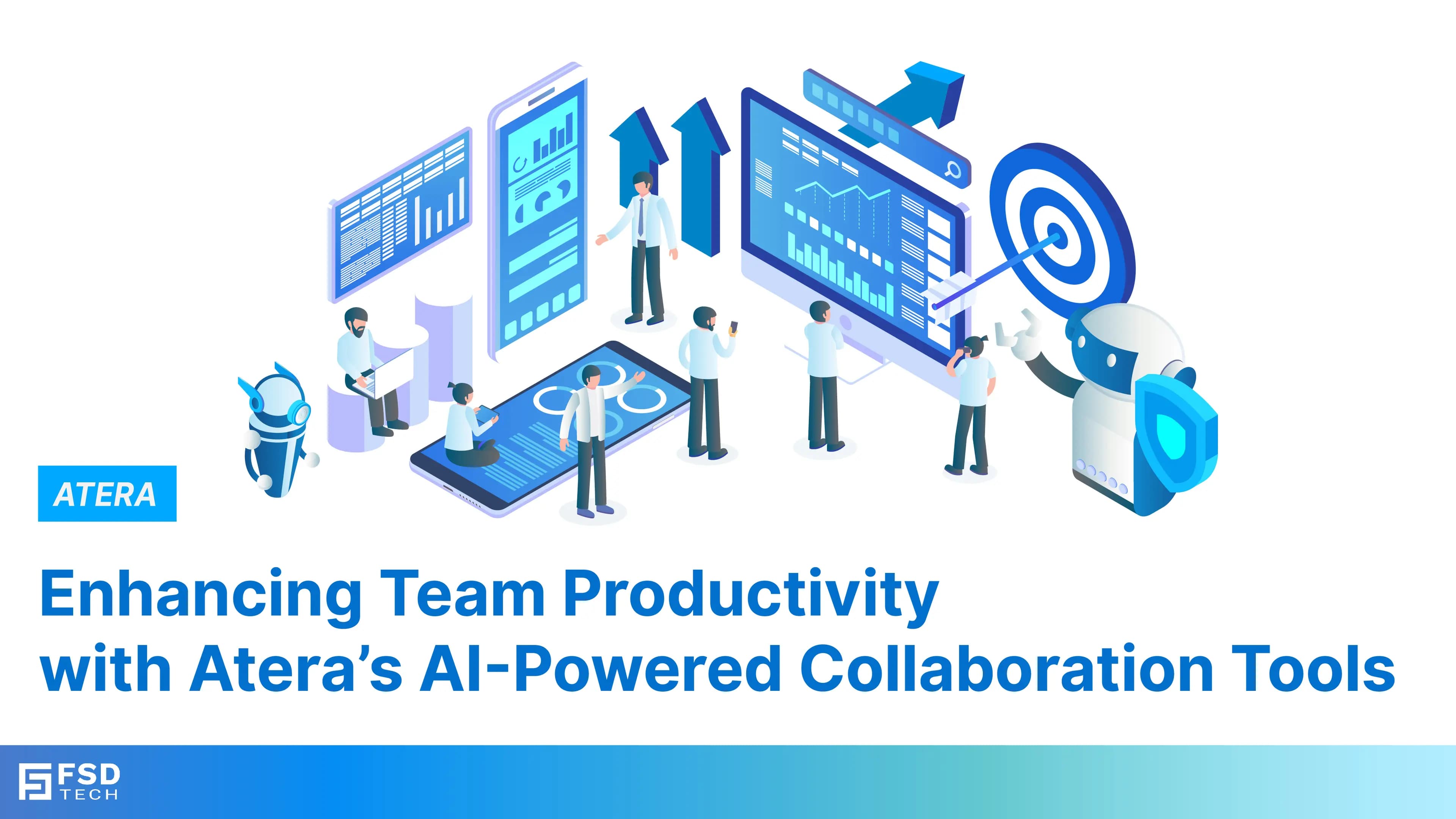
How does Atera support IT team collaboration?
Atera supports IT team collaboration through a shared ticketing system where multiple technicians can work on the same ticket in real time, AI tools that speed up triage and response, automated alerts and notifications, a shared knowledge base, remote access from within any ticket or alert, and integration with communication tools like Slack and Microsoft Teams through Robin (Atera's autonomous AI agent) and via API or Zapier.
IT teams work fast. Multiple technicians handle the same environments. Tickets come in from different channels. Alerts fire at all hours. Without a shared system, things get repeated, missed, or lost in handoffs.
The tools that hold IT teams together — ticketing, documentation, alerts, remote access — need to talk to each other. When they live in separate platforms, context gets lost every time someone switches.
Atera puts all of these tools in one platform. This guide covers exactly how each collaboration feature works, what it does for IT teams day to day, and what the verified limits are. Everything here is drawn from Atera's official platform pages and support documentation.
For most IT teams, the ticket is the unit of work. It captures the request, tracks the resolution, and creates a record. When the ticketing system is well-designed, collaboration happens naturally inside it.
Atera's ticketing system is fully integrated with its RMM and PSA tools. Tickets can be created in several ways:
Once a ticket exists, it becomes the central workspace for both the technician and the end user. Public replies notify the end user by email. Internal notes allow technicians to communicate without the end user seeing. Every update creates a timestamped record.
Atera's ticket view supports real-time multi-technician collaboration. According to Atera's tickets overview support documentation, up to five technicians can work on the same ticket simultaneously. Live avatars on the ticket page show who is currently active. If more than five technicians are involved, a dropdown displays the additional team members.
This means senior and junior technicians can co-work a complex issue without leaving the ticket, and managers can monitor activity without interrupting the workflow.
Ticket automation rules in Atera allow teams to define exactly how tickets are handled without manual intervention. Rules can trigger actions based on conditions such as:
Example automations include: sending an acknowledgment email when a ticket is created, routing a ticket to a specific technician or group based on the issue type, or balancing workload using round-robin assignment.
Custom fields can be added to tickets to capture information specific to your workflow. AI Copilot can fill these fields automatically when built into ticket automation rules — reading each ticket on arrival and populating the relevant fields without manual input.
Also Read: Atera AI Copilot — Redefining Intelligent IT Automation for MSPs
Atera's AI Copilot (available as an add-on for all Atera plans) brings several capabilities directly into the ticket workflow.
AI Copilot automatically generates a summary of any ticket. Instead of reading through a long thread to get context, a technician sees a clear, concise summary immediately. This is especially useful when picking up someone else's ticket or returning to one after time away.
AI Copilot includes a ticket sentiment feature. It analyzes the most recent comment in a ticket thread and categorizes the end user's sentiment as positive, negative, or neutral. This is visible on the Tickets page, allowing teams to prioritize tickets where the end user is frustrated or escalating, without having to read every message.
This feature is documented in Atera's AI Copilot capabilities support article.
When writing a response, AI Copilot can generate a draft reply based on the ticket content and context. Technicians can adjust the tone — more formal or more conversational — with a single click. This feature, called Compose with AI in Atera's platform, also helps translate technical explanations into plain language that non-technical users can understand.
Atera uses AI-based automatic ticket tagging. When tickets arrive outside business hours or in volume, AI tags them based on content, helping route them to the right person. AI Copilot can also complete custom ticket fields automatically through ticket automation rules, keeping ticket records consistent without manual data entry.
After resolving a ticket, a technician can click to generate a knowledge base article from the resolution. AI Copilot drafts the article automatically. This keeps documentation current without requiring technicians to write notes separately.
Important: AI Copilot is an add-on, not included in Atera's base subscription. A 14-day free trial of AI Copilot is available. Contact Atera or your local partner for current pricing.
Staying informed without being overwhelmed is a genuine challenge in IT. Atera's alert and notification system is built around relevance and action.
Atera monitors all managed devices in real time. When a metric crosses a configured threshold — CPU usage, disk space, an offline device, a security event — an alert is generated.
Alerts appear in the central Alerts page, which provides a complete view of all active alerts across all devices and customers. From the Alerts page, technicians can:
Alerts can also be paused or snoozed during planned maintenance windows to avoid unnecessary notifications.
Atera sends email notifications to technicians when tickets are created, updated, assigned, or responded to. Notification rules are fully customizable through ticket automation settings. Teams can configure notifications for individual technicians, technician groups, or customers.
Atera's ticketing system supports ticket notifications via email natively. It also provides a mobile app for iOS and Android with alert monitoring, helpdesk access, and remote access via Splashtop for managing urgent issues on the go.
The original blog described Slack and Teams as receiving "AI-driven updates" natively. This needs to be stated accurately to avoid confusion.
What Atera's documentation confirms:
This is an important distinction for teams evaluating how Atera connects to their communication tools.
Also Read: Mastering Reporting & Analytics in Atera
A shared knowledge base reduces repeated work. When a solution is documented once, every technician and end user can access it. This speeds up resolution for recurring issues and reduces the burden on senior technicians.
Atera's knowledge base is accessible to both technicians and end users through the customer portal. It can hold troubleshooting guides, FAQs, how-to articles, and solution documentation.
Key capabilities, verified from Atera's platform documentation:
A well-maintained knowledge base directly reduces ticket volume. The more issues are documented, the more end users can resolve without contacting the IT team.
IT teams that support distributed or remote users need reliable remote access built into their workflow. Atera integrates remote access directly into tickets, alerts, and device views so technicians never have to switch to a separate tool.
A remote session can be started from three places in Atera:
Atera supports remote access through Splashtop, AnyDesk, TeamViewer, and ScreenConnect. Splashtop and AnyDesk are available within Atera plans depending on plan tier. TeamViewer and ScreenConnect require your own license.
For team collaboration, AnyDesk supports up to three technicians remoting into the same device simultaneously. Splashtop supports concurrent sessions across multiple devices, though only one technician can access a specific device at a time on the base Splashtop plan.
After a remote session, AI Copilot automatically generates a remote session summary — a clear record of what was done, available immediately to the team without requiring manual notes.
Note: ScreenConnect is supported on Windows devices only. Remote connections cannot be initiated from Linux devices via Splashtop.
Atera's App Center provides integrations with a wide range of third-party tools across security, backup, network monitoring, billing, documentation, and more. This allows teams to keep Atera as their central platform while connecting it to the tools already in use.
Verified integrations available in Atera's App Center include tools in categories such as:
For Slack and Teams specifically: Robin connects directly for end-user IT support. Ticket and alert notifications can be routed through API/webhooks or Zapier templates.
Also Read: New in Atera — Using Action AI to Auto-Resolve Common IT Issues
| Feature | What It Does | Where It Lives |
|---|---|---|
| Shared ticketing | Multiple technicians co-work tickets in real time | Tickets page |
| AI ticket summaries | Get instant context on any ticket | AI Copilot (add-on) |
| Ticket sentiment | See if an end user is frustrated, at a glance | AI Copilot (add-on) |
| Compose with AI | Draft responses in the right tone, instantly | AI Copilot (add-on) |
| AI ticket tagging | Route tickets based on content automatically | Built-in automation |
| Knowledge base | Document and share solutions for self-service | PSA / Customer Portal |
| AI KB article generation | Turn resolved tickets into articles automatically | AI Copilot (add-on) |
| Remote access from tickets | Start a session without leaving the ticket | All plans |
| Remote session summaries | Automatic record of what was done in a session | AI Copilot (add-on) |
| Slack / Teams (Robin) | End users submit and resolve IT requests in-app | Robin add-on |
| Slack / Teams (tickets) | Ticket notifications via API, webhooks, or Zapier | API / Zapier |
| Mobile app | Manage alerts, tickets, and remote access on the go | All plans |
Atera's ticket view supports up to five technicians working on the same ticket simultaneously, with live avatars showing who is active. Technicians can leave internal notes visible only to the team, and ticket automation rules ensure the right people are notified when ticket status changes.
Yes, in two ways. Robin (Atera's autonomous AI agent) connects directly to Slack and Microsoft Teams, allowing end users to submit and resolve IT requests within those platforms. For ticket and alert notifications, integration is possible via API, webhooks, or Zapier. Atera's native alert system does not push notifications directly to Slack or Teams without this additional setup.
Ticket sentiment is a feature within AI Copilot. It analyzes the most recent comment in a ticket thread and categorizes the end user's sentiment as positive, negative, or neutral. This is visible on the Tickets page to help teams prioritize responses where users are most frustrated.
Yes. Atera's customer portal gives end users access to the knowledge base for self-service. Robin (Atera's autonomous AI agent) can also resolve common IT issues autonomously through the portal, email, Slack, and Microsoft Teams, without requiring technician involvement.
After a remote access session, AI Copilot automatically generates a remote session summary — a clear record of the actions taken during the session. This creates an audit trail and saves technicians from writing manual notes after each session.
AI Copilot is available as an add-on for all Atera plans. It is not included in the base subscription. A 14-day free trial is available. Contact Atera or your local partner for current pricing.
Atera's Zapier integration connects Atera to over 7,000 third-party apps. It is available at no additional cost from Atera, though an active Zapier subscription is required. Common uses include posting Slack messages when a ticket is created, notifying a team channel when a ticket is assigned, or creating an Atera ticket when an alert fires in another tool.
IT collaboration breaks down when tools are disconnected. Tickets live in one place, alerts in another, documentation somewhere else, and remote access in a fourth system. Handoffs lose context. Issues get resolved twice. Knowledge stays with individuals instead of the team.
Atera addresses this by keeping all of these functions in one platform. Ticketing, AI assistance, remote access, knowledge management, alerts, and third-party integrations all connect to each other. A technician picking up a ticket sees the history, the AI summary, the device status, and can start a remote session without switching tools.
For IT teams and MSPs in the GCC region, FSD-Tech is a certified Atera partner that deploys and supports the platform locally.

Anas is an Expert in Network and Security Infrastructure, With over seven years of industry experience, holding certifications Including CCIE- Enterprise, PCNSE, Cato SASE Expert, and Atera Certified Master. Anas provides his valuable insights and expertise to readers.
Share it with friends!
.webp&w=3840&q=75)
.webp&w=3840&q=75)
🕓 March 25, 2026
🕓 March 22, 2026
🕓 March 20, 2026
share your thoughts